

15,000 Without a Voice And a Dog Named Heidi

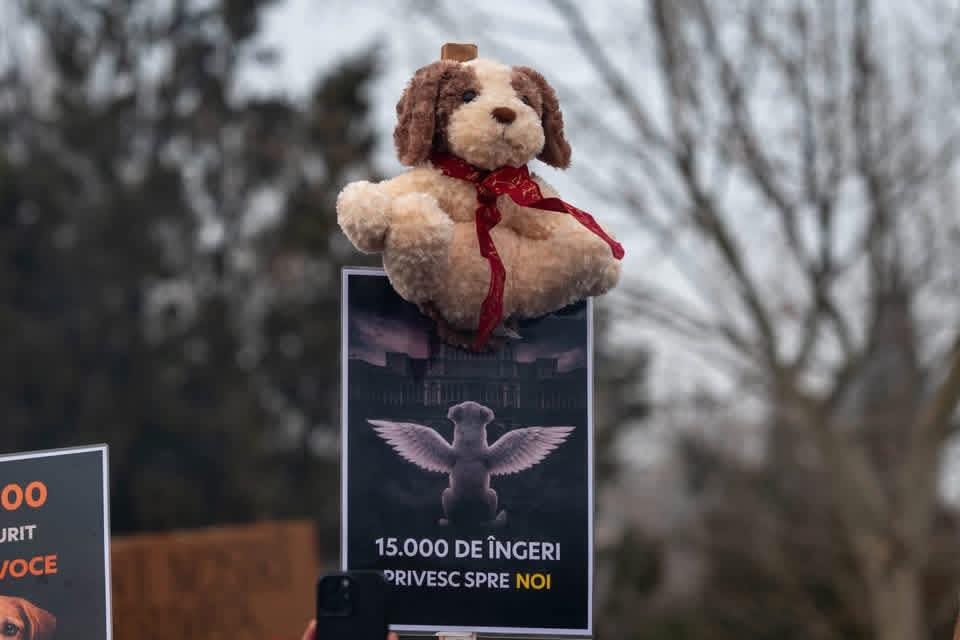
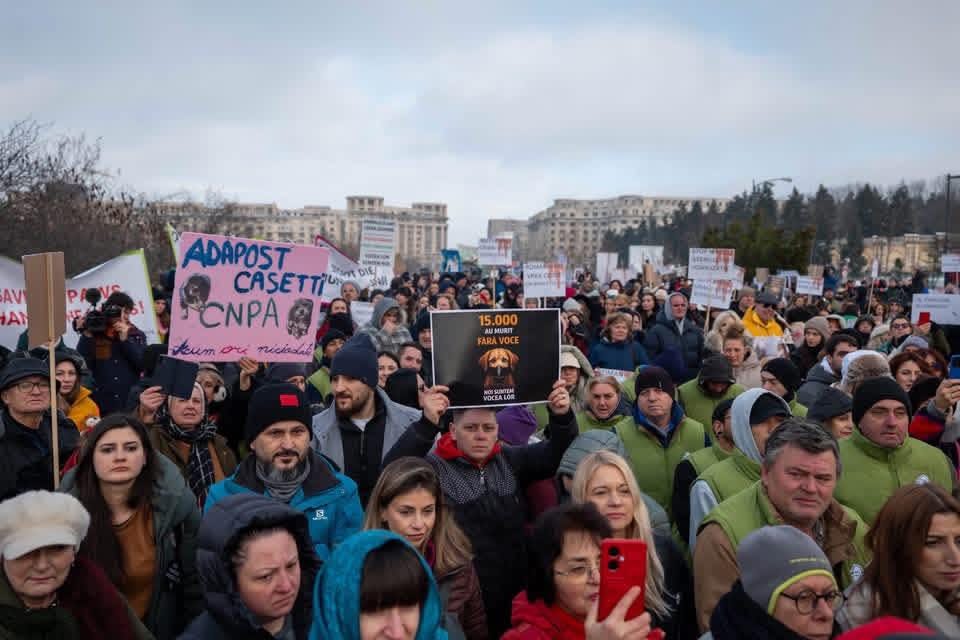
In February 2026, thousands of people gathered in cities across Romania with a stark message written in red:
“15,000 have died without a voice.”
The protests were organised by animal protection associations following revelations about conditions inside a public shelter in Suraia, located in Vrancea County. According to reporting by Radio Constanța, advocates allege that thousands of dogs were euthanised there over a two-year period, many after prolonged neglect.
The demonstrations were not confined to one town. People gathered in Bucharest and other major cities, calling for investigation, transparency, and a shift toward humane population management instead of mass killing.
But movements rarely centre around numbers alone.
They centre around names.
The Dog Who Became That Name
Among the placards and candles, one name appeared again and again:
Heidi.
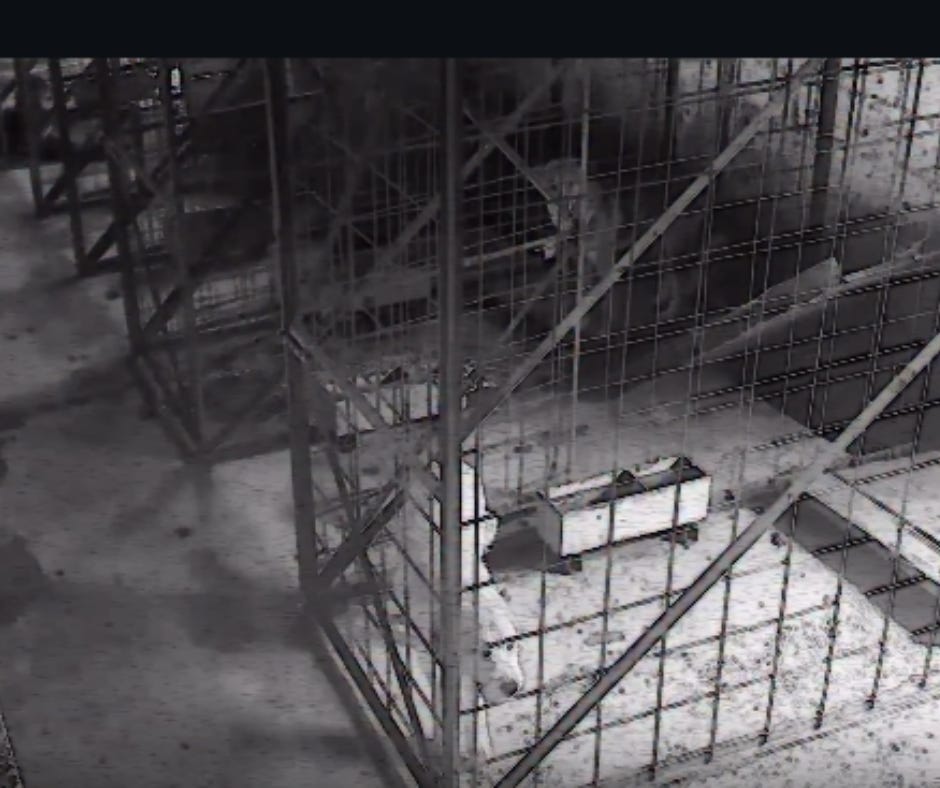
She was a young dog held inside the Suraia public shelter. Her image, shared by rescuers and activists, showed a thin dog standing behind metal bars, searching empty bowls.
She was not presented as extraordinary. She was presented as typical.
Advocates say she lacked adequate food, water, warmth and timely veterinary care. She waited at the front of her enclosure. She looked out. She did not leave alive.
Heidi did not become known because she was the only one who suffered.
She became known because someone said her name.
15,000 is overwhelming. It blurs into abstraction.
Heidi was an individual.
She had a body. A face. A presence. People remember her
In protests across Romania, her name was written in snow and carried on signs. The demonstration was described by organisers as an act of remembrance and a demand that euthanasia not be the default solution to systemic failure.
What Is Being Questioned And Why Funding Matters
At the heart of the protests are not only the conditions inside shelters and the scale of euthanasia, but also how public funds are being spent.
Romanian municipalities receive public budgets to manage stray and shelter dog populations. The protesters argue that much of this funding is currently allocated toward operations that ultimately culminate in euthanasia rather than toward long-term, humane solutions with measurable impact.
Here’s the core of the financial concern:
1. Large Budgets, Limited Outcomes
Municipalities receive public funds for shelter operations, including housing, feeding and controlling dog populations. Critics contend that despite significant expenditure, results have been inconsistent with high euthanasia rates remaining the dominant outcome in some facilities.
2. Sterilisation and Vaccination Are Underfunded
Internationally recognised humane population management requires consistent sterilisation and vaccination programmes combined with community engagement and education. Activists are calling for a reallocation of public funds toward these evidence-based strategies, which reduce population growth over time and decrease shelter intake.
3. Lack of Transparency and Oversight
Protesters are demanding clearer accounting and reporting for how budgets are used. Without transparency, it’s difficult for the public or even independent auditors to see whether resources are producing sustainable, humane results.
They are not calling simply for outrage. They are calling for accountability in how taxpayers’ money is used and whether it aligns with both public interest and animal welfare standards seen across Europe.
The Larger Debate: Humane Strategy vs. Quick Control
Romania is not alone in struggling with how to manage free-roaming dog populations. Many countries have moved toward sterilisation-centred approaches, where resources are invested in:
Mass, low-cost sterilisation and vaccination clinics
Community outreach and responsible ownership education
Foster care, adoption support and post-adoption services
Data-driven monitoring of populations and shelter outcomes
In contrast, when funding prioritises short-term reduction through euthanasia without sustained investment in prevention, shelters fill again, and the cycle repeats.
The protest’s message 15,000 without a voice is not just a statement of grief.
It is a question of public policy and public investment:
Are we spending in ways that reduce suffering and population growth over the long term, or are we simply managing symptoms?
Why Heidi Matters
Heidi’s story does not replace the number. It clarifies it.
Behind every policy decision is a living being who experiences hunger, cold, fear and hope in very real terms. Systems are often discussed in language that feels administrative. Dogs do not experience administration. They experience outcomes.
Heidi’s life ended inside a structure designed to contain and manage animals. Her death has now travelled far beyond those walls.
Whether meaningful reform follows remains uncertain.
But something has shifted.
A name was spoken publicly.
A number was questioned.
A system is being examined.
For a dog who died unheard, that is not nothing.
A Global Pattern of Elimination
What is unfolding in Romania is not isolated.
In Turkey, legislation has accelerated the removal and killing of free-roaming dogs under the language of control. In Pakistan and Morocco, large-scale culling operations continue to be reported, dogs shot in the streets, poisoned, or collected en masse and destroyed.
There are videos. I cannot share them.
They are too distressing. One of them made me feel very unwell. Those of us who work in rescue see suffering regularly. We build tolerance out of necessity. When something still overwhelms you at that point, it tells you something about the scale and nature of what is happening.
This is not management.
It is not strategy.
It is not humane population control.
It is barbaric.
Not as rhetoric. Not as exaggeration. As definition.
Killing on this scale, without sustained investment in sterilisation, vaccination, education and responsible ownership, is not progress. It is the absence of policy dressed up as decisiveness.
And yet in every one of these countries there are people who fight this every single day with whatever energy they have left.
Volunteers documenting evidence knowing it may cost them.
Veterinarians working beyond exhaustion.
Small organisations redirecting every available resource toward prevention rather than destruction.
Citizens standing outside municipal buildings holding photographs of dogs who never stood a chance.
They are not extremists. They are not naïve.
They are asking for systems that reduce suffering instead of institutionalising it.
The global conversation is not about whether stray dog populations need to be managed. They do.
The question is whether we are prepared to fund humane solutions or whether we continue to normalise killing because it is faster, quieter, and politically convenient.
Heidi’s name was spoken in Romania.
But she is not alone.