



In a busy airport everything moves with purpose, people queue, screens flicker, gates open and close on time. Travel is built around systems: documentation, security checks, compliance.
And yet recently, inside that very controlled environment, something profoundly uncontrolled happened.
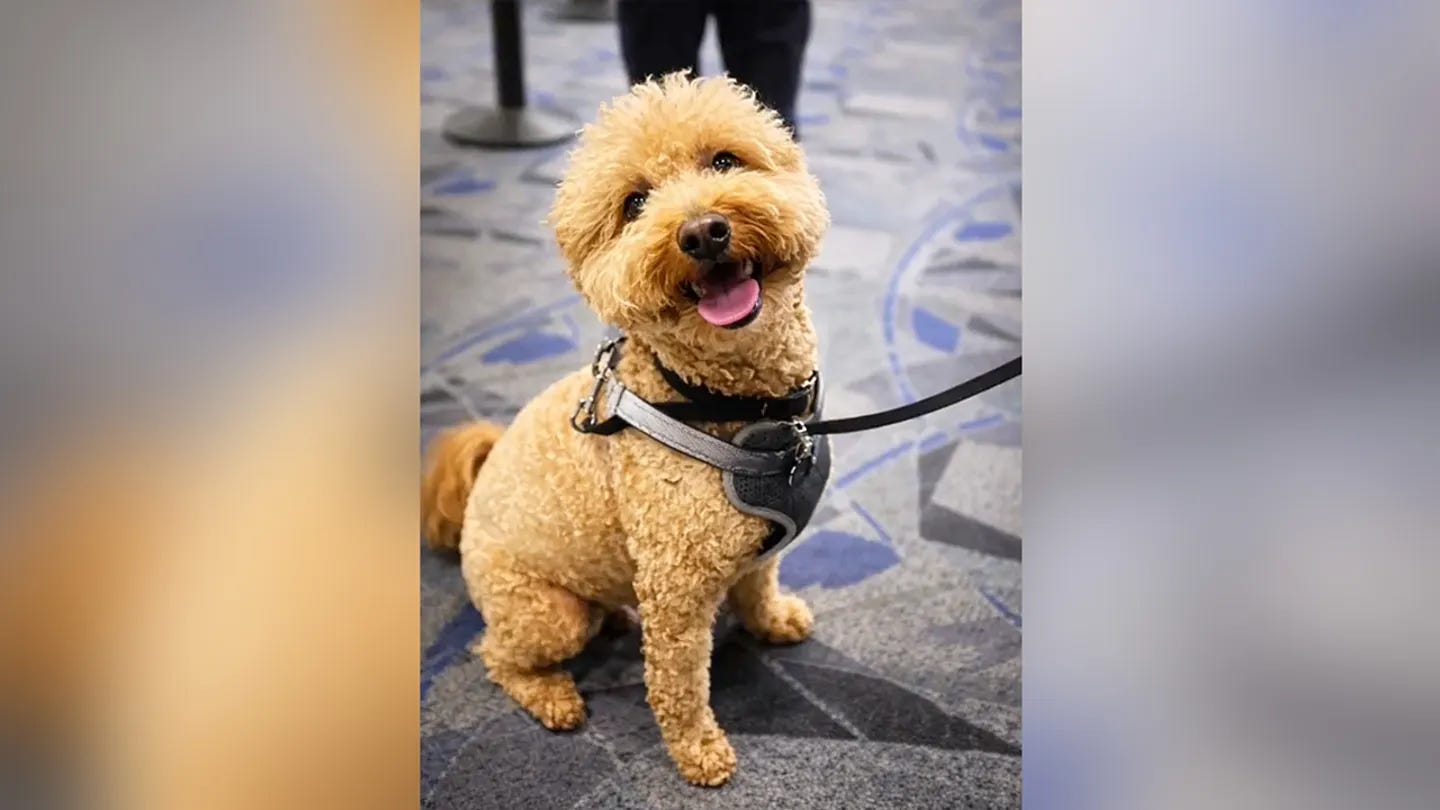
A woman arrived at an airport with her dog, intending to fly.
She did not have the correct paperwork.
So she tied the dog to a counter and walked toward the gate alone.
Security stopped her before departure. The dog remained behind.
The story travelled across the world because it feels shocking. But what actually matters is not the outrage it is what the incident reveals about how society understands responsibility.
Not a Crisis - A Decision
There was no fire. No sudden medical emergency. No unavoidable catastrophe.
There was a rule: animals require documentation to travel.
And then there was a choice: leave the animal anyway.
Many cruelty cases involve anger or violence. This one did not.
That is precisely why it is important.
Abandonment is often not an emotional explosion.
It is administrative failure combined with convenience.
Where The Law Is Clear - Ownership Is Continuous
Animal welfare law in most jurisdictions follows a simple principle:
Duty of care does not pause when circumstances become inconvenient.
An animal is legally dependent.
You cannot temporarily stop being responsible for a dependent life because a journey must continue.
Leaving a dog tied to an airport desk is not treated as a misunderstanding.
It meets the definition of abandonment, placing an animal in a situation where its welfare cannot be guaranteed by the owner who accepted responsibility.
And importantly, the location does not matter.
A roadside
A shelter gate
A forest path
An airport terminal
Legally and ethically, they are the same act.
The Paperwork Was Not the Barrier
It is easy to blame bureaucracy. Forms, vaccination records, airline requirements, they can feel excessive. But those systems exist because transport is stressful and risky for animals. They are safeguards, not obstacles.
The real issue was expectation.
The assumption was:
the trip must continue, therefore the dog must adapt.
But responsibility works the opposite way:
if the dog cannot safely continue, the journey stops.
Why These Cases Matter
People often imagine cruelty as deliberate harm.
Yet welfare organisations repeatedly see a different pattern, abandonment at transition points:
moving house
holidays
new relationships
financial strain
travel
Moments where a human life changes direction, and the animal cannot be neatly carried into the next chapter.
The airport simply made visible something that usually happens quietly elsewhere.

The Dog’s Perspective
The dog did not understand paperwork, airline policy, or boarding times.
It understood:
arriving with its person
waiting beside them
watching them walk away
For animals, security is location-independent but relationship-dependent.
When the person disappears, the environment becomes unsafe, even in the safest building in the world.
What Responsibility Actually Means
Owning an animal is not possession.
It is guardianship.
Guardianship requires planning for:
emergencies
travel restrictions
housing barriers
life disruptions
Because the animal has no alternative plan.
It cannot call a friend, change a booking, or explain itself to staff.
Every contingency must be human-made in advance.
The Outcome
Authorities intervened.
The dog was protected and transferred to rescue care.
The owner now faces legal consequences.
From a legal standpoint, the system worked.
From a societal standpoint, it raises a harder question:
Why do we still see animals treated as attachments to plans rather than lives requiring plans?
The Quiet Lesson
The disturbing part of this story is not anger or violence.
It is normality.
Nothing looked extreme.
Just a person late for a flight, and a problem removed.
Animal welfare does not fail only in dramatic cruelty.
It fails when responsibility becomes conditional.
And responsibility cannot depend on whether the boarding call has already started.