


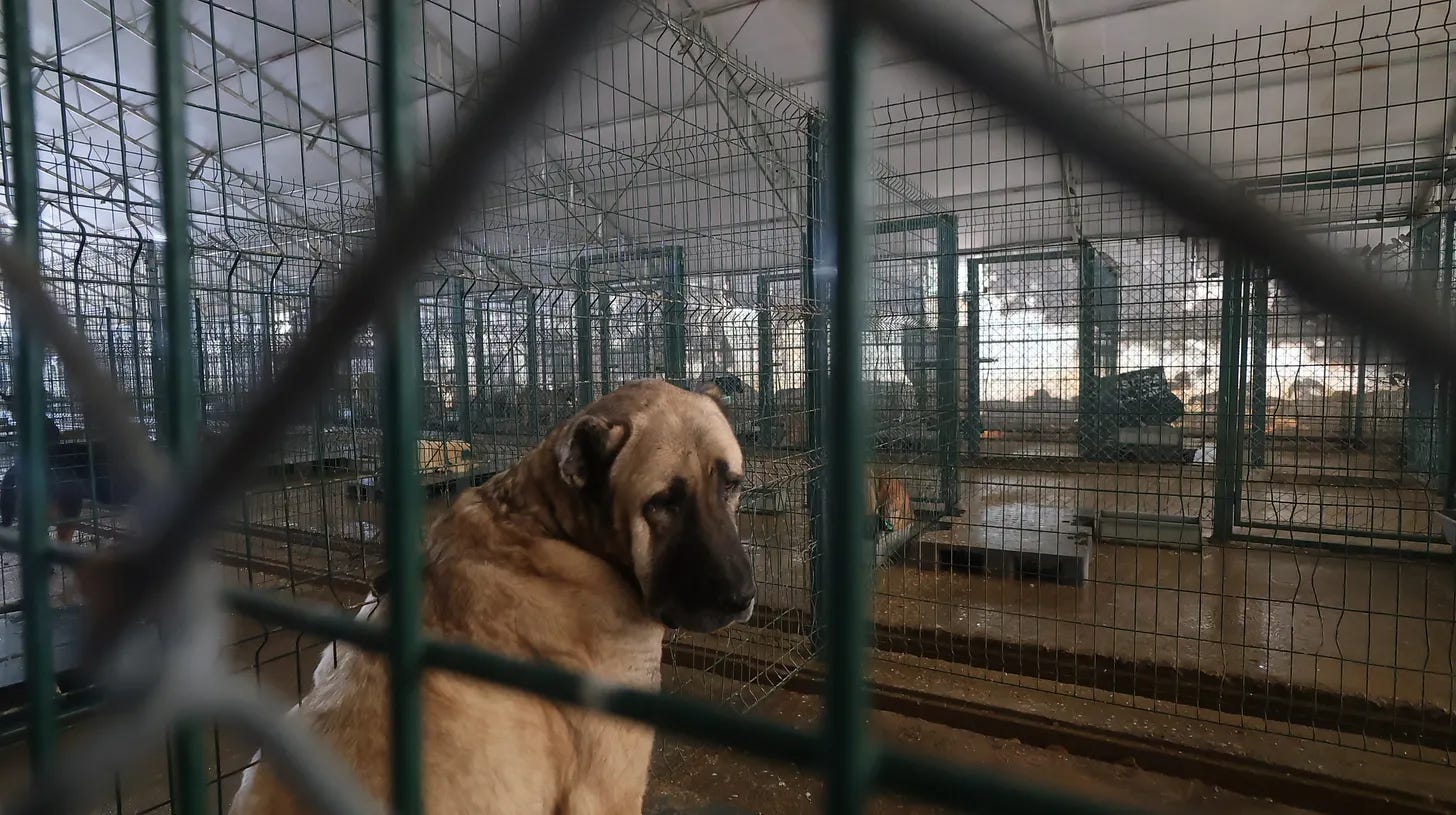
The Governor of Ankara has announced that all 52,000 identified free roaming dogs recorded during the province’s 2024 survey have now been collected, adding that search and collection operations will continue to identify any remaining animals that were not included in the original census. It is a noteworthy figure, not simply because of its scale, but because every one of those 52,000 represents an individual dog that was once living on the streets of Ankara and has since entered a municipal system about which relatively little is publicly known.
For many people, the announcement will naturally focus attention on the size of the collection programme. Our attention, however, is drawn to a different question. Once those dogs were collected, what happened to them?
Collection statistics tell us how many animals entered municipal care, but they tell us very little about what happened afterwards. They do not explain how many dogs remain alive, how many were reunited with owners, how many were adopted, how many were transferred between facilities or how many died while in municipal care. Without that information, it is impossible to properly understand the welfare outcomes of a programme operating on this scale.
As we began examining that question, we found that it had already been raised months before the Governor’s latest announcement. During a meeting of the Turkish Grand National Assembly’s Agriculture, Forestry and Rural Affairs Commission, a member referred to Ankara Municipality figures reporting approximately 41,000 collected animals and around 17,900 recorded as natural deaths, using those figures to question what had happened to dogs following collection. The discussion then widened to the national implementation of Türkiye’s amended Animal Protection Law, during which members sought information about deaths recorded after the legislation came into force. In response, Ministry of Interior adviser Ahmet Yavuz Karaca explained that he did not have the death totals with him, stating that they held mortality rates rather than the figures being requested.
Those exchanges are significant because they demonstrate that questions about outcomes were already being raised at parliamentary level while the collection programme was still expanding. Since then, Dog Desk Animal Action has continued examining publicly available material relating to Ankara’s programme and has identified repeated references by Turkish animal welfare organisations to a Provincial Monitoring and Inspection Report dated 1 May 2026, which they say was presented to the Ankara Provincial Animal Protection Board. Those organisations have consistently attributed further outcome figures to that report, including updated collection and mortality statistics. Despite extensive research, however, we have not yet been able to obtain the report itself or independently examine the underlying records from which those figures were reportedly drawn.
That distinction is important because our aim is not to speculate or to repeat claims that cannot be verified. The Governor’s announcement that 52,000 identified dogs have now been collected is an official statement. The parliamentary commission transcript is an official public record. References to the Provincial Monitoring and Inspection Report have now appeared consistently across multiple Turkish organisations, but until that document becomes publicly available there remain limits to what can be independently confirmed.
None of that changes the central question. If 52,000 dogs have now entered Ankara’s municipal system, then understanding what happened after collection is just as important as knowing how many were collected in the first place. Every one of those dogs had an outcome. Some may still be in municipal care, some may have been reunited with owners, some may have been adopted or transferred, and others may have died. A programme involving tens of thousands of animals cannot be meaningfully assessed through collection figures alone because collection is only the beginning of each dog’s journey through the system.
Requesting that information should not be regarded as political or controversial. Public confidence in any large scale animal management programme depends upon transparency, and transparency requires more than headline collection figures. It requires clear, accessible reporting that allows the public to understand what happened to the animals after they entered municipal care, how outcomes were recorded and whether the welfare objectives of the programme were achieved.
The Governor’s announcement has answered one important question by confirming the scale of Ankara’s collection programme. The next question is every bit as important, because behind every one of those 52,000 figures was an individual dog, and every one of those dogs deserves to be accounted for. Until those outcomes are understood, the story of Ankara’s collection programme remains incomplete.