
For years, Ankara University’s Faculty of Veterinary Medicine was associated with research, education and the advancement of veterinary science. Students learned how to diagnose disease, improve animal welfare and understand the complex relationship between animals and the communities around them. The faculty also contributed to scientific efforts to better understand Ankara’s free-roaming dog population, recognising that effective policy requires evidence rather than assumption.
Today, however, the faculty finds itself at the centre of a very different conversation.
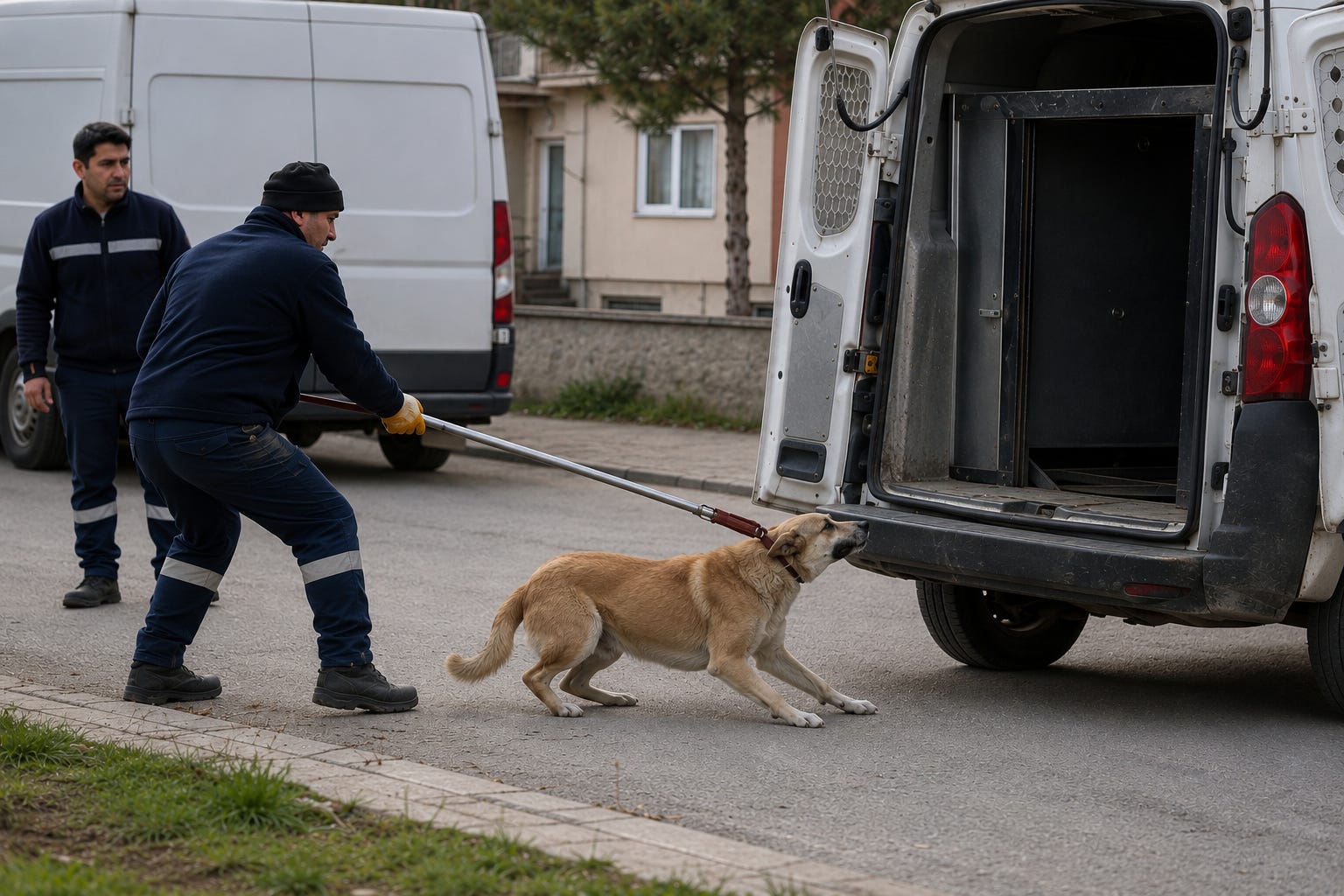
According to students, graduates and animal advocates, ten sterilised and microchipped dogs who had lived on the Faculty of Veterinary Medicine campus for around a decade were recently removed from the campus where they had spent much of their lives. The dogs were reportedly familiar to generations of students and had become a recognised part of the faculty environment. Their removal prompted criticism, protest and a series of uncomfortable questions about what place community dogs now have in modern Turkey.
The story has attracted attention not because these dogs were involved in an incident, nor because they were alleged to be dangerous. Instead, attention has focused on the fact that they were reportedly long-term residents of a veterinary faculty campus.
In 2016, researchers from Ankara University’s Faculty of Veterinary Medicine published work examining the population of free-roaming dogs and cats in Ankara. The study sought to provide reliable population estimates and highlighted the importance of evidence-based approaches to animal management. Rather than relying on anecdote or public perception, the researchers argued that understanding dog populations required observation, data collection and scientific analysis.
The principle behind that work was straightforward. Before societies can decide how to manage free-roaming animals, they must first understand them.
For many observers, the campus dogs appeared to represent a practical example of coexistence. They were reportedly sterilised, identified and known to the people around them. They lived within a community populated by veterinary professionals and students who understood animal behaviour, health and welfare. They were not invisible animals surviving on the margins of society. They were part of a campus community.
The debate surrounding Turkey’s dog population has increasingly become dominated by questions of collection, shelter capacity and implementation of the amended Animal Protection Law. Discussions often focus on numbers rather than individual animals. Yet stories such as this one remind us that behind every statistic are dogs with histories, relationships and places they know as home.
Supporters of the current approach may point out that municipalities are operating within a legal framework that now requires the collection of free-roaming dogs. Critics argue that the removal of stable, sterilised and long-established community dogs undermines years of work promoting sterilisation and coexistence as a humane approach to population management.
Regardless of where one stands in that debate, the circumstances surrounding the Ankara University dogs raise legitimate questions.
If dogs that had reportedly lived peacefully on a veterinary faculty campus for years were no longer considered able to remain there, what had changed? Was there a specific welfare concern? Had complaints been made? Were the dogs assessed as presenting a risk? Or were they simply swept into a broader policy shift affecting community dogs across the country?
At the time of writing, many of those questions remain unanswered.
Equally unclear is the future of the dogs themselves. Students and advocates have sought information about where the animals were taken and what will happen to them next. For those who knew the dogs, the issue is not an abstract policy debate but a concern for individuals they encountered every day during their studies.
For decades, veterinary science has sought to improve humanity’s understanding of animals and strengthen the relationship between people and the species that live alongside them. Universities play a central role in that mission. They are places where evidence is gathered, assumptions are challenged and future professionals are taught to think critically about animal welfare.
For years, Ankara University’s Faculty of Veterinary Medicine represented a place where future veterinarians learned about animal health, welfare and humanity’s relationship with the animals that live alongside us. Its researchers contributed to the scientific understanding of free-roaming dog populations. Its campus was reportedly home to a stable population of sterilised and identified community dogs.
The removal of those dogs therefore feels symbolic of a much larger shift. The debate is no longer simply about managing dog populations. It is increasingly about whether community dogs have a place in society at all.
If long-established, monitored and sterilised dogs can no longer remain at a veterinary faculty, many will inevitably wonder where they are expected to belong.


