

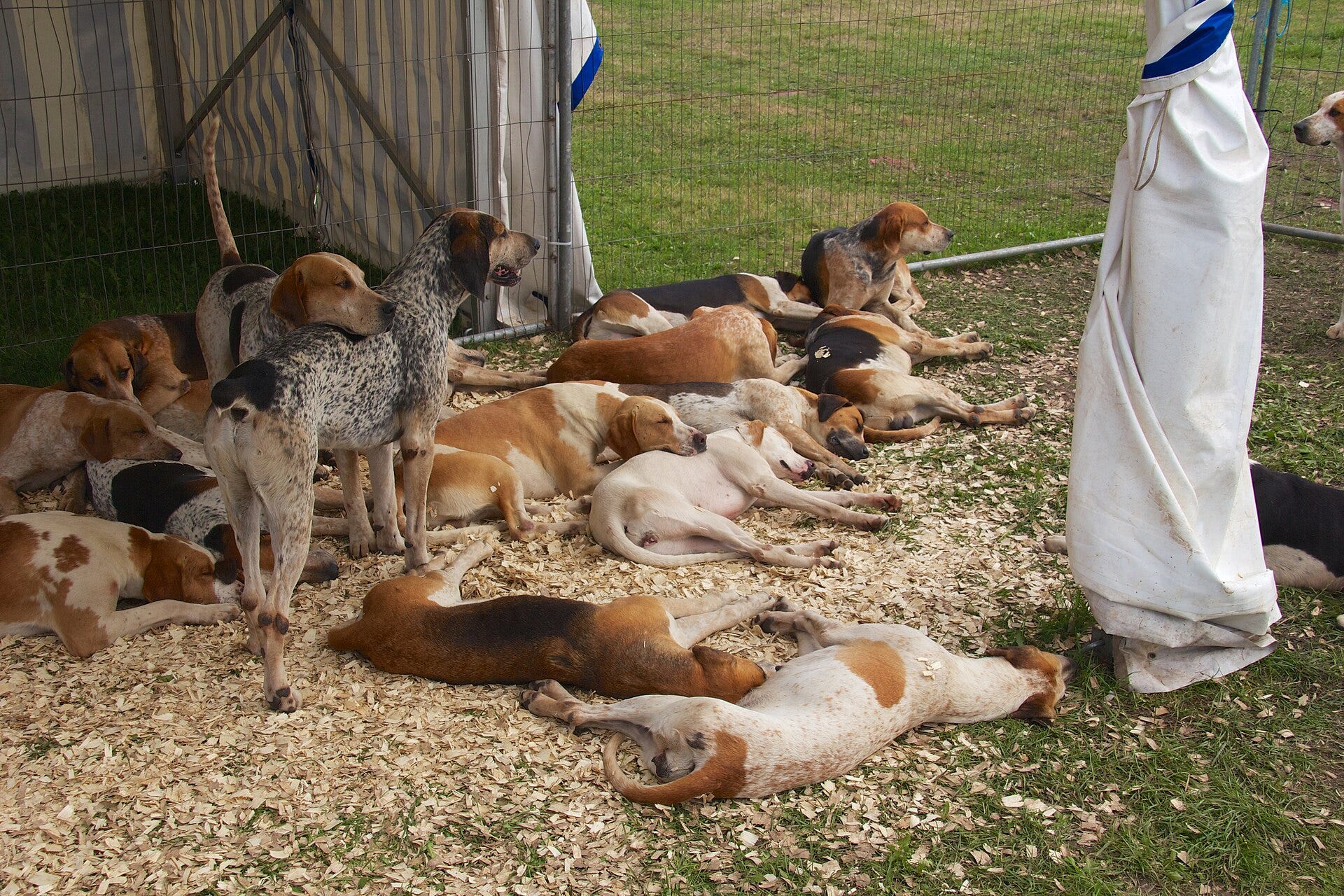
As the Government consults on plans to ban trail hunting in England and Wales, attention is increasingly turning to a question that has often been overlooked, what happens to the hounds?
Much of the public debate around hunting focuses on wildlife, rural traditions, politics, or law. Yet thousands of dogs sit at the centre of the discussion. If trail hunting is prohibited, their future will become one of the most significant animal welfare challenges arising from the transition.
Importantly, the issue is no longer hypothetical. The Government’s consultation on a proposed ban specifically considers the impact on dogs currently used by hunts, recognising that their welfare must form part of the conversation.
The Dogs Behind the Debate
Hunting hounds are not typical pet dogs.
Foxhounds, beagles, harriers and other scent hounds have been bred and managed for generations to live and work in large packs. Their lives are structured around collective activity, kennel environments and established routines that differ significantly from those experienced by most family dogs.
Many may have had limited experience of living inside a home, walking individually on a lead, urban environments, being left alone, household routines and expectations
That does not mean they cannot adapt. Many working dogs successfully make the transition into family life. But it does mean that rehoming requires planning, support and realistic expectations.
Why Rehoming Has Moved Into the Spotlight
For years, discussion about the future of hunting hounds remained largely theoretical. Today, that is changing.
The Government has committed to banning trail hunting in England and Wales and is currently consulting on how the ban should be implemented. While legislation has not yet been passed, the direction of travel has brought renewed attention to what would happen to the dogs currently housed within hunt kennels. Regardless of where individuals stand on hunting itself, the welfare of the hounds deserves serious consideration.
Dogs should not become casualties of a political dispute.
Rehoming Is Possible But It Requires Planning
One of the most common assumptions is that hounds can simply be adopted in the same way as any other rescue dog. The reality is more complex.
A dog that has spent years living within a large kennel environment may need time to adjust to entirely unfamiliar surroundings. Visitors, household noises, domestic routines and individual attention can all represent significant changes.
Successful rehoming often depends on careful matching of dogs and adopters, behavioural support, veterinary assessment, transition plans & ongoing guidance for new owners
These challenges are not insurmountable, but they do require resources.
The Scale of the Challenge
The greatest issue may not be whether hounds can be rehomed. It may be whether enough homes and support systems exist if significant numbers require placement over a relatively short period.
Animal welfare organisations across the UK already face pressures relating to capacity, rising costs and increasing demand for rescue spaces. Finding homes for a handful of dogs is one thing. Finding homes for hundreds or potentially thousands is another.
That is why discussions about the future of hunting hounds need to happen before legislative changes take effect, not afterwards.
Lessons From Other Working Dogs
There is good reason to believe many hounds could thrive in homes. The UK has seen successful rehoming programmes for retired racing greyhounds, former police dogs, military dogs and other working animals. With appropriate support, dogs bred for specific roles can adapt remarkably well to new lives.
Many hounds possess qualities that adopters value, strong social skills with other dogs, confidence, stable temperaments & affectionate natures
The challenge lies not in whether they are capable of becoming companions, but in ensuring they are given the opportunity.
Beyond Politics
People will continue to disagree about hunting. They will continue to disagree about legislation, tradition and rural policy. But the welfare of the dogs should stand apart from those disagreements.
As England and Wales consider a future without trail hunting, there is an opportunity to ensure that the animals at the centre of the debate are not forgotten,
The Real Measure of Success
The success of any future legislation will not be measured solely in parliamentary votes or consultation responses. It will be measured in the lives of the hounds themselves. Did they find safe homes, Did they receive the support they needed, Were they given the opportunity to transition successfully into a different kind of life?
Those are the questions that will matter long after the political arguments have faded. Because whatever view people hold on hunting, few would disagree on one point every hound deserves a future worth living.