



Mademoiselle was old.
She was gentle.
And she was loved.
For years, this geriatric stray dog lived peacefully in Demetevler Metro Station, where commuters, shop workers, and residents knew her as part of the place itself. She asked for nothing more than warmth, safety, and the quiet companionship of people who cared enough to notice her. She never harmed anyone. She never caused trouble. She simply existed, calmly, gratefully on the margins of a city that had already failed her once by leaving her homeless.
Today, Mademoiselle is dead.
According to allegations that must be urgently and independently investigated, she was beaten so severely by metro workers that she was barely alive when help reached her. In her panic, she became trapped in an escalator. Her injuries, and the fear she endured in her final moments, cost her life.
This was not an accident.
This was not animal control.
This was violence.
Hatred Has Consequences
Mademoiselle’s death did not occur in a vacuum. It comes amid a growing and deeply disturbing wave of hostility toward stray dogs in Turkey one that is increasingly normalised, amplified, and legitimised by reckless rhetoric.
Just weeks ago, a press article complained about the number of stray dogs seeking shelter in Demetevler, explicitly calling on Ankara Metropolitan Municipality and Yenimahalle Municipality to take what it described as “necessary precautions.”
In the language of such articles, dogs are reduced to a problem.
In practice, “precautions” too often translate into brutality when people decide to take matters in to their own hands.
Sub-Zero Temperatures, Nowhere Else to Go
Ankara is currently facing sub-zero temperatures. These dogs are not in metro stations by choice. They are there because concrete, escalators, and underground warmth are the only protection they have against freezing to death.
They would rather be in homes.
They would rather be safe.
They would rather belong.
It is human policy failures decades of inadequate sterilisation, abandonment, and lack of sustainable sheltering that have forced them into these spaces. To punish them for surviving is not only morally repugnant; it is indefensible.

Cruel, Illegal, and Stomach-Churning
Beating a dog to death is not only cruel it is illegal. It violates animal protection laws and fundamental principles of humanity. The image of a senior dog, already frail, already vulnerable, being attacked while seeking shelter should horrify anyone with a conscience.
If a society can tolerate mobs beating an elderly dog to death, we must ask a far more frightening question:
What else are they capable of?
Violence does not stop where it begins. It spreads. It escalates. It desensitises.
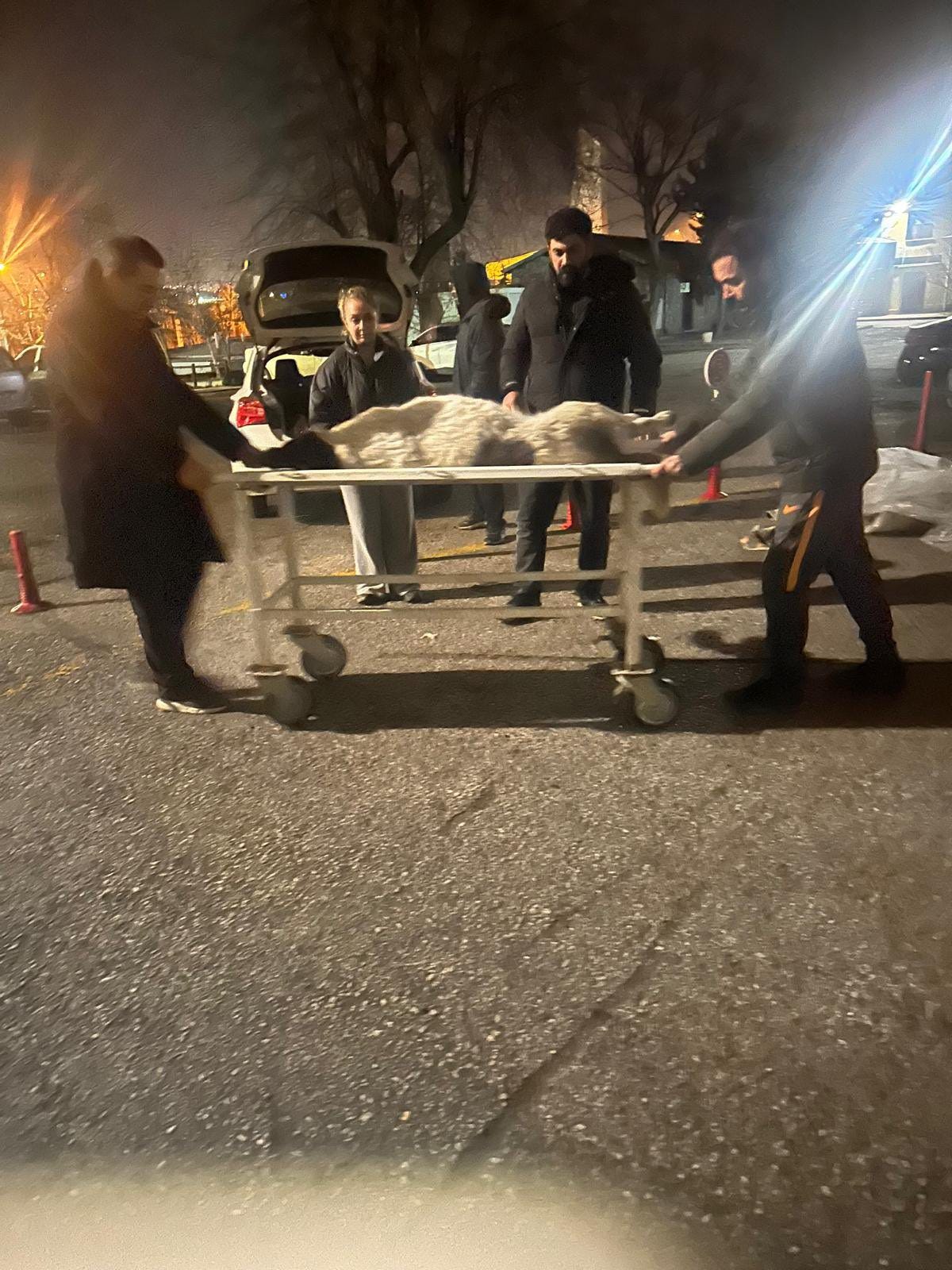
Mademoiselle Deserved Better
Mademoiselle deserved to live out her remaining days in peace. She deserved protection, not persecution. She deserved the kindness she had quietly returned to the people who shared her space for years.
Her death must not be dismissed, buried, or excused.
It demands:
Accountability for those responsible
Transparent investigation of the allegations
Immediate safeguards for other dogs sheltering in public spaces
A decisive rejection of hate-driven narratives about stray animals
Above all, it demands that we remember who failed whom.
Mademoiselle did not fail society.
Society failed Mademoiselle.
May her life and her death force us to confront the consequences of cruelty, and may her name not be forgotten #matmazelicinadalet
Horrific, the poor poor soul. I saw some really sorry sights working with dogs in Asia. All sorts of outrageous torture, just obscene…