
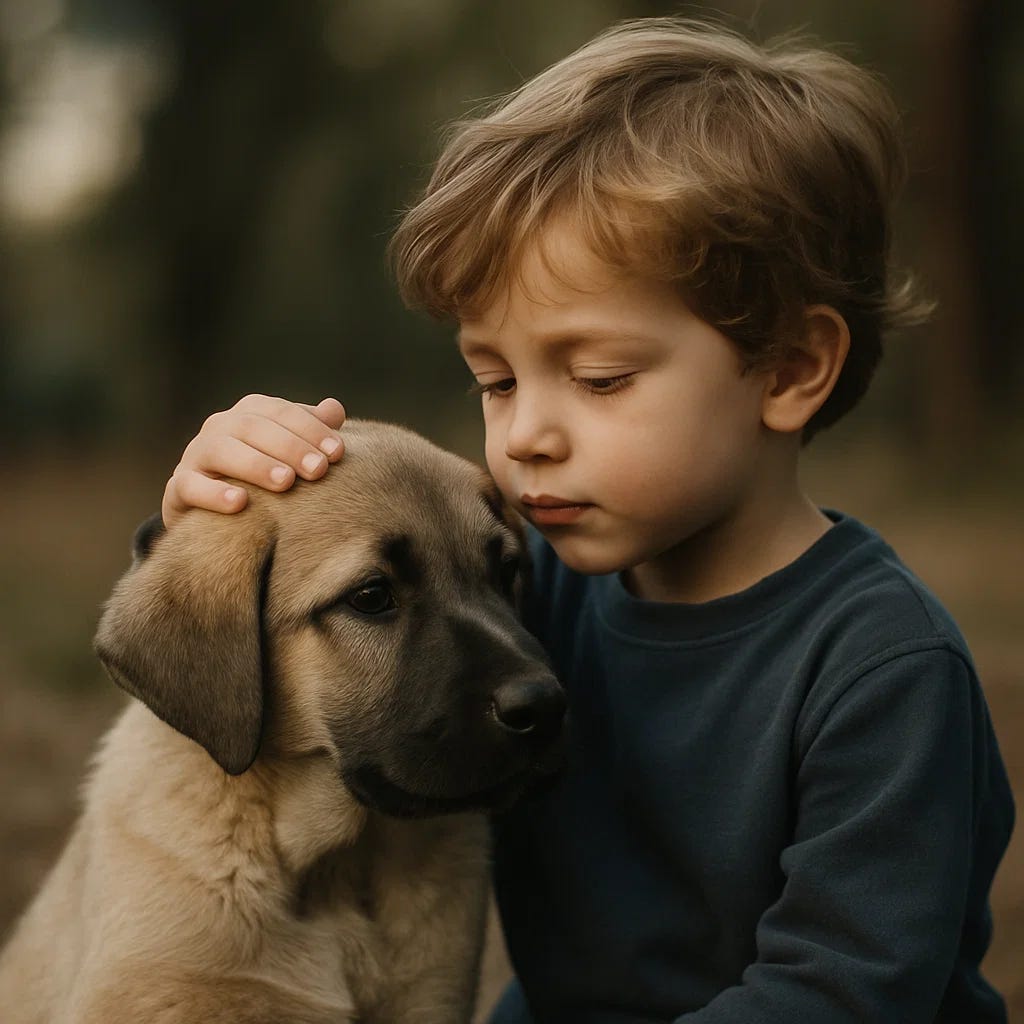
Children and Stray Dogs: Building Empathy from a Young Age
On the streets of Turkey and in countless countries around the world, children grow up surrounded by stray dogs. Some see them as playmates, others as threats, and still others simply as part of the landscape. But these encounters are not small or insignificant. For a child, the way they are taught to see and treat stray dogs shapes not only the lives of the animals but also the character of the child themselves.
Empathy, the ability to understand and share the feelings of another is one of the most valuable qualities we can nurture in young people. And stray dogs, with their visible vulnerability and resilience, offer a unique opportunity for children to learn what empathy really means.
The Power of First Encounters
For many children, their first close encounter with suffering or need comes not from another human, but from an animal:
A hungry puppy pawing through a rubbish bin.
A thin mother dog trying to nurse her litter on a cold pavement.
A limping stray crossing the road, searching for shelter.
When children see these scenes, their instinct is often to ask: Why is this dog hungry? Why is no one helping? These questions are the seeds of empathy. The answers we give whether dismissive or compassionate shape how children will respond to need in others, both human and animal, for the rest of their lives.
Lessons Stray Dogs Teach Children
Compassion for the Vulnerable
Stray dogs rely on kindness. When a child offers food or water, they learn that their actions can directly ease suffering.Responsibility and Care
Feeding or helping a dog requires commitment. This teaches children that compassion is not a one-time act but an ongoing responsibility.Respect for Life
Every wagging tail or grateful lick reminds children that animals are sentient beings with feelings, not objects to be ignored or mistreated.Boundaries and Safety
With guidance, children learn to read dog body language, understanding when a dog is fearful, when to approach, and when to give space. This builds respect and awareness.Community Values
Helping street dogs is not just personal; it is communal. Children who see adults caring for strays learn that kindness is a shared responsibility, not an exception.
Why It Matters for Society
Raising children to empathise with animals is about more than animal welfare it’s about the kind of society we want to create. Studies consistently show that children who grow up respecting animals are more likely to respect people, too. Empathy, once nurtured, expands outward.
By contrast, teaching children to fear, ignore, or mistreat stray dogs fosters apathy or even cruelty. A child who learns to walk past suffering without a second thought may one day walk past a vulnerable person in need.
How to Foster Empathy in Children
Lead by Example: Children copy what they see. If adults show kindness to strays, children will too.
Involve Them in Care: Let children help place food and water, build simple shelters, or accompany you on vet visits.
Teach Safe Interaction: Explain how to greet dogs calmly, read their signals, and respect their space.
Tell Their Stories: Share the journeys of rescued dogs so children see the transformation that compassion creates.
Connect Kindness to Action: Encourage children to see that small acts like leaving water on a hot day can have big impacts.
A Future Shaped by Empathy
Every child who learns to care for a stray dog learns a lesson in humanity. They learn that kindness matters, that responsibility matters, and that all living beings deserve dignity. These children will grow into adults who extend that compassion beyond animals, to neighbours, communities, and strangers in need.
Stray dogs do not only need us; we need them. They are teachers in fur, showing the youngest among us how to care, how to connect, and how to be human in the truest sense.


