


When Chip arrived with us he was unable to walk normally.
Instead of standing upright, he moved in a permanent crouched position, almost as though his body had adapted to carrying itself in a way it was never meant to. It was clear that something had happened to him long before he reached safety.
Further veterinary investigations revealed the reason.
At some point in his life, almost certainly after a significant trauma such as being struck by a vehicle, Chip had suffered a fracture to one side of his pelvis and hip. The injury had never been treated. Instead, the broken bones healed by themselves in the wrong position, leaving the joint permanently altered.
By the time Chip reached us, the fracture had already fully fused. Although surgery is sometimes possible immediately after these injuries occur, that opportunity had passed many months, and perhaps years, earlier. To attempt to break apart a healed joint and reconstruct it now would involve major, highly invasive surgery with significant risks and no guarantee of improving his mobility. Our veterinary team believes that the potential harm outweighs any likely benefit.
Living with that injury for so long created another problem.
Muscles are designed to stretch and contract through a normal range of movement. When a limb is held in an abnormal position for months or years, those muscles, tendons and surrounding soft tissues gradually adapt to that shortened position. They become tight and lose much of their ability to lengthen again. Even if the original bone injury could somehow be corrected, the surrounding muscles would no longer allow the limb to move normally without careful rehabilitation.
As if that were not enough, Chip is also living with reduced nerve conduction affecting the injured limb. The nerves are not transmitting signals as effectively as they should, making it even harder for the muscles to function properly. It means his recovery is not simply about healing a fracture. It is a combination of long standing bone changes, shortened muscles and impaired nerve function, each affecting the others.
It would be easy to look at those challenges and feel discouraged. Chip doesn’t.
He has adapted so completely to his disability that this is simply how he moves through the world. He doesn’t dwell on what he has lost. He gets up, walks in his own way, enjoys his food, seeks affection and carries on with his day. Most importantly of all, he is not in pain.
That gives us something incredibly valuable to build upon.
Chip has now started medication aimed at improving nerve conduction. We do not yet know how much function may return, but if we can achieve even a modest improvement, our next step will be carefully managed physiotherapy to help strengthen the weakened muscles and encourage the greatest mobility possible. Progress, if it comes, is likely to be slow, but Chip has already shown us that he has remarkable determination.
The truth is that we cannot predict where this journey will end.
Perhaps the medication and physiotherapy will improve his mobility. Perhaps his progress will be limited. Perhaps one day mobility aids will become part of his future. Right now, nobody can answer those questions.
What we can promise is much simpler. Chip will never have to face those challenges alone again.
Whether he eventually walks more comfortably, needs lifelong physiotherapy, or relies on mobility equipment to enjoy life, we will be there beside him. We will continue searching for every opportunity to improve his quality of life, while accepting him exactly as he is today.
Because that is what we do, we never give up on a dog.
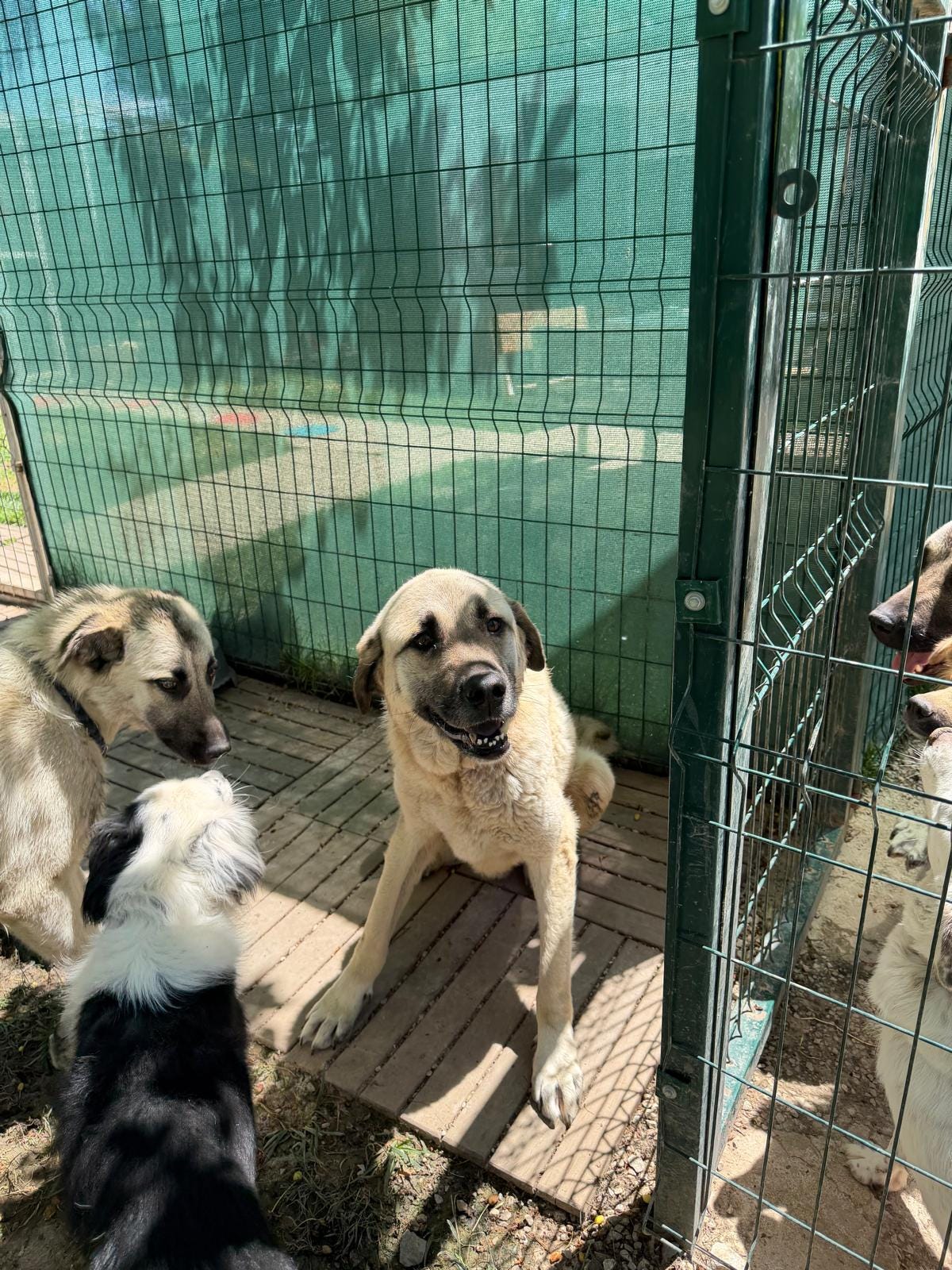
If you would like to support Chip’s recovery & care with a donation you can do so here