


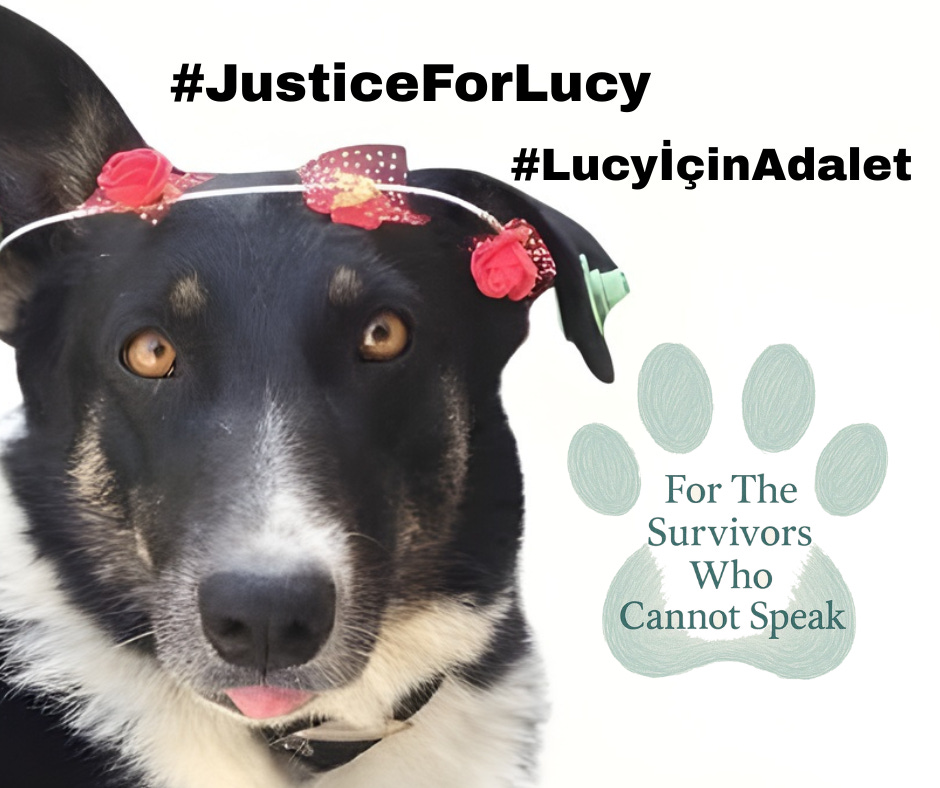
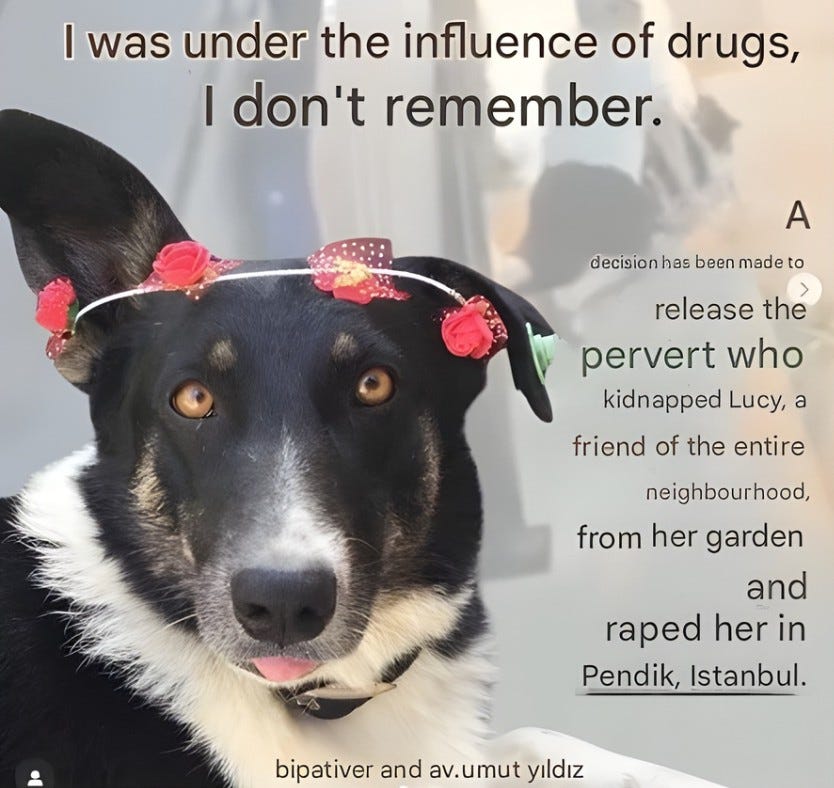
Lucy was a gentle, elderly neighbourhood dog who spent her entire life in the Pendik district of Istanbul. She knew her community, and her community knew her. For twelve years she moved quietly among them, relying on their kindness and offering her trust in return. What happened to her on 21 June 2025 shattered not only her world, but the sense of safety her neighbours believed she had.
That day, devastating footage emerged online showing a man attempting to sexually assault her. The neighbourhood immediately recognised the perpetrator, identified as C.K., and demanded action. Authorities responded, taking him into custody, and for a moment it seemed that justice might be possible.
But that hope was short-lived.
A Case That Reveals the System’s Cracks
In the weeks that followed, Lucy’s story spread rapidly across social media. Activists, legal advocates, rescuers, and everyday citizens expressed their outrage, sharing the video and calling for accountability. It became painfully clear that the law, as it stands, provides animals with far too little protection.
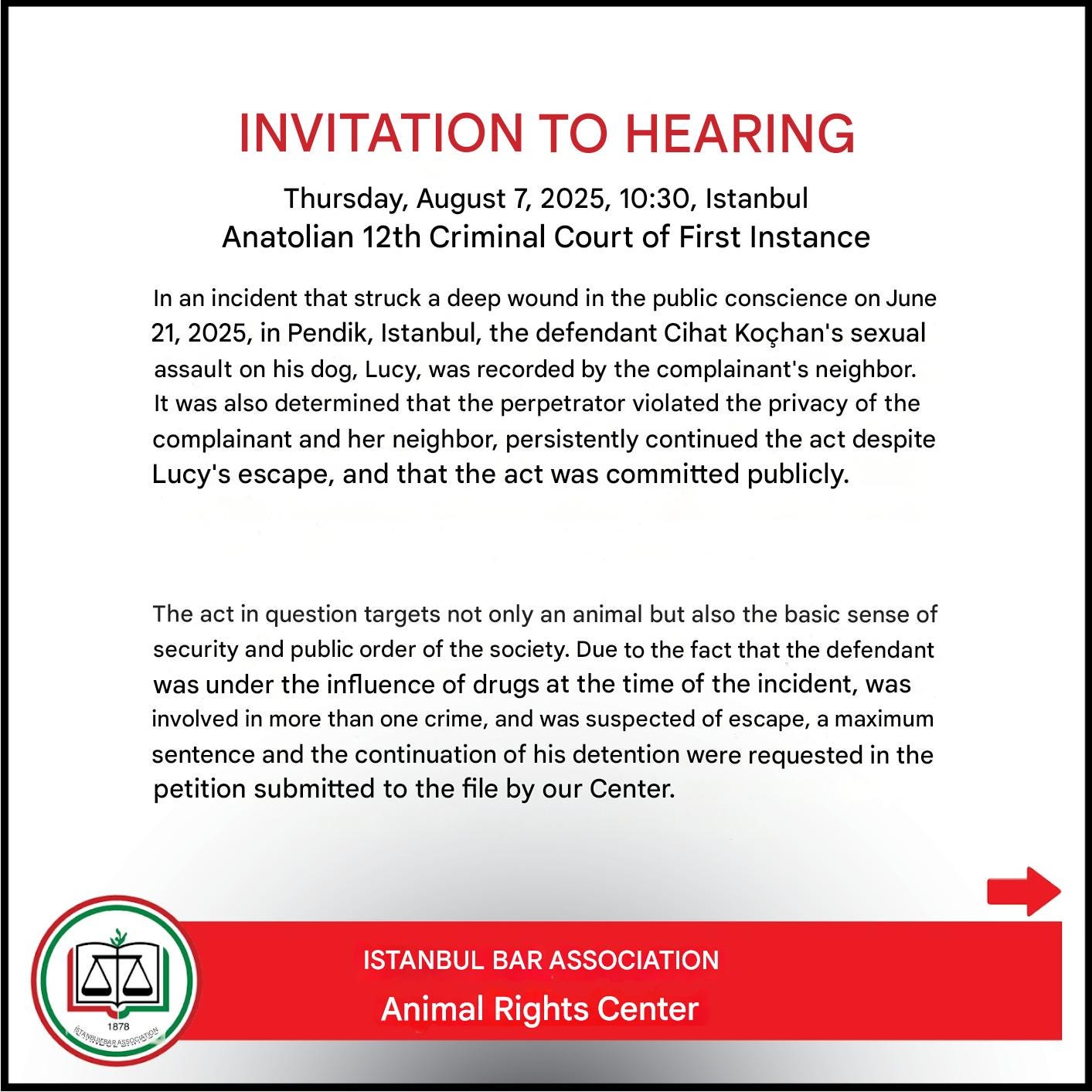
Those concerns proved justified. At the first hearing on 7 August 2025, despite the video evidence and the national outcry, the court released the suspect on bail. The decision intensified public anger and exposed the fragility of the legal mechanisms that supposedly exist to safeguard animals from cruelty.
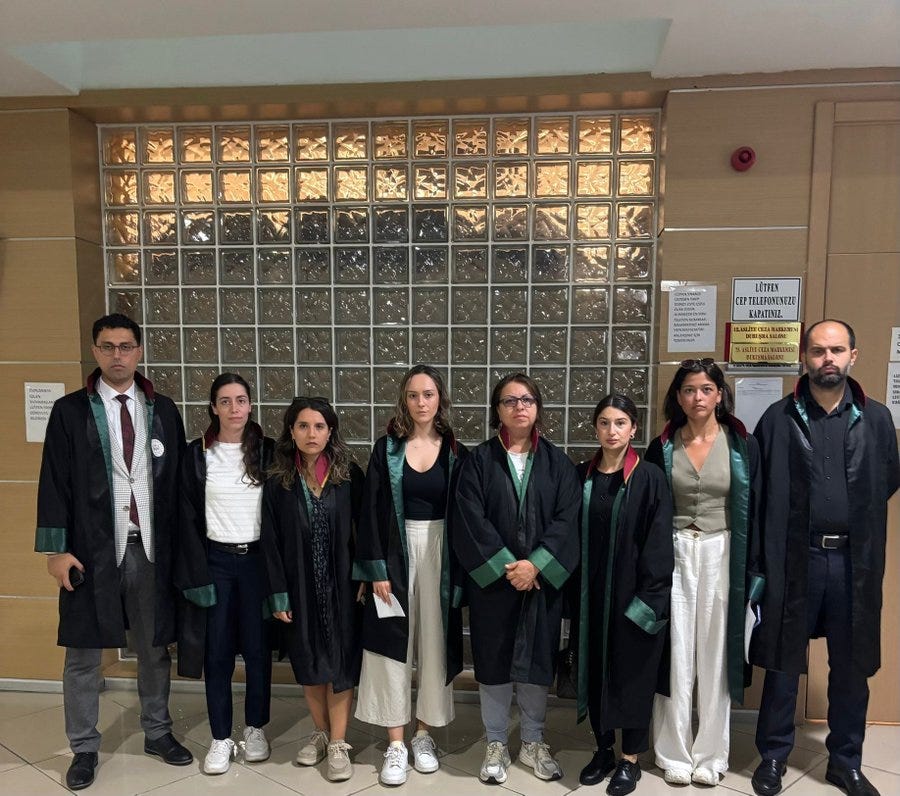
Members of the Istanbul Bar Association’s Animal Rights Centre publicly condemned the ruling, stating outright that the law was not equipped to deliver justice for Lucy or for animals like her. Their repeated statements signalled that even those within the legal profession recognised the severity of the failure.
A Disturbing Turn in Court
The most recent hearing brought forward something even more shocking than the crime itself.
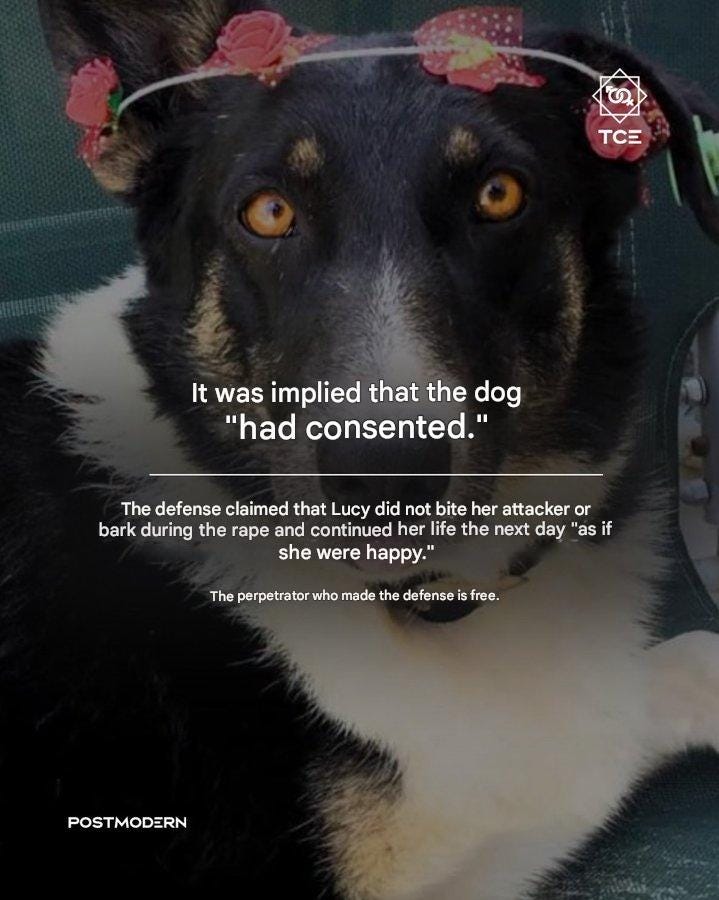
The perpetrator’s lawyer presented a defence claiming that Lucy had not resisted. According to this argument, she did not bite, did not bark, and appeared happy the next day an attempt to imply that she had somehow consented to her own assault.
Such reasoning is grotesque.
Animals cannot give consent. They cannot understand violation in human terms. And they often freeze during trauma immobilised not by acceptance, but by terror. To interpret this as compliance is to deliberately distort reality.
Meanwhile, those who care for Lucy say she is now frightened in her own garden, hesitant even to approach familiar people. The contrast between her suffering and the defence’s claims could not be more stark. Her behaviour tells the truth: she is traumatised.
The legal system’s ability to entertain such an argument reflects a deeper structural issue. Under Turkish law, animals are still regarded as property, objects rather than beings capable of suffering. This outdated classification enables dismissive attitudes toward violence, and in Lucy’s case, it created space for an abhorrent attempt to normalise sexual abuse.
The Road to Justice Continues
Lucy’s case has now been postponed, with the next hearing scheduled for 12 May 2026 at the Anadolu Courthouse, 12th Basic Criminal Court. Activists, lawyers, and animal-welfare organisations have committed to being present, ensuring that the proceedings take place under public scrutiny. The exact hearing time will be announced closer to the date.
This new date marks an important moment not just for Lucy, but for the broader fight for animal protection in Turkey. What happens in that courtroom will signal whether the justice system is willing to evolve or whether it remains content to treat animals as voiceless objects whose suffering carries little weight.
The Role of Public Outrage
Social media has played a decisive role in keeping Lucy’s case alive. Within hours of the footage appearing, thousands of people had seen it. The rapid spread of information forced institutions to respond and prevented the case from slipping quietly out of view.
Public pressure has become one of the few reliable tools available to animal advocates. It connects communities, mobilises volunteers, draws legal observers to hearings, and ensures that prosecutors and courts know they are being watched. Without this collective effort, many cases including Lucy’s would never see a courtroom at all.
Lucy Deserved Protection. Instead, She Was Failed.
Lucy’s story exposes far more than one act of cruelty. It reveals a legal structure unable to recognise the full reality of animal suffering, a courtroom willing to entertain the impossible notion of animal consent, and a society forced to rely on outrage rather than institutional protection.
But it also reveals something else: the strength of collective compassion. Thousands of people refused to remain silent. Legal professionals stepped forward to criticise their own system. Activists pledged to attend hearings, report updates, and demand reform.
Lucy’s case is not over, and it must not fade. What happens on 12 May 2026 matters. It matters for her, for the animals who share her vulnerability, and for the people fighting to ensure that cruelty is not met with indifference.
At Dog Desk Animal Action, we will continue to monitor this case closely, share developments, advocate for legislative change, and stand alongside everyone dedicating their time and hearts to justice. Lucy deserved better. Every animal does. And together, we will continue the work until the law finally reflects what society already knows: animals are not property. They are living beings, and they deserve protection
Update
13/05/2026 the court found Cihat Koçhan guilty & sentenced him to 1 year 3 months in prison with a fine of 60,000 TL