


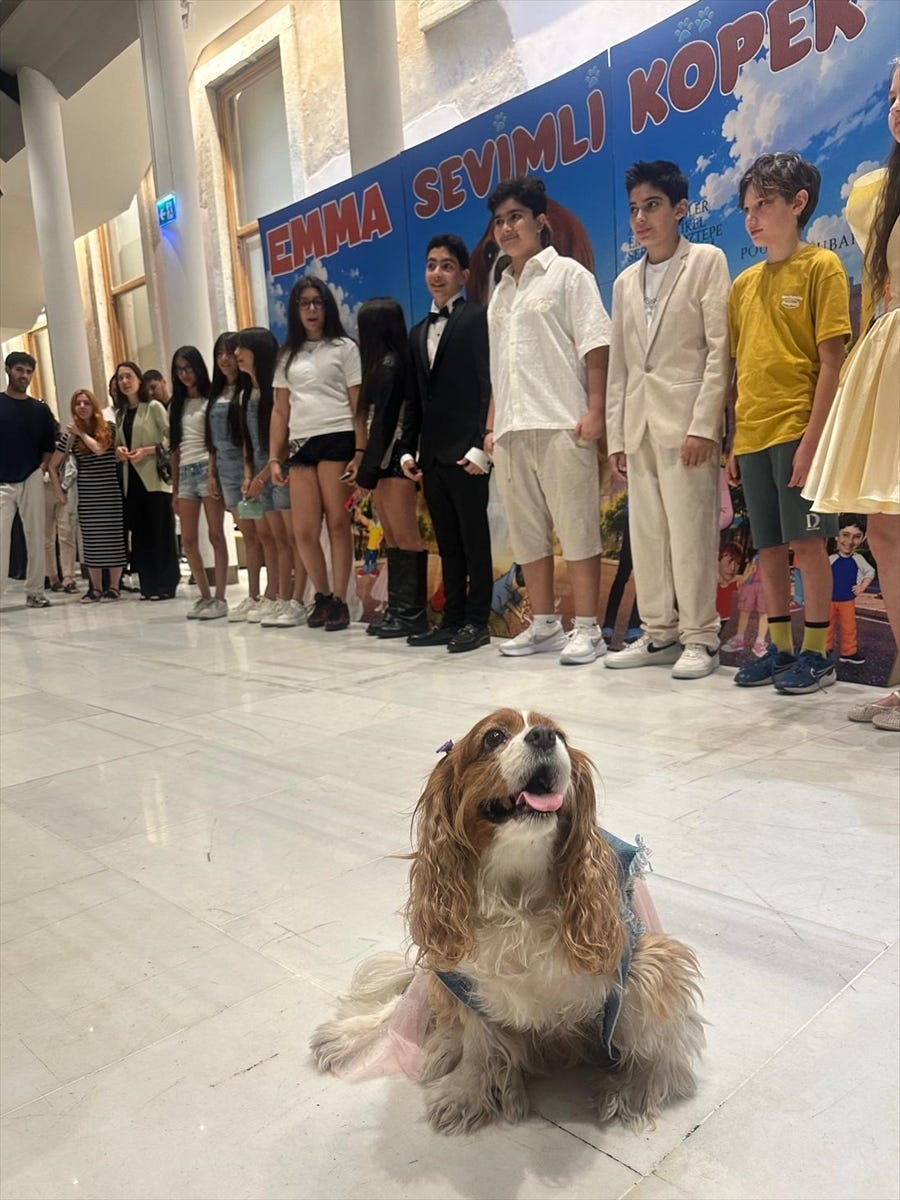
At a time when Turkey’s street dogs have become the focus of one of the country’s most heated social and political debates, a new family film has arrived in cinemas with a very different message.
Emma Sevimli Köpek follows the story of Emma, a shelter dog who is adopted by a young girl and her father before unexpectedly becoming a social media sensation. While the film is designed as family entertainment, its central premise is striking. The hero of the story is not a dog purchased from a breeder. She is a rescue dog whose life begins in a shelter.
That may sound like a small detail, but in a country where millions of people are currently being exposed to increasingly negative discussions about free-roaming and shelter dogs, representation matters.
For many children, films help shape how they understand the world around them. They influence how young people view animals, what they believe responsible ownership looks like and whether they see dogs as problems to be managed or individuals worthy of care and compassion.
The film’s creators have openly stated that they hope to encourage empathy towards animals and promote the idea that animals should be viewed as members of the family rather than disposable possessions. They have also announced that proceeds from the film will support vulnerable animals and animal welfare work.
Those messages arrive at a significant moment.
Over the past two years, much of the public discussion surrounding dogs in Turkey has focused on collection, shelter capacity, public safety and legislative change. Images of dogs being removed from streets, debates over municipal responsibilities and growing concern about conditions within some facilities have dominated headlines. In that environment, it can become easy to forget that every dog at the centre of these discussions is an individual animal with the capacity to form relationships, experience joy and become deeply loved.
Stories have always played an important role in changing public attitudes. Around the world, films, books and television programmes have helped transform how people think about wildlife conservation, companion animals and even farming practices. While no single film can solve a complex animal welfare crisis, cultural change often begins with something as simple as encouraging people to see an animal differently.
That is particularly important when it comes to adoption.
One of the biggest challenges facing animal welfare organisations globally is overcoming the perception that rescue dogs are somehow less desirable than dogs acquired through commercial breeding. Yet countless rescue organisations can point to examples of shelter dogs becoming beloved family companions, assistance dogs, therapy dogs and loyal lifelong friends.
By placing a shelter dog at the centre of a positive family story, Emma Sevimli Köpek offers children a different narrative. Instead of seeing a shelter dog as unwanted, they see a shelter dog as the hero.
Whether the film achieves commercial success remains to be seen. What is already clear, however, is that it presents a vision of dogs that contrasts sharply with much of the rhetoric dominating current public debate. Rather than focusing on fear, conflict or control, it focuses on companionship, responsibility and connection.
At a time when Turkey is deciding what kind of future it wants for its dogs, that may be one of the most important conversations of all.