
Dementia in Dogs: Loving Them Through the Fog
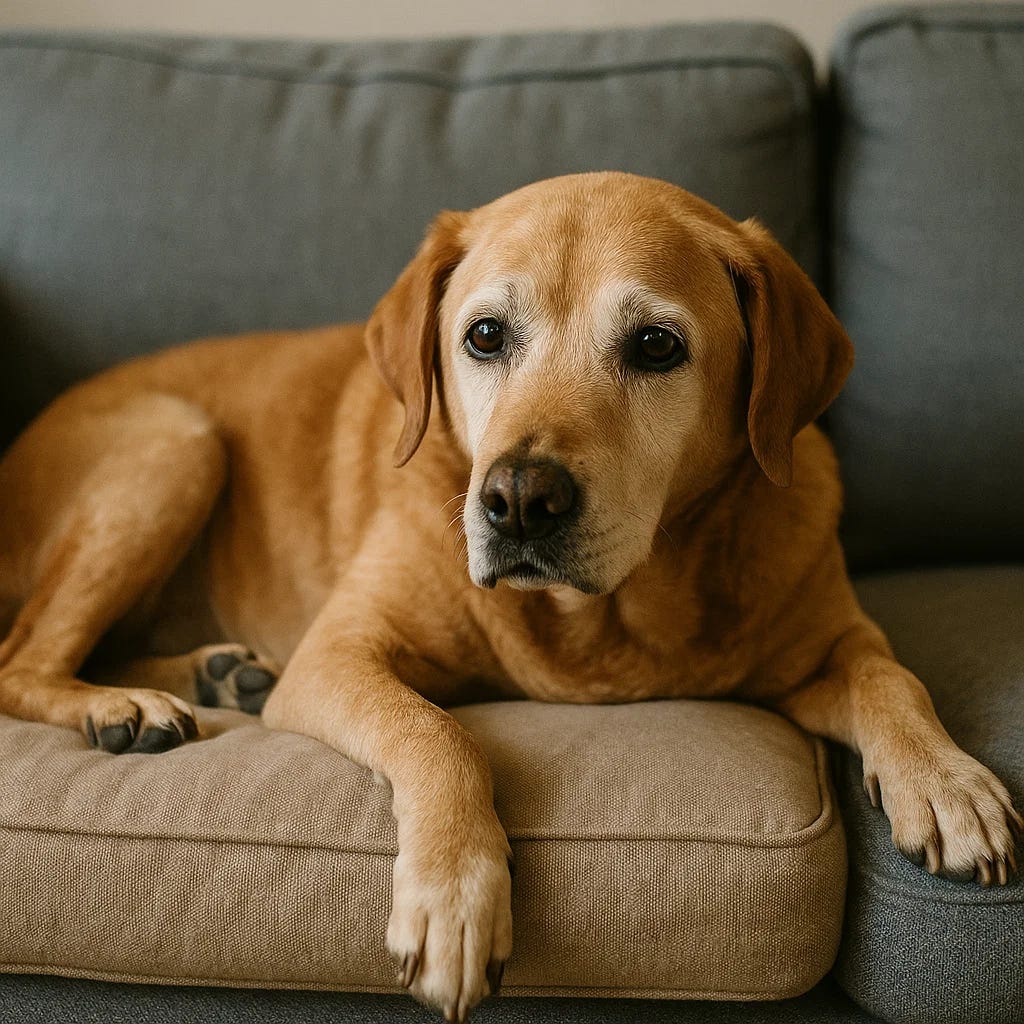
Growing old with our dogs is a privilege. We share their greying muzzles, their slower steps, and the gentle comfort of years spent side by side. But sometimes age brings changes we never expected — changes that can be confusing, heart breaking, and even frightening.
For many senior dogs, these changes have a name: Canine Cognitive Dysfunction, more commonly known as dementia.
When the Familiar Feels Foreign
Dementia in dogs is caused by physical changes in the brain, similar to Alzheimer’s disease in humans. These changes can affect memory, learning, awareness, and personality.
At first, the signs might be easy to miss — a moment of hesitation at a doorway, or a puzzled look in a familiar room. But over time, those moments can grow into patterns.
Veterinarians often describe the symptoms using the DISHA acronym:
Disorientation – Your dog may wander aimlessly, get stuck behind furniture, or seem lost in their own home.
Interactions – They may withdraw from family, become fearful of people they once trusted, or suddenly cling to you for comfort.
Sleep-wake cycle changes – Restless nights and daytime drowsiness become more common.
House training – Years of reliable toilet habits may fade, and accidents indoors can happen.
Activity level – Loss of interest in toys, games, or walks they used to enjoy.
Why It’s Not Just ‘Old Age’
Too often, these symptoms are dismissed as “just getting old.” But dementia is a medical condition, and early intervention can help slow its progression and ease the distress it causes.
A veterinary check-up is the first step. Many signs of dementia overlap with other health issues like arthritis, hearing loss, or vision changes, all of which can be treated or managed.
When Dementia Leads to Confusion
For many owners, the most distressing shifts in their senior dog’s behaviour aren’t rooted in malice, but in confusion. As cognition falters, familiar places and routines become baffling to our loyal companions.
Dogs with Canine Cognitive Dysfunction (CCD) may wander aimlessly, stare at walls, or seem lost in rooms they’ve known for years
They might fail to recognize familiar people or places, stand facing the wrong side of a door, or become stuck behind furniture—classic signs of disorientation
These broken mental pathways also affect responses—commands once second nature may now be met with blank stares due to impaired comprehension
Underlying medical issues—like sensory loss or pain—can worsen the confusion. That’s why a vet’s thorough evaluation is essential before attributing behaviours to dementia
Supporting a Dog with Dementia
There’s no cure for canine dementia, but you can take steps to make life easier and more comfortable:
Medication – Certain drugs can support brain function.
Mental stimulation – Gentle games, sniff walks, and puzzle feeders keep the mind active.
Routine and familiarity – Predictable days reduce confusion and anxiety.
Safety adjustments – Non-slip rugs, ramps, night lights, and baby gates can prevent accidents.
Caring with Compassion
Living with a dog who has dementia means learning to see the world through their eyes. They may forget where they are. They may forget who you are. But they will still feel your presence, your voice, your touch and above all, your love.
The accidents, the pacing, even the moments of aggression are not who they truly are. They are symptoms of a brain that’s slowly changing. And while those changes can be painful to witness, our dogs rely on us to be their constant in a world that’s becoming unfamiliar.
In the End
Dementia may steal memories, but it cannot take away the bond you’ve built over a lifetime. With patience, understanding, and veterinary support, we can help our dogs live their final years with dignity, comfort, and love — just as they’ve given us every day of theirs.


