


Egypt
New Strategy For Managing Street Dog Population
Egyptian officials have announced a new national approach to managing the country’s street dog population. The strategy draws on measures used in countries including the Netherlands and India and includes discussion around sterilisation, population management and public safety.
The announcement comes amid ongoing debate about how best to address the welfare and management of Egypt’s large free roaming dog population, which officials estimate numbers in the millions.
India
Booster Vaccination Programme For 10,000 Street Dogs
Authorities in Trichy have begun a large scale anti rabies booster campaign targeting 10,000 sterilised street dogs. The programme forms part of wider efforts to maintain vaccination coverage among community dogs and strengthen rabies prevention measures.
Officials say the campaign will focus on dogs already covered by sterilisation programmes, ensuring ongoing protection and supporting long term population management objectives.
Chennai
Madras High Court Seeks Reports On Implementation Of Stray Dog Measures
The Madras High Court has directed the governments of Tamil Nadu and Puducherry to provide detailed reports on steps taken to implement recent directions relating to stray dog management.
The court is seeking information on measures affecting schools, hospitals, transport hubs and other public areas, reflecting growing attention on how recent policy and legal developments are being applied in practice.
South Africa
Figures Highlight Scale Of Animal Homelessness
New estimates suggest millions of dogs and cats in South Africa are living without permanent homes, with animal welfare organisations warning that sterilisation capacity and veterinary access remain significant challenges.
Campaigners are using the figures to call for greater investment in preventative animal welfare measures and responsible ownership initiatives.
Kazakhstan
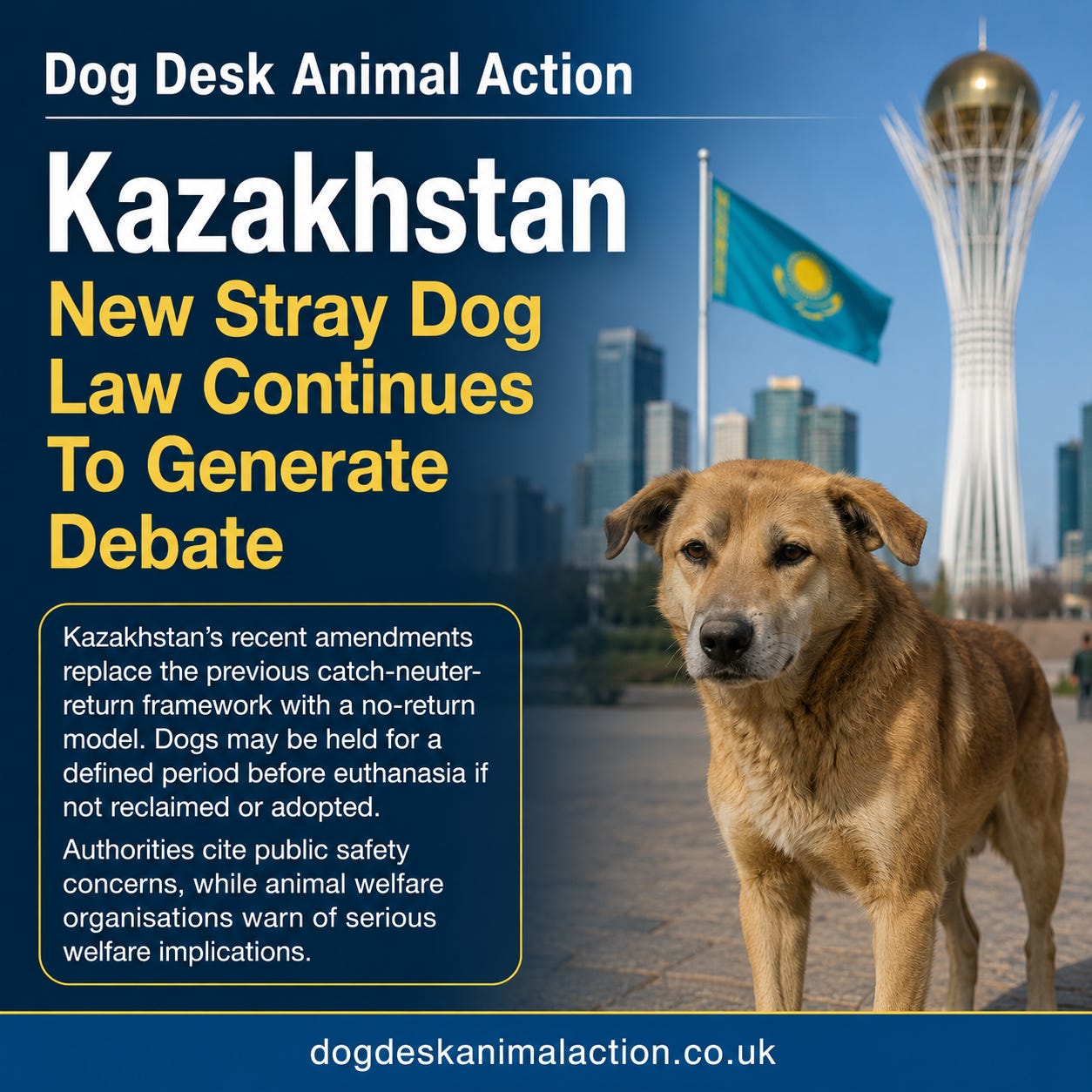
New Stray Dog Law Continues To Generate Debate
Debate continues in Kazakhstan following the adoption of amendments that replace the country’s previous catch neuter return framework with a no return model.
Under the new system, captured dogs may be held for a defined period before euthanasia if they are not reclaimed or adopted. Authorities have cited public safety concerns, while animal welfare organisations have expressed concern about the welfare implications of the changes.
Bangladesh
Animal Welfare Groups Oppose Calls For Dog Culling
Animal welfare organisations and volunteers in Bangladesh have publicly opposed renewed calls for stray dog culling, arguing that sterilisation and vaccination programmes provide a more effective and humane approach.
The groups have called on authorities to strengthen implementation of existing animal welfare measures and continue investment in Catch Neuter Vaccinate Release programmes.
Dog Desk Animal Action monitors developments affecting free roaming dogs and animal welfare worldwide. Stories are selected based on their potential impact on animal welfare policy, population management, legal frameworks and free-roaming dog populations.