


European Union
Landmark Dog and Cat Welfare Rules
Animal welfare organisations across Europe are reacting to the European Union’s new bloc-wide dog and cat welfare regulation, described by many as the most significant companion animal legislation in EU history.
The new framework introduces mandatory microchipping and traceability systems for dogs and cats, tighter breeding standards, restrictions on harmful breeding practices, and tougher controls on illegal trade and imports.
A major change is the creation of interoperable databases between EU member states, allowing animals to be tracked more effectively across borders. Supporters say this could significantly disrupt illegal puppy trafficking and irresponsible commercial breeding networks.
The legislation is also notable because protections apply broadly rather than excluding certain working dogs, something several European outlets highlighted this week. Critics however continue warning that implementation and enforcement may vary widely between countries
Ukraine
New Standards for Dogs Kept on Chains
New animal welfare standards introduced in Ukraine continue generating discussion following implementation earlier this spring.
The updated regulations reportedly include restrictions on keeping dogs permanently chained, revised veterinary documentation requirements, and tighter rules surrounding the care of companion animals.
The changes reflect a wider regional trend toward stricter regulation of dog and cat welfare systems, identification, and ownership responsibilities across Eastern Europe. At the same time, debates continue around enforcement capacity and how effectively welfare standards can be monitored during wartime pressures and economic strain.
Mexico
Screwworm Threat to Street Animals During Heatwave
Authorities and veterinary specialists in Mexico are warning that extreme heat and large free-roaming animal populations may increase the risks associated with the return of screwworm infections.
The first detected case in Mexico City has renewed concerns because the parasite attacks living tissue through open wounds and can affect dogs, cats, livestock, wildlife, and even humans. Experts say street animals are particularly vulnerable due to untreated injuries and lack of veterinary access.
Scientists warn that rising temperatures and environmental pressures may create conditions favourable for wider spread. Mexico is now increasing surveillance and working with international partners on containment strategies including sterile fly programmes.
UK
Rescue Volunteers Fight to Save Abandoned Kittens Found Near Railway Station
Animal rescuers in Weymouth, England are caring for three newborn kittens discovered abandoned in a rucksack near Upwey railway station.
The kittens were estimated to be only around a week old and had not yet opened their eyes when they were found. Rescue volunteers said the kittens required round-the-clock bottle feeding and would likely have died if they had not been discovered quickly.
The case has reignited debate in the UK around abandonment, unneutered cats, and the growing pressures facing small rescue groups during kitten season. Volunteers involved in the rescue stressed that support and surrender help are available, warning that abandonment increasingly reflects a wider emotional detachment toward vulnerable animals.
USA
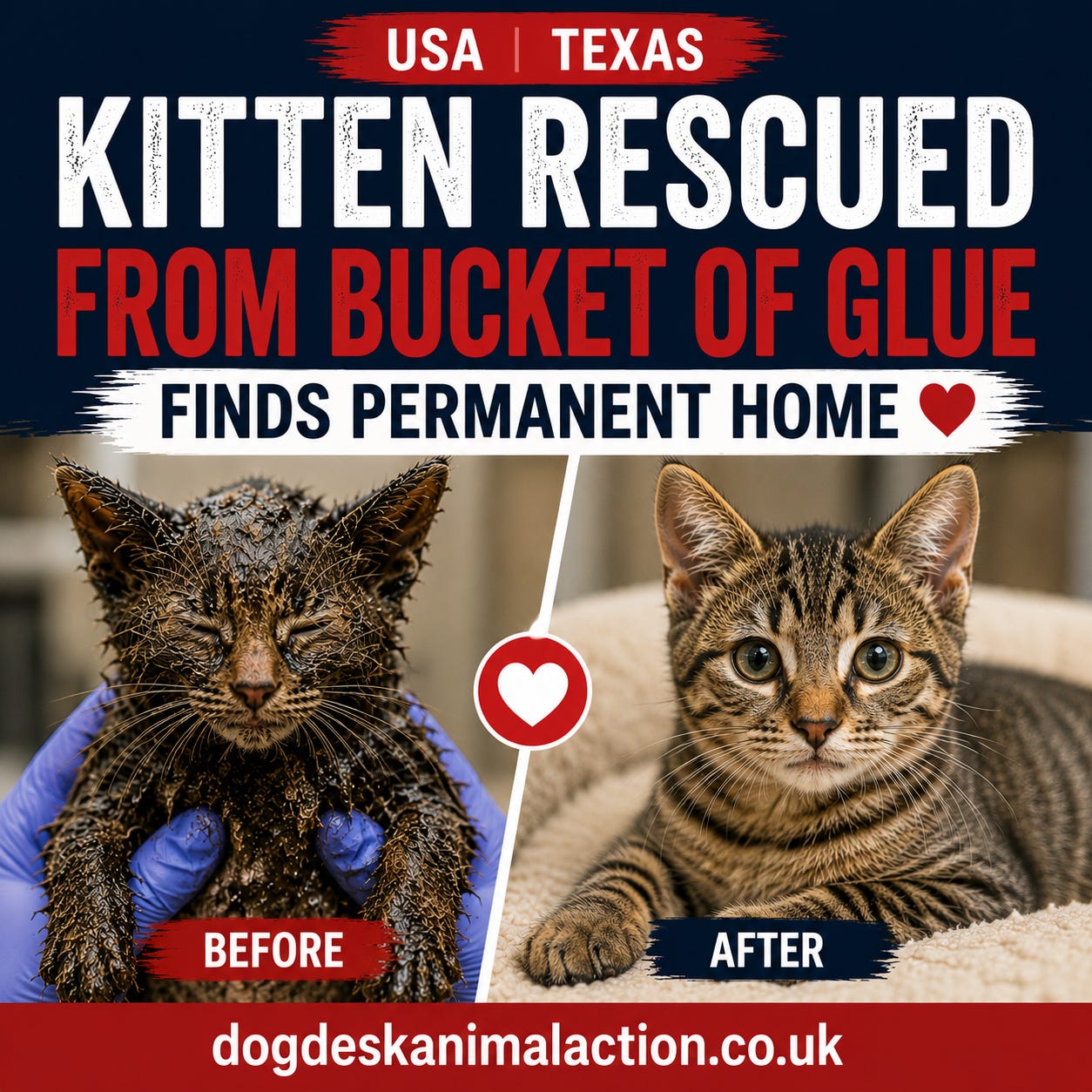
Texas Kitten Rescued From Bucket of Glue Finds Permanent Home
A kitten rescued after being found trapped in industrial glue in Texas has now recovered and been adopted by the foster carer who helped save his life.
The kitten, named Elmer by rescuers, arrived severely dehydrated and close to death after being discovered covered in hardened adhesive. Veterinary staff spent hours removing the glue using canola oil baths and careful massage treatment.
The story generated international attention partly because of the contrast between the severity of the kitten’s condition and his rapid emotional attachment to caregivers during recovery. The case has also sparked wider discussions online about cruelty, neglect, and the resilience animals can show even after severe trauma.
Spain
Cat Colony Volunteers Warn of Growing Pressure
A feline protection group in Jódar, Spain has publicly described the growing pressures facing community cat carers as colony numbers increase and volunteer resources remain stretched.
The organisation says it currently supports around 50 cat colonies while also caring for abandoned domestic cats requiring treatment and adoption placement. Volunteers reported concerns including cruelty incidents, sabotage of feeding stations, financial pressure, and emotional exhaustion.
The situation reflects a wider international pattern where unpaid volunteers increasingly form the backbone of urban cat welfare systems while operating with limited institutional support.
End of Bulletin