

England
Government Signals Further Reforms On Dog Breeding And Welfare
The UK Government has reaffirmed its intention to review and strengthen dog breeding regulations as part of its wider Animal Welfare Strategy. Ministers have confirmed that a consultation on dog breeding reform remains part of the government’s programme, with measures expected to focus on improving welfare standards, increasing oversight and addressing practices that contribute to poor health outcomes.
For many animal welfare organisations, the debate extends beyond breeder licensing. Questions are increasingly being asked about the role breeding plays in creating pressure on rescue networks, shelters and welfare services already struggling to meet demand.
Northern Ireland
Major Animal Welfare Reform Consultation Opens
Northern Ireland’s Department of Agriculture, Environment and Rural Affairs has launched a public consultation on the next phase of animal welfare reform.
The proposals include measures relating to dog licensing, traceability, enforcement and wider welfare protections. Officials say the consultation aims to modernise existing legislation and ensure animal welfare laws reflect contemporary challenges facing both animals and the organisations responsible for protecting them.
The consultation is expected to attract significant interest from welfare groups, veterinary professionals and members of the public.
England
Report Calls For Stronger Oversight Of Dog Breeding
Researchers from the University of Exeter have published a report calling for clearer guidance for inspectors responsible for enforcing dog breeding regulations.
The study argues that inspectors can face difficulties when interpreting complex welfare rules and suggests stronger guidance could improve consistency and strengthen protections for breeding dogs and puppies. The findings arrive at a time when policymakers are considering broader reforms to breeding regulation across the United Kingdom.
The report adds to growing discussion around how breeding practices can influence wider animal welfare outcomes.
India
Pressure Builds Ahead Of New Street Dog Protests
India’s street dog crisis continues to generate national debate following recent legal and political developments affecting free-roaming dogs.
Campaigners and animal welfare organisations have announced further demonstrations as concerns continue over policies involving the collection and relocation of community dogs. Supporters of humane population management argue that sterilisation, vaccination and improved waste management remain the most effective long-term solutions, while critics continue to raise concerns regarding public safety and dog attacks.
The issue remains one of the most significant and closely watched animal welfare debates in the world.
Australia
Tasmania Confirms Greyhound Racing Phase-Out Plan
The Tasmanian Government has confirmed plans to phase out greyhound racing by 2029.
The decision follows years of debate regarding animal welfare concerns within the industry and will be accompanied by a compensation package for affected participants. Supporters argue the move reflects changing public attitudes towards animal racing, while industry representatives have expressed concerns about the impact on jobs and regional communities.
The announcement marks a significant shift in Australia’s approach to greyhound welfare.
Australia
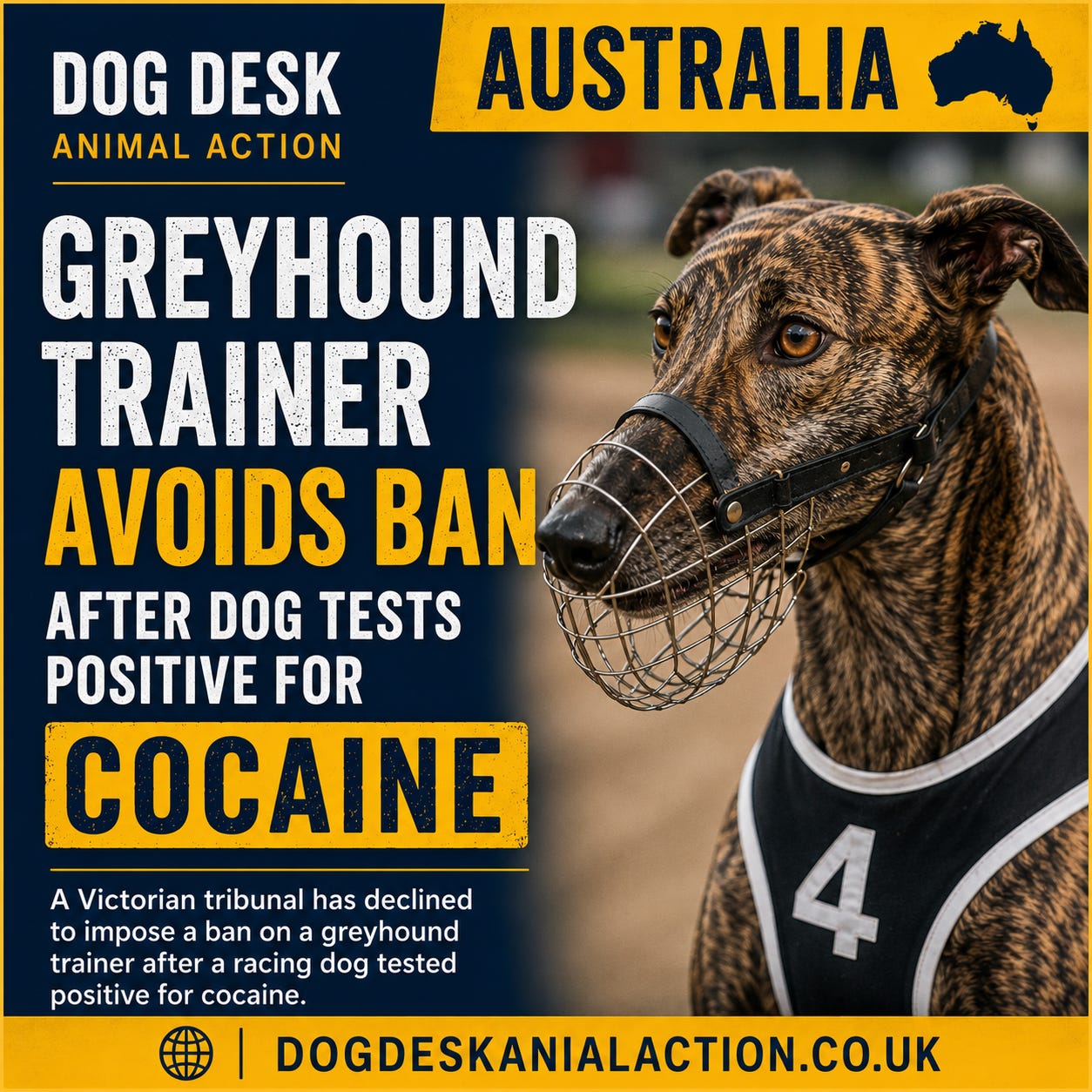
Greyhound Trainer Avoids Ban After Dog Tests Positive For Cocaine
A Victorian tribunal has declined to impose a ban on a greyhound trainer after a racing dog tested positive for cocaine.
The ruling has prompted renewed debate within the racing sector and among animal welfare groups, with critics questioning whether existing penalties are sufficient to maintain public confidence in the industry’s welfare standards. The case has attracted national attention at a time when greyhound racing is already facing heightened scrutiny across Australia.
The decision is likely to fuel further discussion about accountability and enforcement within the sport.
Germany
Animal Welfare Association Sues Government Over Shelter Funding
Germany’s largest animal welfare organisation has launched legal action against the federal government, arguing that animal shelters are being left to manage growing pressures without adequate financial support.
Shelters across Germany have reported increasing costs, rising intake numbers and significant strain on resources. The organisation argues that welfare services are performing essential public functions and require more sustainable funding if they are to continue meeting demand.
The case highlights challenges that are not unique to Germany. Across much of the world, animal welfare organisations are facing growing expectations while resources struggle to keep pace.
End of Bulletin