

South Korea
Campaigners Seek Stronger Protection For Seized Animals
Animal welfare organisations in South Korea are calling for legal reforms to prevent animals being returned to alleged abusers while investigations and court proceedings remain ongoing.
Campaigners argue that current legal gaps can place vulnerable animals at risk and create uncertainty for shelters and rescue organisations tasked with caring for seized animals. The debate reflects a broader international question facing animal welfare systems: how best to balance property rights, due process and animal protection when cruelty allegations arise.
As animal welfare laws continue to evolve, many advocates believe stronger safeguards are needed to ensure animals are not returned to potentially harmful environments before cases are resolved.
India
Chennai Extends Pet Licensing Deadline
The Greater Chennai Corporation has extended the deadline for pet licence renewals until 15 June while continuing free microchipping and rabies vaccination services.
The initiative forms part of wider efforts to improve responsible ownership, strengthen animal identification systems and support public health objectives through vaccination coverage.
While licensing schemes can sometimes be controversial, supporters argue they provide valuable opportunities to promote vaccination, improve traceability and encourage greater engagement between owners and local authorities.
ICAM
Conference 2026 Opens Next Week
The International Companion Animal Management Coalition Conference begins next week, bringing together experts, practitioners and organisations working across the companion animal welfare sector.
Topics include dog population management, sterilisation programmes, sheltering, community engagement, monitoring and evaluation, and evidence-based policy development.
Dog Desk Animal Action will be attending the conference and reporting on discussions relevant to free-roaming dogs, humane population management and international welfare policy.
One session of particular interest explores how monitoring, evaluation and theory of change frameworks can help organisations better understand the long-term impact of dog population management programmes.
Global Veterinary Public Health Conference 2026
Veterinary professionals, researchers and policymakers will gather next week to discuss some of the most significant challenges affecting animal and public health.
Subjects on the agenda include rabies prevention, vaccination strategies, zoonotic disease control, responsible ownership initiatives and the role of companion animals within wider public health systems.
The event highlights the increasingly recognised connection between animal welfare and human wellbeing, particularly in communities where free-roaming dog populations remain part of everyday life.
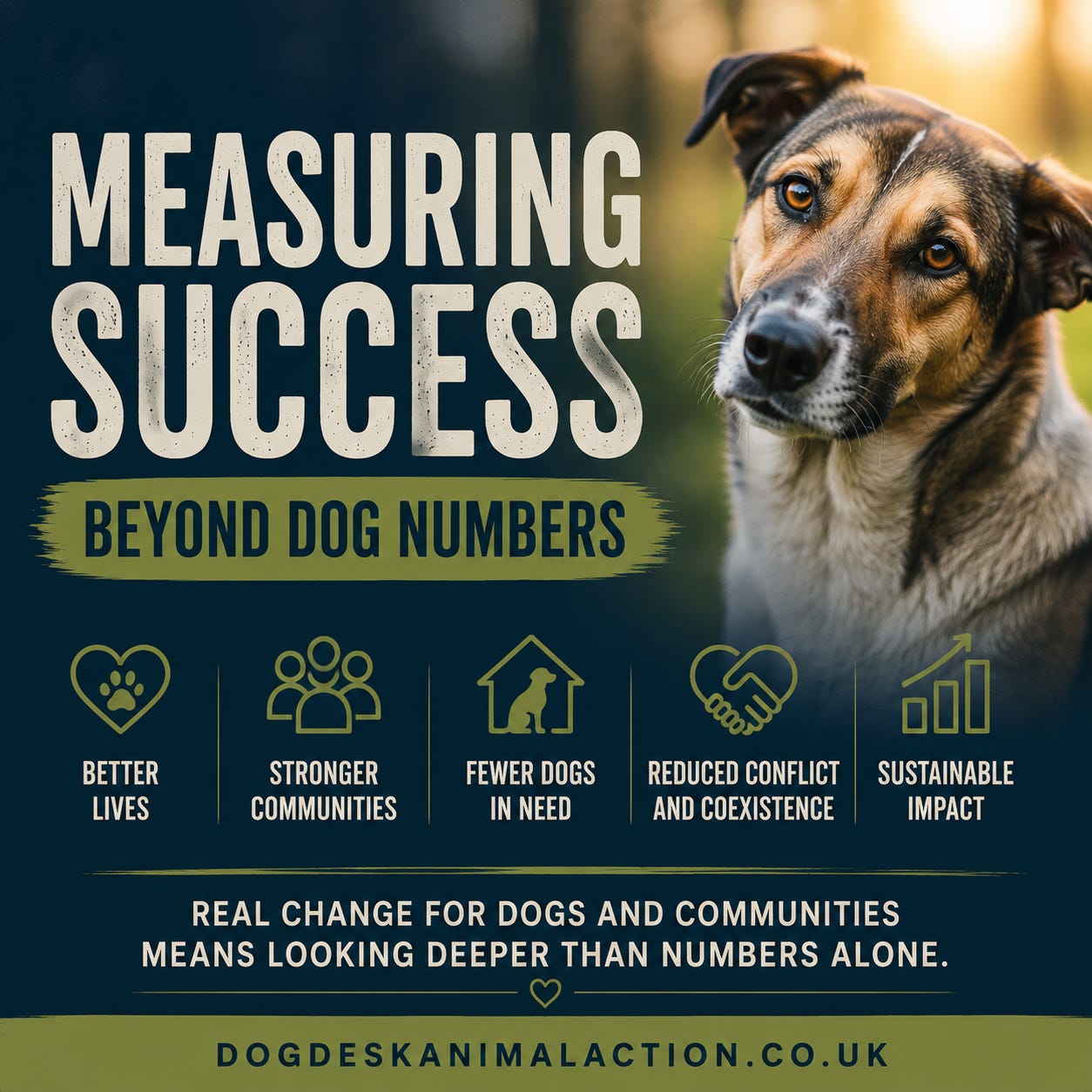
Measuring Success Beyond Dog Numbers
Increasing attention is being given to how animal welfare organisations measure success.
Historically, programmes have often been judged by simple outputs such as the number of animals sterilised, vaccinated or sheltered. However, researchers and practitioners are increasingly asking whether these figures alone provide a complete picture.
New approaches seek to examine broader outcomes, including changes in community attitudes, improvements in animal welfare indicators, reductions in conflict and the sustainability of interventions over time.
The discussion reflects a growing recognition that meaningful change is often more complex than numbers alone can capture.
Technology’s Growing Role In Animal Welfare
Technology continues to play an increasingly important role in animal welfare work around the world.
From microchipping and identification databases to shelter management systems, data collection tools and online reporting platforms, organisations are using technology to improve efficiency, transparency and decision-making.
At the same time, new challenges are emerging around data quality, accessibility and the ethical use of technology in welfare settings.
As animal welfare organisations face growing demands and limited resources, technology is likely to remain an important part of future solutions, provided it is used thoughtfully and alongside practical frontline expertise.
Looking Ahead
The coming week will see welfare professionals, researchers and organisations from around the world come together through both the ICAM Conference and the Global Veterinary Public Health Conference.
While the subjects being discussed range from dog population management and vaccination programmes to programme evaluation and technology, a common theme runs throughout: the need for evidence-based solutions that improve outcomes for animals and the communities they live alongside.
Dog Desk Animal Action will be attending ICAM and sharing key insights and developments throughout the week.
Dog Desk Animal Action – Supporting vulnerable dogs through welfare, healthcare, research, education and advocacy. 🐾
End of Bulletin