

Düzce Municipality Admits Improper Handling of Sedated Street Dog After Video Sparks Public Concern

Credit Duzceasayis81
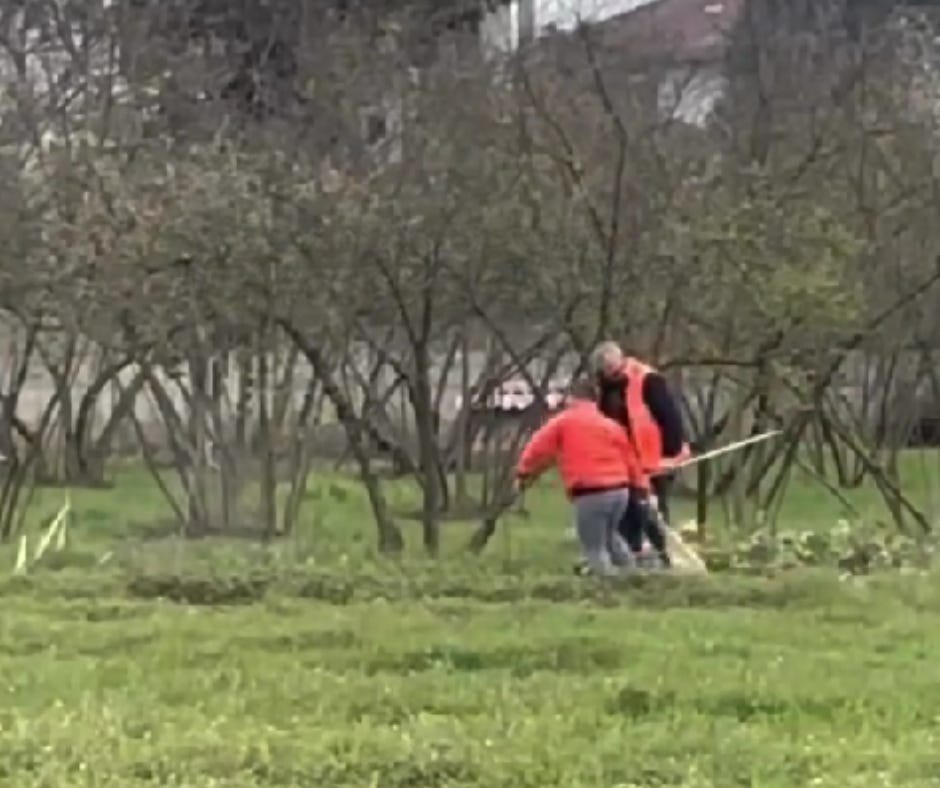
A short video circulated quietly on social media. A street dog in Düzce had been sedated.
What followed was not a veterinary procedure, but handling that raised immediate concern.
The footage was enough to prompt an official response.
The Incident
In Düzce, municipal teams carried out what was described as an intervention involving a street dog.
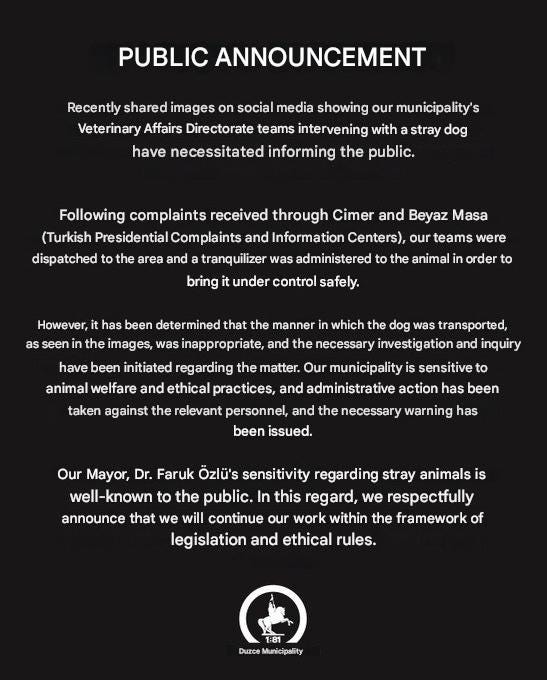
Following the circulation of video footage online, the municipality issued a public statement. In that statement, they confirmed:
The dog had been sedated
The subsequent handling was not carried out appropriately
Administrative action had been taken against the personnel involved
This is not a case built on speculation or conflicting accounts. The existence of footage was acknowledged. The handling was not defended.
That distinction matters.
What the Video Represents
The footage shows a sedated animal unable to protect itself, unable to respond being physically moved in a way that does not reflect basic veterinary handling standards.
Sedation changes everything.
Once an animal is immobilised:
It becomes fully dependent on human care
The risk of injury increases significantly
Proper support of the spine, limbs, and airway becomes essential
This is not specialist knowledge. It is baseline handling.
The concern here is not that intervention occurred. It is how it was carried out after control had already been established.
The Language of Intervention
The term “müdahale” intervention, is used broadly.
It can mean:
Rescue
Medical treatment
Capture
Removal
But without detail, it can also obscure.
In this case, the word intervention tells us something was done, but not whether it was:
humane
necessary
or competently executed
It took public footage to fill that gap
The Role of Public Evidence
This case follows a now familiar pattern:
An incident occurs
Footage is shared
Public concern builds
An official statement is issued
Without the video, there would likely have been:
no explanation
no admission
no accountability
This raises a simple but important question:
How many interventions take place without visibility?
What Is Still Missing
Despite the acknowledgement of improper handling, key information remains absent:
What was the condition of the dog before sedation?
Why was sedation deemed necessary?
What happened to the dog after the incident?
Was a veterinarian present or involved?
These are not secondary details. They define whether an intervention was justified and whether the animal’s welfare was protected.
Legal and Practical Context
Under Turkey’s Law 5199 on Animal Protection, municipalities are responsible for:
Humane capture
Veterinary treatment
Sterilisation
Return to habitat (where appropriate)
The law does not permit:
careless handling
unnecessary harm
or interventions that compromise welfare
In practice, implementation varies significantly between municipalities.
Training, oversight, and accountability are inconsistent. And increasingly, interventions are taking place under pressure rather than planning.
A Wider Pattern
The Düzce incident should not be viewed in isolation.
Across Turkey, there is growing tension between:
public safety narratives
and animal welfare obligations
This creates an environment where:
speed replaces care
process replaces welfare
and language replaces transparency
Intervention becomes a justification, rather than a description.
What This Case Shows Clearly
This is not a question of whether municipalities should act. They should.
But action without standards is not protection. And control without care is not welfare.
What the Düzce incident demonstrates is this:
Oversight is often reactive, not built-in
Accountability depends on visibility, not system design
Welfare is not consistently embedded in practice
A Reasonable Expectation
It is not unreasonable to expect that:
A sedated animal is handled correctly and safely
Every intervention is accompanied by clear reporting
Outcomes are documented and accessible
These are not high standards. They are minimum ones.
Closing Reflection
A video surfaced. An explanation followed. An admission was made.
But the sequence itself is the issue.
When transparency depends on exposure and accountability depends on reaction the system is not functioning as it should.
The question is no longer what happened in Düzce.
The question is:
What happens where no one is watching?