Veterinary clinics and professionals confirm that the dogs received medical care, vaccinations and ongoing support before their removal.
The controversy surrounding the removal of dogs from Ege University in İzmir has taken another significant turn. Four veterinary clinics and professionals have now issued public statements describing their involvement in caring for the animals, raising serious questions about the account presented by the university rectorate.
Following the overnight operation of 16–17 October, during which dogs were removed from areas of the university campus, the rectorate issued a statement referring to complaints about aggressive dogs, concerns for public safety and deficiencies in the arrangements under which some animals were being kept.
Its statement described an area enclosed by temporary fencing, allegedly operating without permission, veterinary supervision or the appointment of authorised personnel, and under conditions it considered unsuitable for animal health.
But veterinary professionals who say they were directly involved in the animals’ care are now challenging an important part of that account.
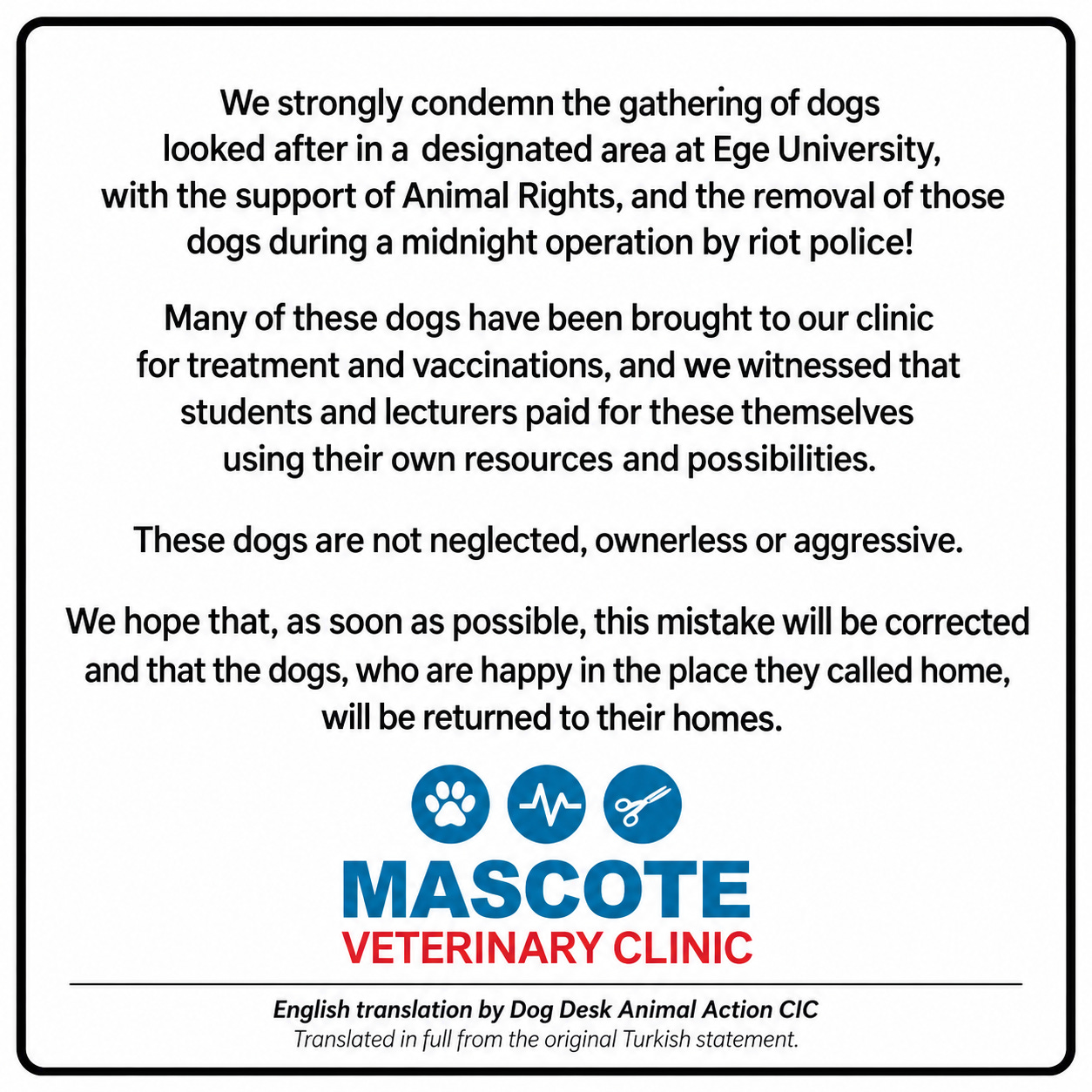
Mascote Veterinary Clinic has condemned the operation, stating that numerous dogs were brought to its premises for treatment and vaccination by students and lecturers who paid for those services themselves. The clinic says it witnessed these efforts first hand and rejects the characterisation of the animals as neglected, unowned or aggressive.
It has called for the dogs to be returned to the place where they were happy and regarded as home.
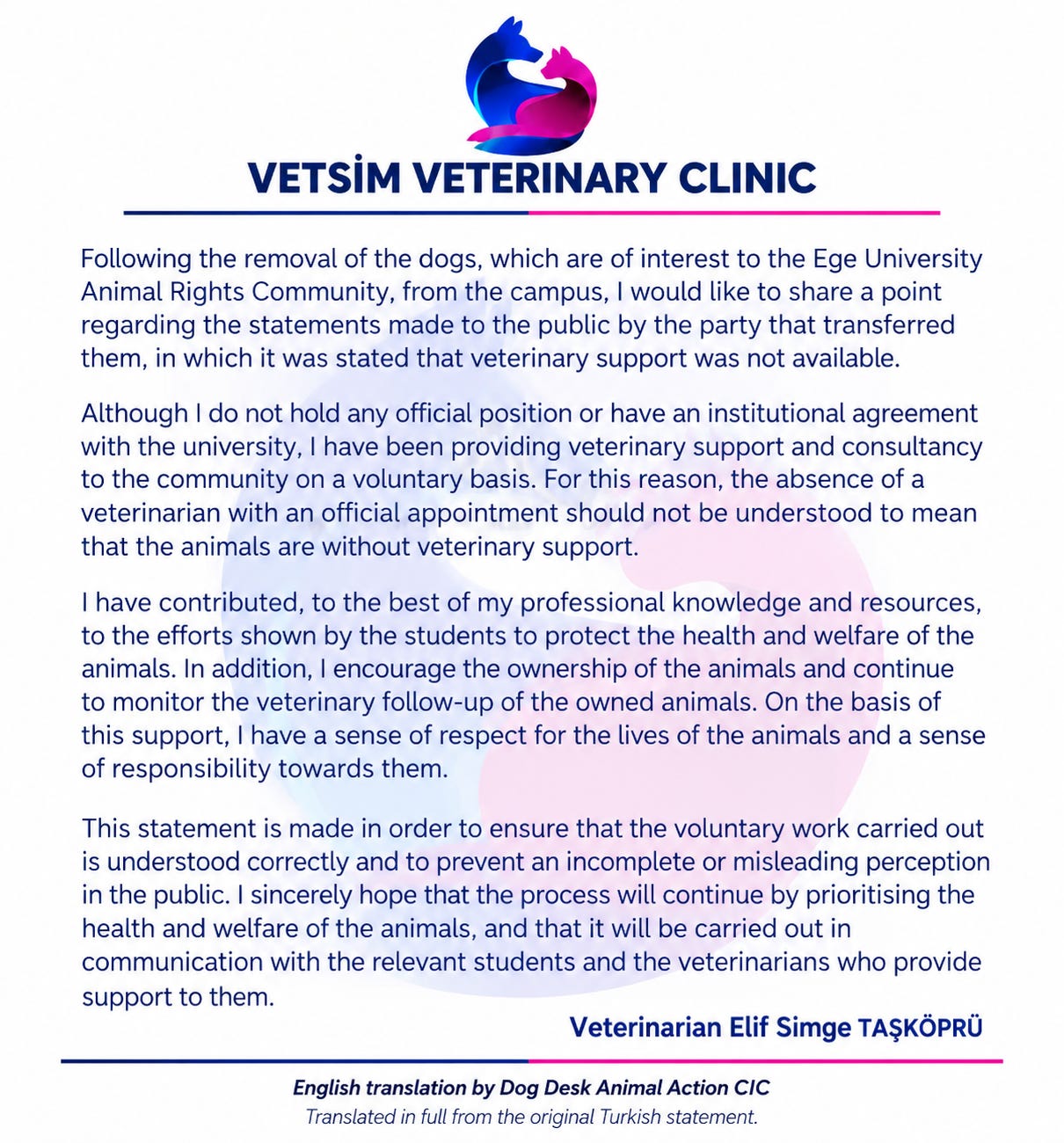
Veterinarian Dr Elif Simge Taşköprü, of Vetsim Veterinary Clinic, has provided an important clarification concerning veterinary oversight. Although she held no official appointment or institutional contract with Ege University, she confirms that she voluntarily provided veterinary assistance and advice to the university’s animal rights student group.
She makes a distinction that goes to the heart of the rectorate’s statement: the absence of an officially appointed veterinarian does not mean that animals were deprived of veterinary care.
Dr Taşköprü also confirms that she continues to support the veterinary follow-up of animals that have been adopted.
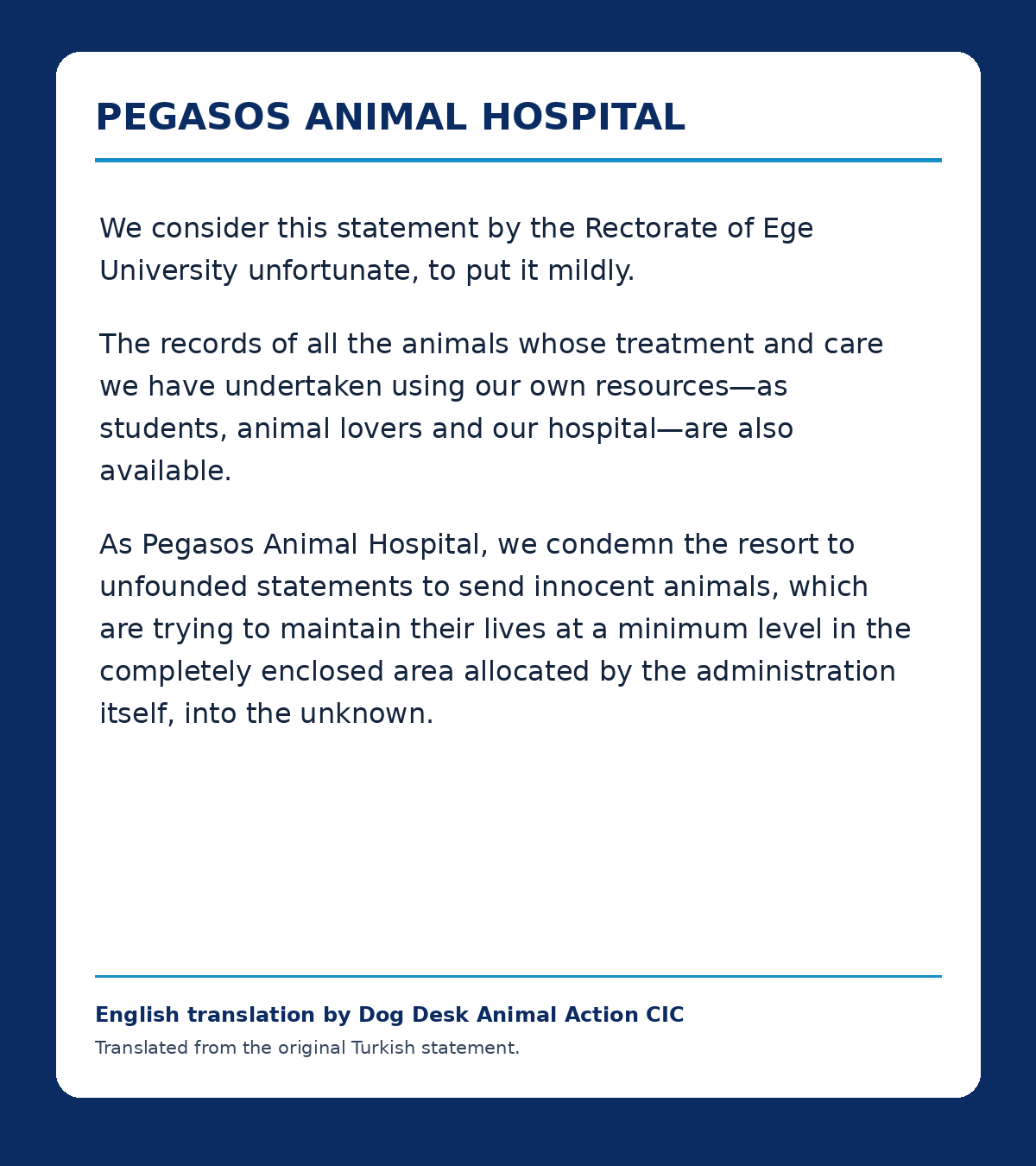
Pegasos Animal Hospital has issued an especially forceful response, describing the rectorate’s statement as unfortunate, to put it mildly.
The hospital says it possesses records documenting the treatment and care provided to the dogs through the resources of students, animal lovers and the hospital itself.
It also disputes the portrayal of the animals’ living arrangements, stating that they were surviving in an enclosed area allocated by the university administration. Pegasos condemns what it describes as unfounded claims being used to send innocent animals into an uncertain future.
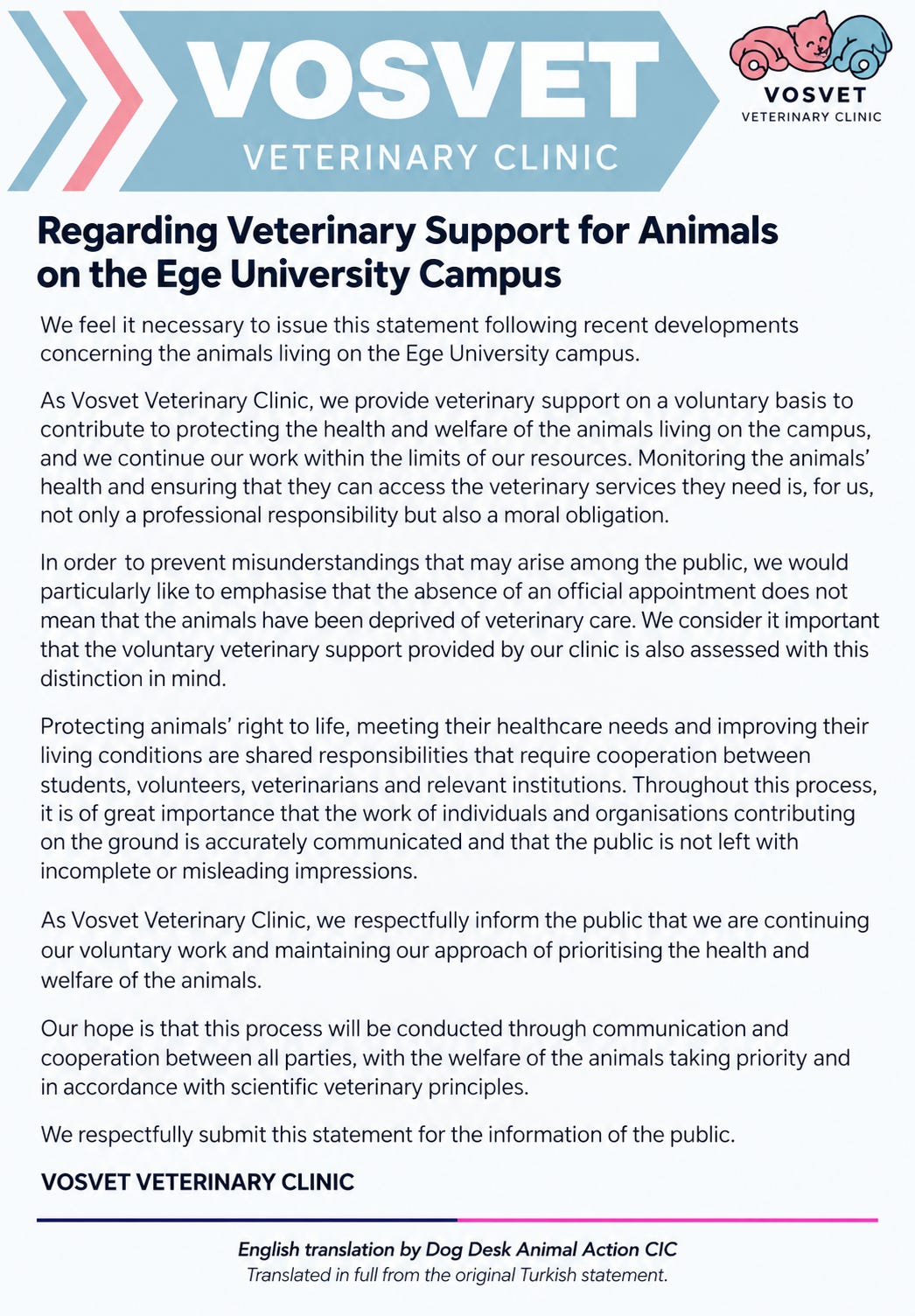
Vosvet Veterinary Clinic has independently confirmed that it has provided voluntary veterinary support to animals living on the university campus and continues this work within its available resources.
The clinic similarly emphasises that the absence of a formal veterinary appointment must not be confused with an absence of veterinary assistance.
Together, these statements raise questions that cannot reasonably be dismissed as objections from animal welfare campaigners alone. They come from professionals who describe direct involvement in the animals’ treatment, monitoring and welfare.
There is an important distinction between whether an animal housing area satisfies administrative or licensing requirements and whether the animals living there have received veterinary treatment. One does not automatically establish the other.
The rectorate may have identified regulatory concerns about the facility. It may also have received genuine complaints about particular dogs. Neither possibility removes the need to examine the evidence behind its broader description of the animals’ circumstances.
The existence of veterinary records, as reported by Pegasos, is particularly important. Such records could establish which animals received treatment, when they were examined, what medical interventions were undertaken and whether ongoing care was required.
That evidence should now form part of any transparent review of the decision to remove the dogs. There is also the question of continuity of care.
Some of these animals had established relationships with students, volunteers and veterinary professionals who knew their individual histories. Removing them from that network creates practical welfare questions extending far beyond the physical act of transportation.
Were their medical histories transferred to the receiving facilities? Were animals undergoing treatment identified? Were the veterinarians familiar with their conditions consulted? And can those who previously cared for them establish where they are now?
These are not peripheral concerns. They are fundamental questions about what happened to individual animals following a major intervention carried out in the name of safety and welfare.
The four veterinary statements provide direct testimony that veterinary support was available and that students and other caregivers were actively arranging treatment.
The university must now explain how that evidence was considered when it assessed the dogs’ living conditions and decided upon their removal.