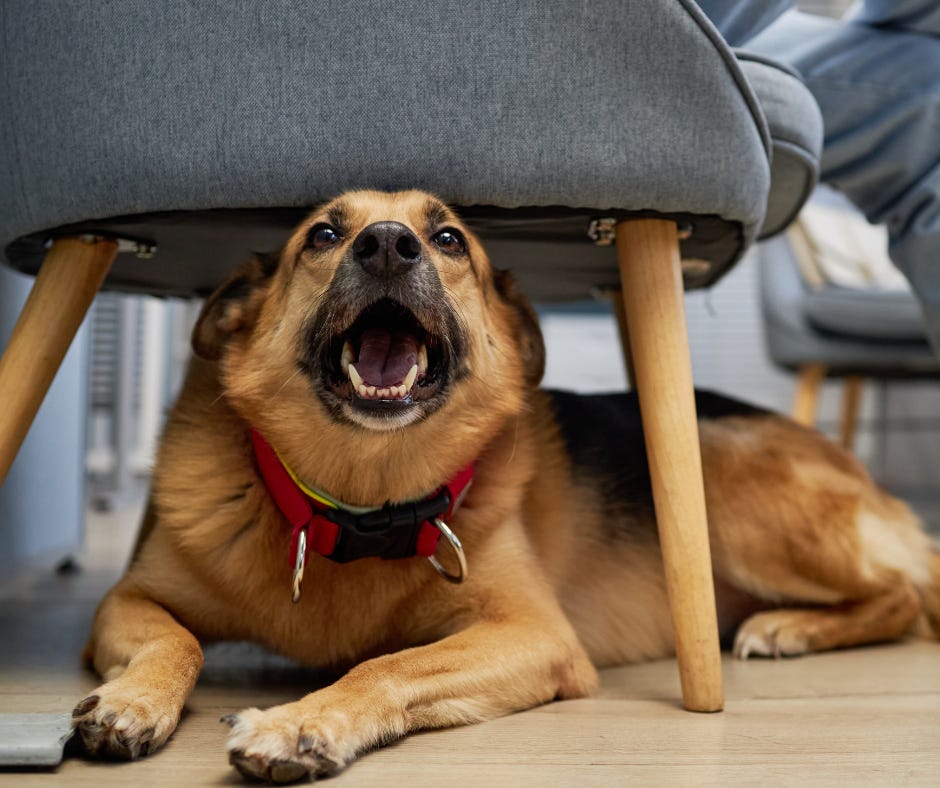
Video protects the identity of the dog in this reflection
When a Dog Is Not Yet Comfortable
A recently arrived dog was brought into a UK home.
I was told only that he had been removed from a high-kill shelter overseas & was a former street born dog.
Within a short period of observation, I noted:
Persistent pacing
Repeated lip licking
Indoor urination
These behaviours do not automatically predict failure.
They do not mean the dog cannot adapt.
They do not mean the placement was wrong.
But they do not signal comfort.
What These Signals Mean
In canine behavioural science, pacing and displacement behaviours such as lip licking are commonly associated with heightened arousal or stress. Indoor urination in a newly transported dog can reflect physiological stress, loss of routine, or lack of environmental familiarity.
None of these are moral failings. They are information.
Dogs moving from:
Street environments
High-density shelters
Kennel blocks
Transport vehicles
into a quiet domestic home undergo an abrupt ecological shift. The sensory load changes. The predictability changes. The autonomy changes.
For some dogs, this transition is rapid and successful.
For others, it is not.
The Part We Don’t Discuss Openly
Most imported street dogs do settle.
Some do not.
From foster accounts shared privately we know that:
A minority fail to adapt.
A small number escalate to defensive behaviours.
Some have bitten.
Some have ultimately been euthanised.
These outcomes are uncomfortable to acknowledge. But suppressing them does not prevent them. It prevents preparation.
This Is Not About Blame
This is not an indictment of rescues.
It is not an attack on friends.
It is not a declaration that street dogs cannot live in homes.
It is a reminder that behaviour is not ideology.
A dog signalling stress is communicating.
The question is not whether he should be rescued.
The question is whether the transition plan matches his behavioural profile.
Ecological Mismatch
Street-living dogs often operate with:
High environmental autonomy
Distributed feeding patterns
Self-selected social distance
Fluid territory
A domestic home provides:
Confinement
Proximity to humans
Controlled routines
Restricted choice
Some individuals thrive in this structure.
Others require far more gradual integration than is typically provided.
The Ethical Responsibility
Rescue is not only about extraction.
It is about:
Assessment
Matching
Structured transition
Honest risk acknowledgement
If we know that a small percentage of dogs will not settle safely in domestic homes, then responsible management includes saying so.
Quietly. Factually. Without drama.
Authority in this space comes from telling the whole truth including the parts that make us uncomfortable.
The Outcome Is Still Unknown
The dog I observed may well adapt.
He may decompress, regulate, attach and thrive.
I hope he does. But his early signals were not neutral. They were communicative.
Our responsibility is not to guarantee happy endings.
It is to read the signals early enough to prevent tragic ones.