
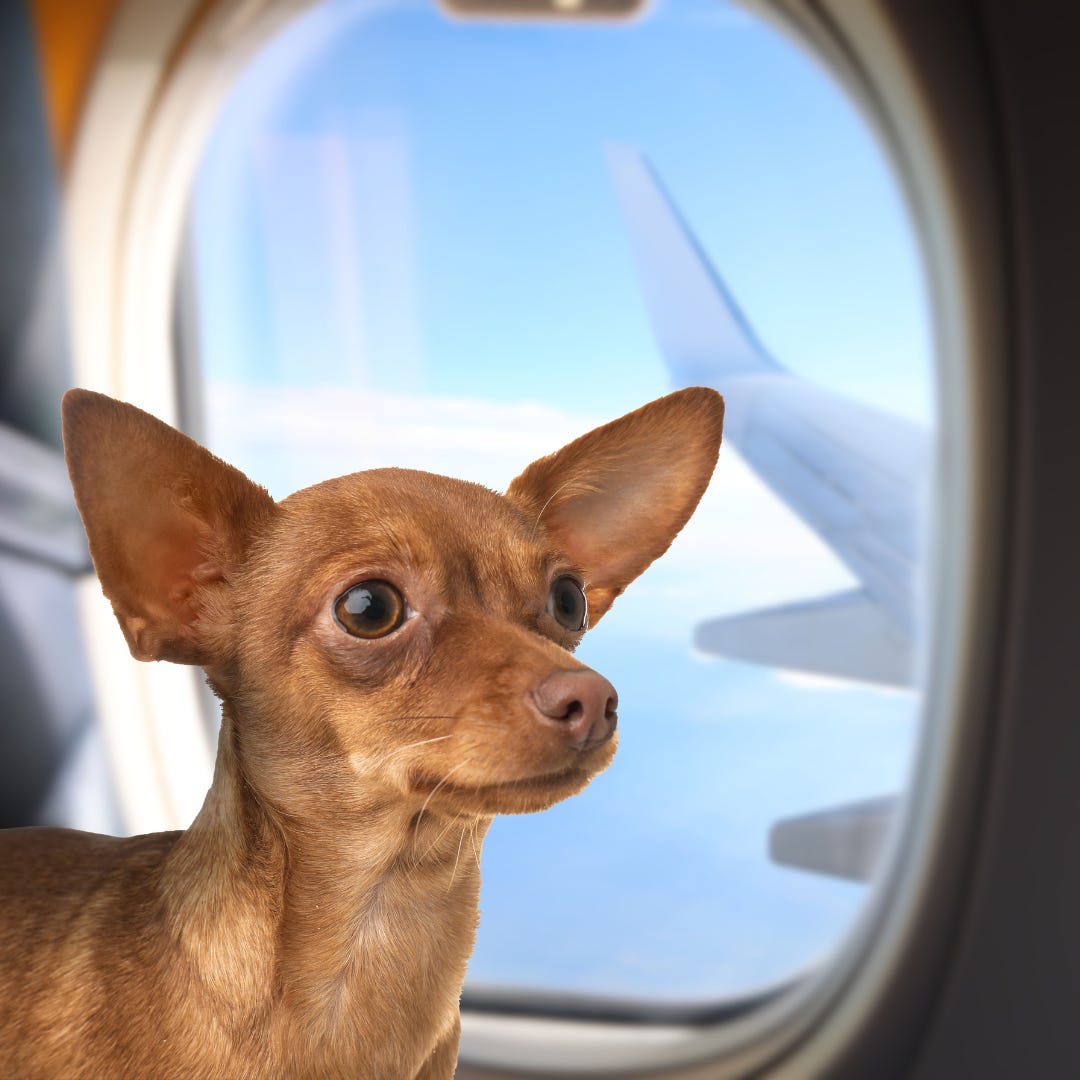
From Cargo Hold to Cabin- Italy’s Bold New Pet-Travel Rules
For many pet owners, air travel comes with a bittersweet choice: either leave your furry companion behind, or subject them to the cargo hold, a space of noise, isolation, and stress.
But as of May 2025, Italy has taken a major step toward changing that. Under new rules approved by ENAC (Italy’s civil aviation authority), medium- and large-sized animals can now travel in the cabin, alongside their human caretakers a shift many see as both humane and forward-looking.
Here’s what you need to know.
What’s Changing? The Key Provisions
1. Pets in cabin no longer limited strictly by low weight caps
Previously, most airlines only allowed very small pets (often under 8–10 kg including carrier) to travel in-cabin. Now, under the new ENAC regulation, pets housed in a suitable carrier may be placed even on the seat, provided they are secured by seat belts or anchoring systems.
The combined weight of the animal plus its carrier may exceed prior limits but it must not exceed the maximum weight allotted for an average passenger.
In other words: carriers may be heavier, but there is still a ceiling tied to passenger seat limits.
2. Safety & placement rules
The animal must be housed in an approved carrier (soft, semi-rigid, or rigid) that allows them to sit, turn, lie down, and is properly ventilated.
The carrier may be placed on seats or over seats (i.e. above or in front) as long as it is secured (by seat belts, anchorage systems) and does not obstruct emergency operations.
It must not block aisles, exits, or the movement of crew.
Airlines remain responsible for defining the detailed conditions and fares, but must submit those policies to ENAC for approval.
3. Implementation timeline & test flight
The ENAC resolution was approved in May 2025, taking effect immediately in terms of regulatory framework.
Italy is planning a maiden flight illustrating the new regime, reportedly on a domestic Milan–Rome route under ITA Airways, carrying larger dogs in the cabin under the new rules.
Why This Matters
Animal welfare & owner peace of mind
Putting larger pets into cargo holds has always raised concerns from temperature fluctuations to handling errors, noise, stress, separation anxiety even in pressurised and climate-controlled holds. The new cabin rules emphasize keeping animals close, safer, and more comfortable.
A recognition of evolving societal values
This move reflects shifting attitudes: pets are less luggage and more family members. It also aligns with broader pressures for more humane animal policies.
Impacts on airline & travel industry
Airlines will need to revise internal protocols, seat configurations, safety checks, cleaning regimes, allergen policies, and fare structures. Some travellers (especially those with allergies, phobias, or sensitivities) may push back, so balancing flexibility with passenger comfort will be key.
Tourist & pet-friendly appeal
Italy may now strengthen its appeal to pet owners who travel fewer barriers, more freedom, fewer pets left behind. The change could boost inbound and domestic travel among animal lovers.
What Remains Unclear & Challenges Ahead
Exact weight “cap” vs seat load: While the rule ties pet + carrier weight to not exceeding the maximum weight allowed for an average passenger, what that translates to numerically is not uniform across airlines or seat classes.
Airline adoption lag: Having a legal framework is one thing; getting every airline to adopt, adapt, certify, and manage the policy is another. Some may resist or delay.
Domestic vs international flights: The regulation applies within Italy (and airlines operating under ENAC). How it interacts with international/overseas flights, foreign carriers, or with EU rules will need alignment.
Passenger concerns: Allergies, fear of animals, hygiene, handling of misbehaving pets these are valid worries that carriers will need robust policies for.
Emergency / safety constraints: Ensuring that carriers don’t obstruct safety protocols, evacuation routes, or crew movement is non-negotiable.
Cost & pricing: Will airlines charge extra? How will pet notice, seat reservation, or extra cleaning fees be handled?
Tips for Pet Owners Planning to Fly in Italy under the New Rules
Confirm with your airline early before booking whether they have implemented the new pet-in-cabin rules.
Check carrier specs: Make sure your pet’s carrier meets ventilation, size, and securing requirements.
Weigh carefully: Total weight (animal + carrier + any supplies) should not exceed what the airline designates as equivalent to a passenger’s limit.
Behaviour & training: A calm, well-behaved pet reduces risk of disturbance.
Health & vaccinations: Continue to meet all veterinary/vaccination requirements.
Book early: Because cabin pet spots will be limited, reserving early is wise.
Prepare for contingencies: Bring pet comfort items, pads, water, etc.
Conclusion: A Progressive Shift With Work to Do
Italy’s new directive allowing animals including medium and large dogs to fly alongside their owners in aircraft cabins is a landmark change. It signals respect for animal well-being, addresses practical travel frustrations, and could set a precedent across Europe. But the success of the rule depends heavily on how airlines implement it, manage safety and passenger concerns, and adapt operationally.
In the months ahead, as the first flights under the new regime roll out, we’ll see whether this legislation transforms pet travel, or proves to be more symbolic than substantive.


