
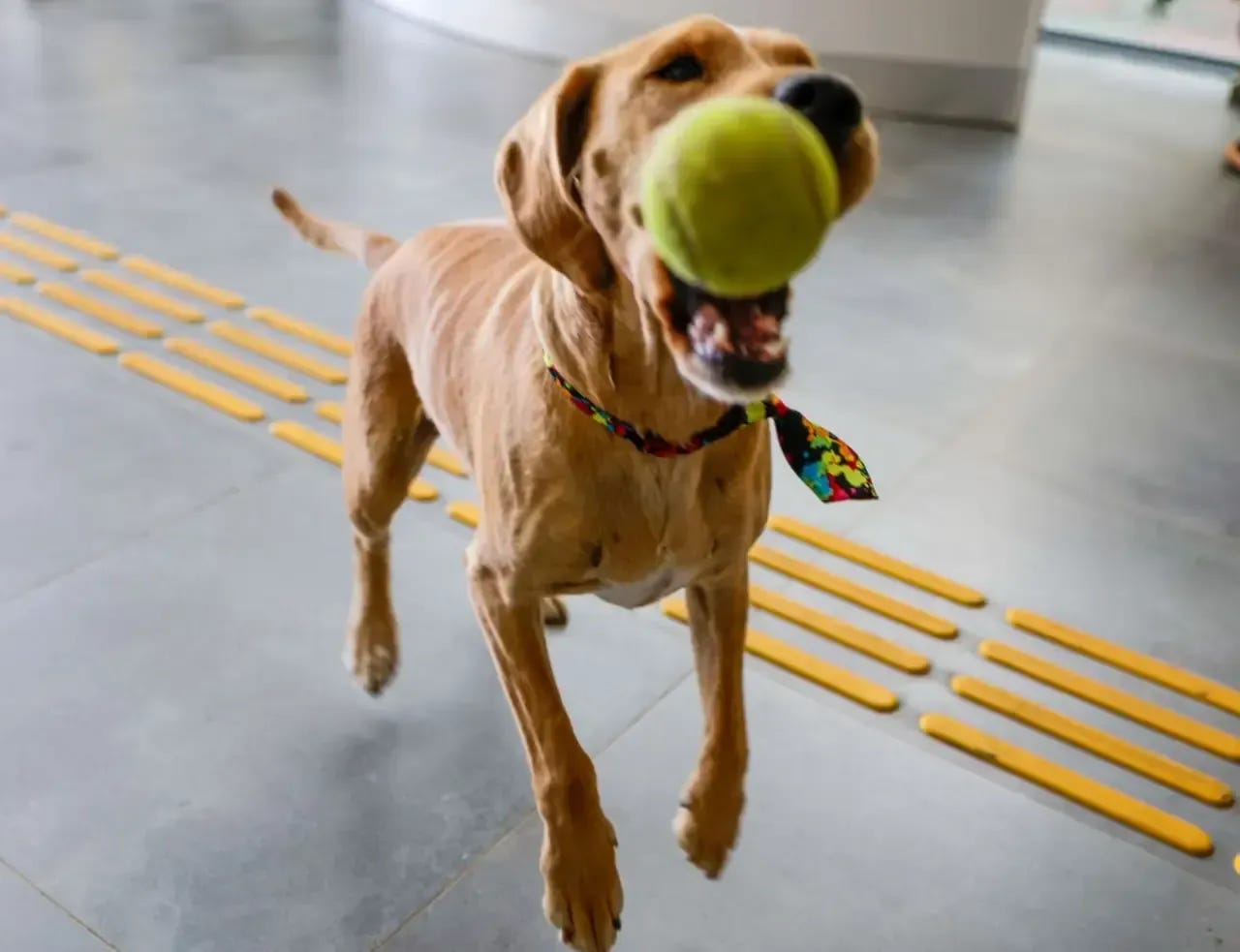
A story from İzmir this week offered a glimpse of a different relationship between people and street dogs at a time when that relationship is under intense pressure across Turkey.
Bal, an abandoned dog, began visiting a disability services centre operated by the İzmir Metropolitan Municipality. Staff members fed him, provided water and gradually welcomed him into daily life at the centre. Over time, he became a familiar presence for employees, visitors and service users, eventually becoming so integrated into the life of the facility that he is now regarded as part of the team.
Under normal circumstances, this might simply be viewed as a heart warming local news story. What makes it particularly significant is that it is taking place while municipalities across Turkey continue collecting dogs from the streets as part of efforts to implement the country’s new animal law.
Much of the discussion surrounding the law focuses on numbers, facilities, budgets, capacity and enforcement. Those are important issues, but stories such as Bal’s highlight something that can easily be overlooked. Street dogs are not simply animals occupying public spaces. In many cases, they are also part of the communities around them and have relationships with the people they encounter every day.
The reports from İzmir describe Bal as a source of comfort and companionship within the centre. Staff say he spends time with visitors, helps create a welcoming atmosphere and has become particularly popular with children and people using the facility’s services. His presence is valued not because he performs a formal role but because he contributes something positive to the environment around him.
That idea will be familiar to many people who have lived alongside community animals. Across Turkey, dogs and cats have long become part of neighbourhood life. Some are known by name, some are cared for collectively by local residents and others become such familiar faces that people struggle to imagine the area without them. These animals often occupy a unique space between ownership and independence, living within communities while forming genuine connections with the people around them.


At Dog Desk Animal Action, Bal’s story immediately brought another animal to mind. Marmaduke, a cat who has made the local town hall his workplace, has become a familiar figure to both staff and visitors. Nobody formally appointed him to the position, yet he has nevertheless established himself as an accepted part of daily life within the building. People look for him when they arrive, ask after him when he is absent and greet him as though he were another member of staff.
The reason stories like Bal’s and Marmaduke’s resonate is that they remind us of something often missing from policy discussions. Animals are frequently discussed as a challenge to be managed, a population to be controlled or a problem to be solved, yet they are also capable of enriching the communities around them in ways that are difficult to quantify. They provide companionship, create social connections and often become part of the identity of the places where they live.
None of this means every dog can safely remain where it is or that every situation allows for this kind of relationship. Welfare, public safety and individual circumstances will always matter. Even so, Bal’s story demonstrates that when people look beyond the label of stray dog, they sometimes discover an animal capable of becoming something more than a statistic or a policy issue.
At a time when dogs are being removed from communities across Turkey, Bal’s story offers a reminder of what can be lost when animals disappear from public life. An abandoned dog arrived at a municipal facility looking for food, water and somewhere safe to spend his time. Instead of being viewed solely as a problem to be addressed, he was welcomed into a community and became part of it.


