

Gebze - One of Turkey's Most Shocking Shelter Scandals Ends Without Prosecution

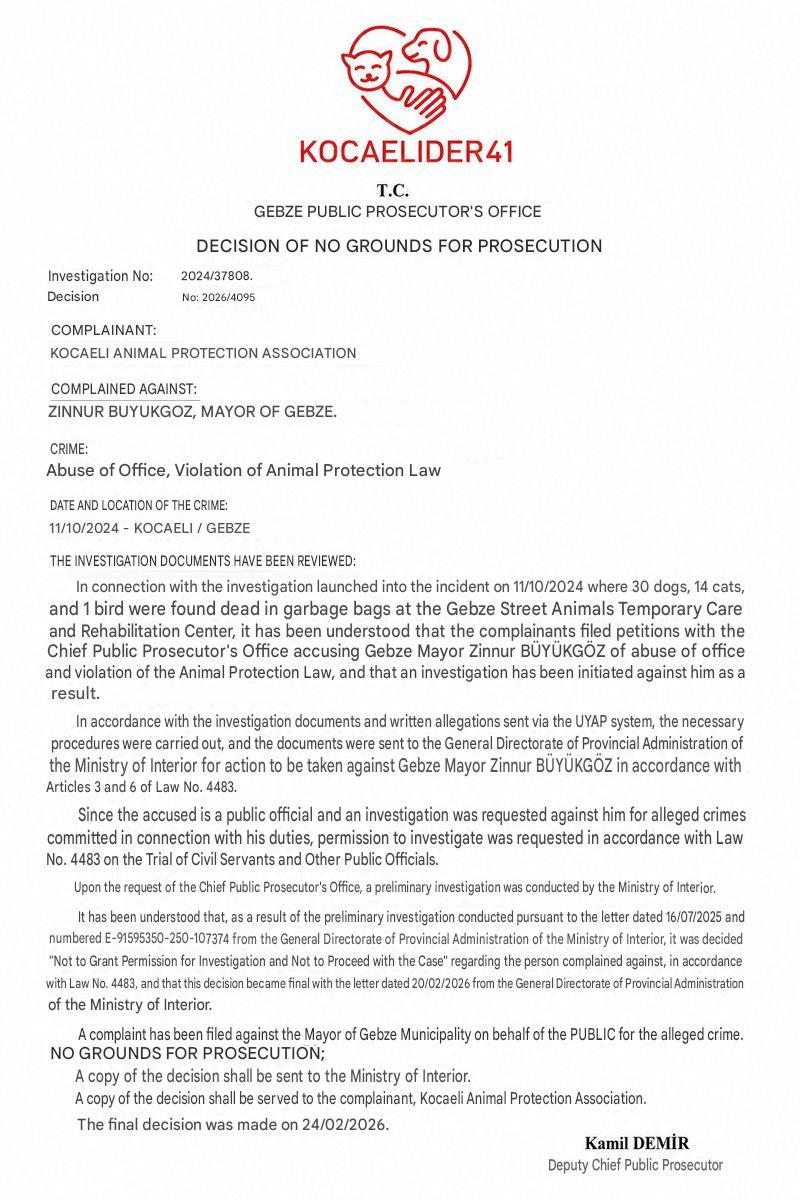
When the Gebze shelter scandal erupted in October 2024, it quickly became one of the most disturbing animal welfare stories to emerge following the passage of Turkey’s amended animal law. Images from the facility spread across the country as reports emerged that dozens of animals had been discovered dead in black garbage bags. Animal welfare organisations, politicians, journalists and members of the public demanded answers. Many believed that those answers would eventually come through the legal system.
Instead, what has now arrived is a decision bringing the case to an end without a prosecution.
According to a decision issued by the Gebze Public Prosecutor’s Office, complaints made against Gebze Mayor Zinnur Büyükgöz were reviewed following the discovery of thirty dogs & fourteen cats found dead at the municipality’s temporary animal care and rehabilitation centre. Because the complaint concerned a public official, permission to investigate was sought through the procedures required under Turkish law. That permission was ultimately not granted by the Ministry of Interior. Following that decision, the prosecutor concluded that there were no grounds for prosecution.
For many people who followed the case from the beginning, that outcome will be difficult to reconcile with the events that brought national attention to Gebze in the first place. The discovery of so many dead animals was not a routine incident. Public protests followed. Animal welfare organisations lodged formal complaints. Political representatives visited the scene. Municipal employees were reportedly suspended while investigations took place. The story became a symbol of the fears many campaigners had expressed after changes to animal welfare legislation created new pathways for the removal and killing of street dogs.
The prosecutor’s decision does not rewrite what happened in October 2024. It does not change the fact that dozens of animals were found dead. It does not erase the images that shocked the country or the public concern that followed. It does not answer every question raised by animal welfare organisations, campaigners and ordinary citizens who looked at the events in Gebze and wondered how such a situation could occur.
What it does mean is that one of the most controversial animal welfare cases to emerge since the passage of the amended law appears to have reached its legal conclusion without anyone facing prosecution at the highest level of municipal responsibility.
For supporters of the law, the decision may be viewed as confirmation that the legal process has run its course. For critics, it is likely to be seen as something very different. Many will ask how a case that began with the discovery of thirty dogs & fourteen cats found dead can end without further accountability. Others will question whether public confidence is strengthened when investigations into elected officials depend upon permission being granted before they can proceed.
Regardless of where people stand on those questions, the facts at the heart of the story remain unchanged. Thirty dogs & fourteen cats lost their lives. The public demanded answers. Complaints were filed. Investigations were announced. Nearly two years later, the case has ended without a prosecution.
For many people, that will not feel like an ending at all. It will feel like the beginning of a new and uncomfortable question about accountability, transparency and what justice looks like when the victims cannot speak for themselves.
How any claim can be made of appropriate and legal process, the outcome implies that any protections for the welfare and lives of animals are in reality non-existent, how can this be an example of a democratic system based on effective law