The Gorakhpur Municipal Corporation in India plans to microchip thousands of street dogs and create individual digital records. This proposal interests us because individual identification could address a common gap in stray dog management: traceability. We often seek information from authorities about the fate of collected dogs, and this system could provide much needed transparency.
Reports indicate that each dog would receive a unique identification linked to details such as sterilisation, rabies vaccination, health, and behaviour. Geotagged photographs with date, time, and location are also expected to be included in the records provided to the Municipal Corporation.
If implemented properly, this system would be highly beneficial. It would allow tracking of a dog from collection through sterilisation, vaccination, and eventual return. Maintaining records throughout the dog’s life could also document any recapture, treatment, transfer, shelter admission, adoption, or death.
However, another aspect of the proposal requires closer scrutiny.
Gorakhpur also has plans for dogs considered aggressive. Local reports state that dogs involved in biting incidents are detained for observation, and it has been suggested that a dog responsible for a second unprovoked bite would be permanently confined rather than returned to the streets.
This raises an important question: who & what determines whether a dog is aggressive?
A dog biting someone confirms the incident, but not the reason. A frightened dog may bite if cornered. An injured dog might react when handled. A mother may defend her puppies. A dog may also defend its food or react if it has been hit, kicked, threatened, or deliberately provoked.
This does not diminish the importance of public safety. Serious dog attacks are frightening and can cause severe injuries. Authorities have a duty to protect the public. But there is a significant difference between a dog that attacks unprovoked and one that defends itself after being frightened, hurt, or threatened.
It is especially important to make this distinction when a behavioural allegation is recorded in a dog’s identification, as it could ultimately lead to lifelong confinement.
Guidance from India’s Animal Welfare Board notes that some complaints about street dogs may be false, and some individuals may request removal simply because they do not want dogs in their area. Proper safeguards are therefore essential for any behavioural classification.
Who determines if the bite was provoked, will they be adequately trained, we see so many people on a global scale woefully equipped to carry out this most vital assessment. How will the complainant’s statement be investigated. Will medical records be taken in to consideration, will CCTV be reviewed. Will witnesses be interviewed & assessed for reliability. Will the dog be examined for injuries & in the case of nursing mothers will that be taken in to consideration. And because mistakes happen what if the wrong dog is identified. Also can an incorrect behavioural assessment be challenged and corrected?
The consequences for an individual dog could include lifelong confinement, so these are not minor administrative matters. Every step should be thorough so as no false conclusions are drawn.
Microchipping could represent a significant advancement. In many countries we monitor, authorities report the number of dogs collected from the streets, but reliable information about their subsequent outcomes is often lacking. In most cases once a dog has been collected they are never seen again.
An effective traceability system would address this gap. Each stage, collection, sterilisation, vaccination, return to the community, transfer, shelter admission, adoption, or death should be recorded to ensure comprehensive tracking. And this information should be published & available to the public.
We encourage thorough development of this aspect of Gorakhpur’s proposal. A microchip can identify a dog, but it cannot explain the reasons for its behaviour. Entering an allegation into a database does not make it a fact. Because the label aggressive can determine whether a street dog is returned or confined, there must be a clear and fair process for applying this classification.
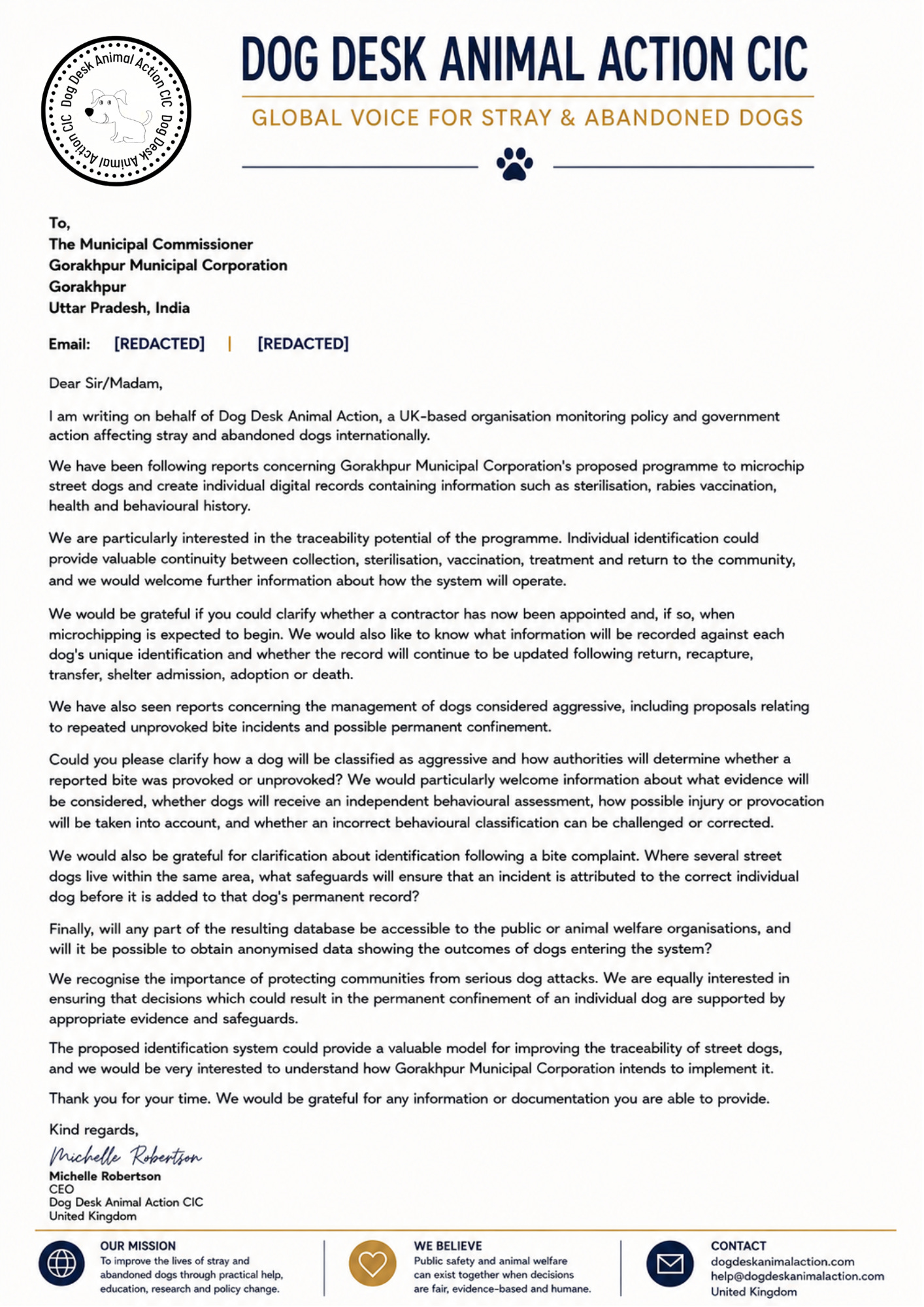
Dog Desk Animal Action has contacted the Gorakhpur Municipal Corporation to request more information about the proposed scheme. We have specifically asked how behavioural incidents will be evaluated and recorded, what evidence will be required before a dog is deemed aggressive, what safeguards exist in cases of possible provocation, and whether behavioural classifications can be challenged.
We have also inquired about the traceability system, specifically whether each dog’s record will be maintained throughout all stages, including collection, sterilisation, vaccination, return, transfer, shelter admission, and other possible outcomes.
This initiative presents an opportunity to create a truly useful system, as individual identification would support both dog population management and accountability. However, if an entry in this system determines whether a dog can return home, the supporting evidence must be accurate and reliable.