


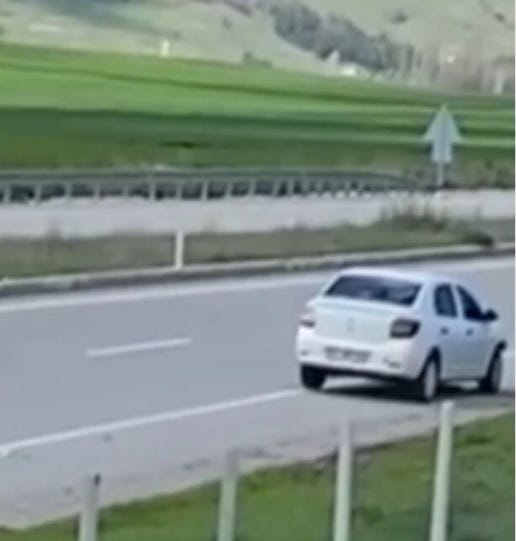
A dog is hit by a car. The driver stops. Moves the body to the side of the road.
Gets back in the vehicle. Drives away.
The dog dies where it was left.
And yet, the conclusion presented in the media is not about the driver, not about responsibility, not about abandonment or impact or consequence but about the danger stray animals pose in traffic.
That framing should concern anyone paying attention.
What Actually Happened
The incident took place on the İskilip road in Çorum. A vehicle struck a dog that had entered the road. The driver then removed the injured animal from the carriageway and continued their journey. The dog later died from its injuries.
That is the factual sequence. There is no ambiguity here. No complexity.
A living being was hit, left without care, and died.
The Quiet Rewrite of Responsibility
But then comes the pivot. The story is framed as another example of stray animals creating danger in traffic.
Not:
a failure to stop and seek veterinary help
a failure to report the incident
a failure of duty of care
Instead, the animal already dead becomes the risk factor.
This is not just poor framing. It is a moral inversion.
Because once you accept that logic, the responsibility disappears. The driver becomes incidental. The death becomes inevitable. And the animal becomes the problem.
Stray Dogs Do Not Create Themselves
Every street dog exists because of human decisions.
Abandonment. Uncontrolled breeding. Failure to sterilise. Failure to regulate ownership. Failure to implement sustained population management.
To then take the visible outcome of those failures, a dog on a road and present it as a standalone danger is not analysis.
It is deflection.
It removes the human chain of causation and replaces it with a convenient narrative:
they are the issue.
The Moment That Should Have Defined the Story
There is one detail in this case that should have been the entire story:
The driver stopped. That matters. Because stopping means awareness.
It means the impact was known. It means a decision was made.
And the decision was not to seek help. Not to call anyone. Not to take the animal to a clinic.
The decision was to move the body out of sight and continue.
That is the moment that defines this incident, not the presence of a dog on a road.
Language Shapes Outcome
When incidents like this are repeatedly framed around stray animal danger, something very predictable happens:
Public sympathy shifts away from the animal
Policy shifts toward removal rather than prevention
Harm becomes easier to justify
It is how you move from a dog was hit and left to die to there are too many dogs.
The wording is not neutral. It is directional.
What Is Missing
There is no mention of:
Whether the driver has been identified
Whether any legal process has been initiated
Whether leaving an injured animal without assistance is being treated as an offence
Instead, the conversation is redirected toward measures to deal with stray animals.
Not measures to deal with what actually happened.
The Real Question
If a driver can hit a dog, move it aside, and leave and the takeaway is that the dog was the hazard, then the problem is no longer about animals in the road.
It is about what society has decided not to see.
Final Thought
This dog did not create risk. It encountered it.
The risk was a system that allows animals to be born onto the street,
and a mindset that allows them to be treated as disposable once they are there.
Until that is addressed honestly not softened, not reframed these stories will keep being written the same way.
A death. A deflection.
And a quiet shift of blame onto the one who cannot answer back.