
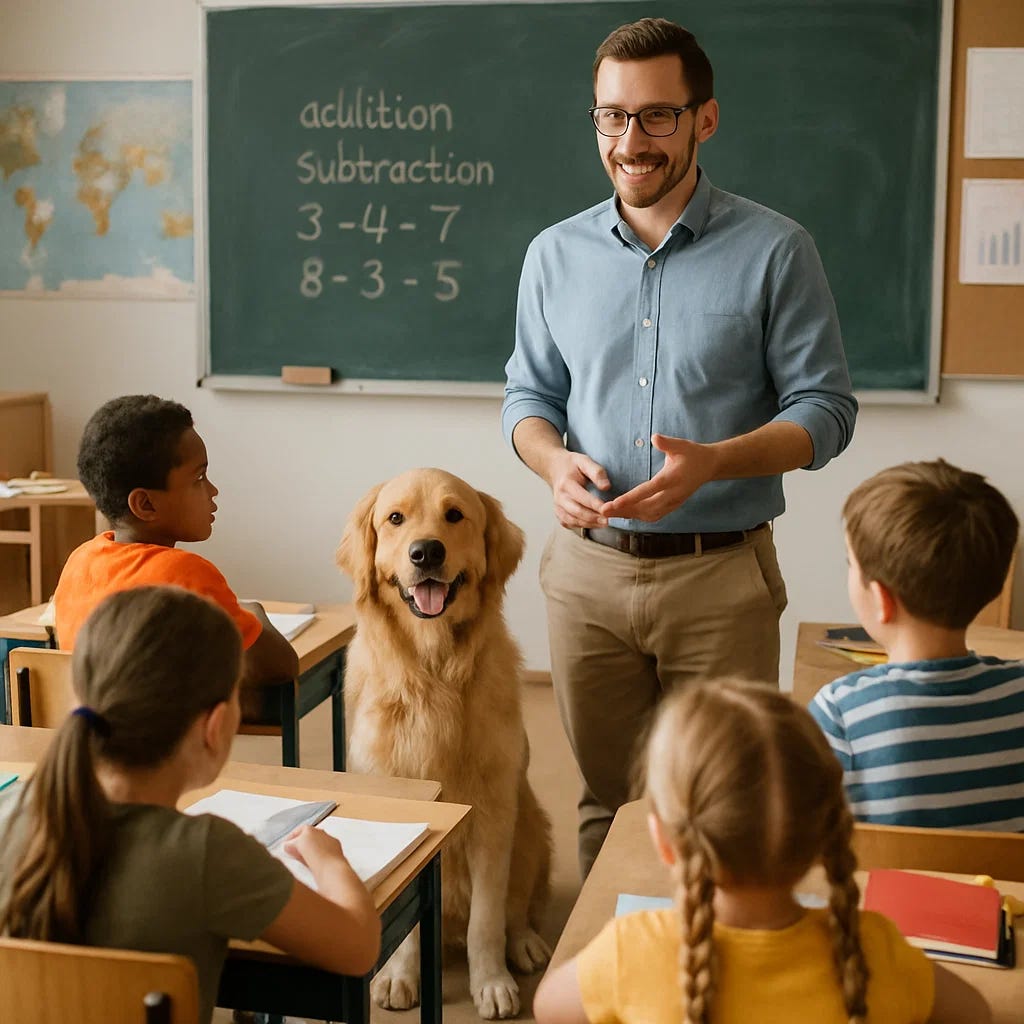
How Happy, Healthy Dogs in Classrooms Can Change Hearts in Turkey
For many children, outside the classroom they hear messages of fear and hostility toward non-human animals. Too often, children are taught to see stray dogs and cats as dangerous, dirty, or disposable, lessons that feed the wider culture of hostility and abuse toward vulnerable beings.
But there is another way.
Research and lived experience across the world show that bringing healthy, happy dogs into classrooms has the power to transform the way children relate not only to animals, but to each other.
The Power of Presence
Children who spend time with dogs in safe, supervised classroom settings learn compassion in the most natural way possible.
Stroking a calm dog, walking together in the playground, or simply observing an animal’s gentle nature dissolves fear. It also challenges the harmful narratives children may hear at home or in the media, narratives that frame street animals as threats instead of friends.
When a child learns that a dog can be a friend, the seeds of respect are planted. That respect can grow into a habit of kindness that stretches beyond species.
Breaking the Cycle of Hatred
Hatred rarely arises spontaneously. It is taught, absorbed, and repeated.
If a child only hears that dogs spread disease, that cats are pests, or that animals are worthless, they are far more likely to carry those prejudices into adulthood. By contrast, when a child experiences joy with a classroom dog, seeing wagging tails and bright eyes the cycle is interrupted.
Healthy, vaccinated, and well-cared-for dogs in schools show children that animals can thrive when treated with dignity. They become living counterarguments to fearmongering
Building Emotional Resilience
Dogs are not just beneficiaries of this approach, they are also healers.
Interaction with dogs has been shown to reduce stress, ease anxiety, and even improve concentration among children. In classrooms where tensions may run high, the calming presence of an animal encourages cooperation and patience. These are skills every child needs, regardless of species boundaries.
By encouraging empathy toward dogs, schools also cultivate empathy between children themselves.
A society that cares for its most vulnerable animals is one that is better equipped to care for its most vulnerable people.
Planting Hope in Turkish Classrooms
Introducing dogs into schools in Turkey would not be without challenges.
It would require careful planning, proper training, and a commitment to animal welfare. But the rewards for children, for society, and for the dogs themselves are immense.
Every wagging tail in a classroom is a small act of resistance against cruelty. Every smile between a child and a dog is proof that compassion can be taught and learned. By opening classroom doors to healthy, happy dogs, Turkey has the chance to nurture a new generation that sees all life as worthy of respect.
The tide of hatred can be turned. And it can begin with something as simple, and as profound, as a dog lying peacefully at a child’s feet during a lesson.


