
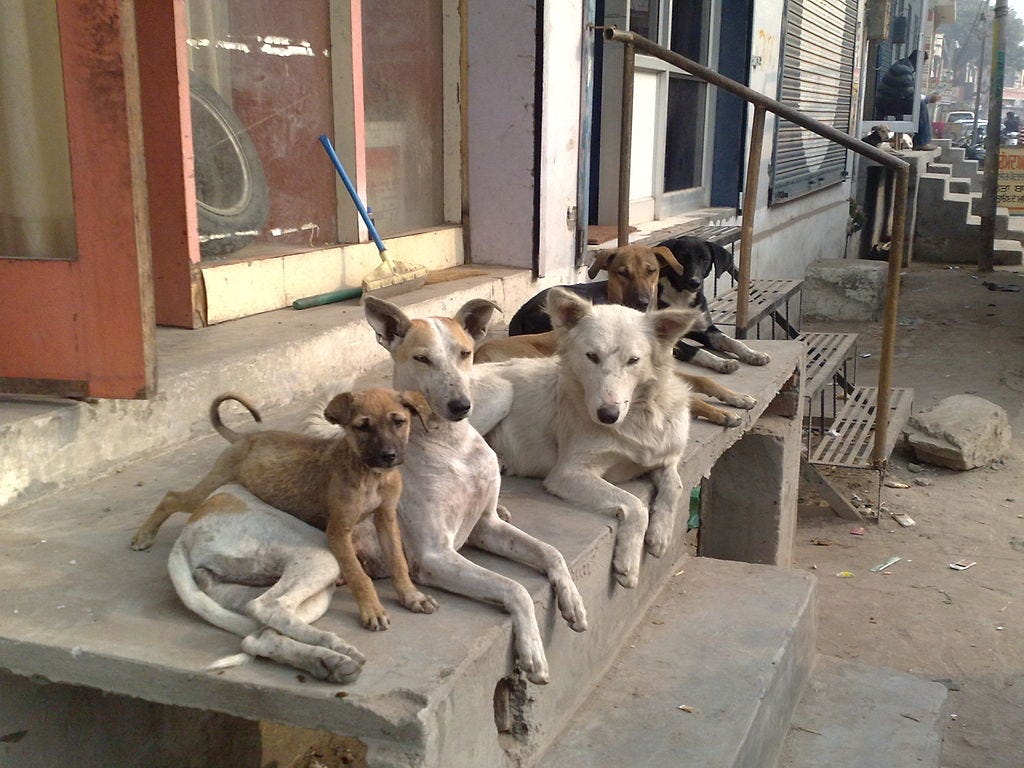
International Homeless Animals Day: The Forgotten Dogs Facing Death on the Streets
On International Homeless Animals Day, the world is encouraged to pause and think about the millions of animals with no one to care for them—no warm bed, no regular food, no one to protect them from harm. For countless dogs in Turkey, Morocco, Pakistan, and India, being homeless doesn’t just mean hardship. It can mean a death sentence.
Around the world, stray and street dogs are being killed under the banner of “population control” and “public safety.” But what these culls really reveal is a failure of compassion, planning, and political will.
Morocco: Allegations in the Shadow of the World Cup
Animal welfare groups, including the International Animal Welfare and Protection Coalition, have raised alarms about Morocco’s treatment of stray dogs ahead of the 2030 FIFA World Cup. Reports claim as many as three million dogs could be killed in a mass cull—through poisoning, shootings, and other brutal methods.
The Moroccan government denies these allegations, pointing instead to its Trap-Neuter-Vaccinate-Return (TNVR) program, launched in 2019. In El Aarjate, a facility treats and sterilizes 400–500 dogs, vaccinating and tagging them before release. Officials say only ill or aggressive dogs are euthanized.
Yet, with international sporting events historically linked to animal “clean-ups,” activists remain sceptical, urging greater transparency and independent oversight.
Turkey: Law vs. Reality
In Turkey, a recently upheld law requires municipalities to capture, shelter, vaccinate, and sterilize stray dogs, and make them available for adoption. On paper it sounded humane. In practice it has caused an unimaginable amount of suffering & loss
For homeless dogs already vulnerable to abuse, starvation, and disease, the shelter door, as it currently is does not offer salvation it offers more suffering.
Pakistan: Killing in the Name of Safety
In March 2025, authorities in Pakistan’s Punjab province killed around 1,000 stray dogs in just two weeks following a spike in reported attacks. This approach is not new—poisoning and shooting campaigns have been used for decades across the country, despite global health bodies proving they are ineffective at controlling populations or rabies.
For Pakistan’s homeless dogs, the danger doesn’t just come from the streets—it comes from the very systems meant to manage them.
India: Progress Under Threat
A recent Supreme Court order now requires all stray dogs in Delhi-NCR to be captured and permanently housed in shelters. In Kerala, pressure from anti-dog movements has fuelled calls for legal culling.
The danger is clear: once compassion is replaced by fear, homeless animals are always the first to pay the price.
Why Culling Fails—and What Works
Every credible authority, from the World Health Organization to major veterinary associations, agrees: killing homeless dogs does not work. It does not reduce populations in the long term and it does not eliminate rabies.
What does work?
Trap-Neuter-Vaccinate-Return (TNVR)
Large-scale rabies vaccination
Accessible adoption programs
Public education to promote responsible pet ownership
These methods treat the problem at its root—while allowing dogs to live without fear.
On International Homeless Animals Day, Let’s Choose Humanity
The stray dogs of Morocco, Turkey, Pakistan, and India are not pests. They are survivors. They are sentient beings who deserve safety, kindness, and a place in our communities.
On this International Homeless Animals Day, stand with us against cruelty
Share this blog to raise awareness of what homeless dogs are facing worldwide.
Support campaigns which seek to improve the lives of stray dogs.


