


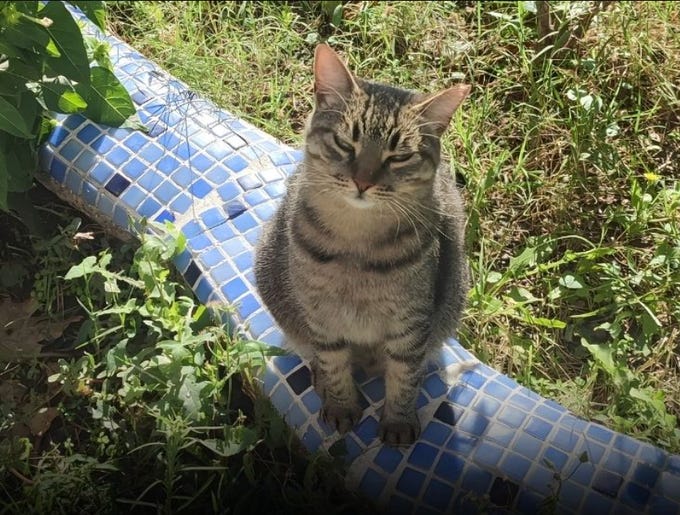
On 5 March 2026, a trial will take place at Bayraklı Courthouse in İzmir concerning the killing of a community cat named Poncik.
The case has drawn attention across Turkey not only because of the brutality involved, but because it raises a wider question: how seriously society treats violence against animals under the law.
The İzmir Bar Association has publicly stated that it is following the case closely, emphasising that justice for Poncik is a matter of legal principle as well as compassion.
What Happened to Poncik
Poncik was a community cat living in a neighbourhood where local residents cared for him. Like thousands of cats across Turkey, he was part of the informal urban ecosystem: fed by neighbours, recognised by the community, and living freely in shared public space.
He was stabbed to death, an act that shocked local residents and prompted calls for accountability.
In response, animal advocates and citizens organised around a simple message:
Justice for Poncik.
The upcoming hearing will determine how the law responds to this violence.

The Accusations and Neighbourhood Tensions
According to reporting from local media, prosecutors allege that Erol Ö. and Sunay Ö., a couple living in the same residential complex in Bayraklı, are responsible for the killing of Poncik. The indictment states that the pair acted together and used a sharp object to kill the cat, with prosecutors seeking a prison sentence of up to four years.
Poncik was not a stray unknown to residents. He was a community-fed cat, cared for collectively by people living in the complex. This appears to have been a source of ongoing tension. Neighbours reported that disputes had occurred between the couple and other residents over the presence of the cat and the practice of feeding animals in shared spaces.
Following the incident, police collected blood samples from the scene and from outside the couple’s residence, which later matched the samples taken from the cat. The suspects denied the allegations during the investigation, but prosecutors nevertheless proceeded with charges of killing a domestic animal using a cutting instrument in joint action.
The case quickly became a flashpoint in the neighbourhood and beyond. Local residents, animal-welfare advocates and lawyers began closely following the proceedings, arguing that the outcome will signal whether acts of cruelty against community animals are treated seriously by the justice system.
The Legal Context
Turkey’s animal protection framework has changed significantly in recent years.
The Animal Protection Law (Law No. 5199) was strengthened in 2021 so that certain acts of cruelty against animals are no longer treated merely as administrative offences but as criminal acts subject to prosecution.
However, enforcement remains one of the key issues.
Many cases involving severe animal abuse historically ended with:
minimal penalties
suspended sentences
or procedural dismissal
Because of this pattern, individual trials increasingly become symbolic tests of whether the law is being applied in practice.
The Poncik case now sits within that broader legal landscape.
The Position of the İzmir Bar Association
In its public statement, the İzmir Bar Association made its position clear:
The killing of Poncik must be treated as a serious criminal act.
The bar association will monitor the proceedings.
The case is not only about one animal, but about the enforcement of animal protection law.
Bar associations in Turkey increasingly intervene in animal cruelty cases to ensure proper legal oversight and to prevent such cases from being quietly closed.
Their involvement signals that the legal profession itself recognises the importance of these prosecutions.
Why This Case Matters
Violence against animals is rarely an isolated issue.
Research in criminology and behavioural science has repeatedly shown that deliberate cruelty toward animals is associated with broader patterns of violent behaviour. For that reason, many legal systems treat animal cruelty not simply as property damage but as a public safety concern.
Cases like Poncik’s matter because they test three things:
Legal enforcement
Whether existing laws protecting animals are actually applied.Public accountability
Whether acts of cruelty are treated seriously by the justice system.Social norms
Whether communities accept or reject violence against vulnerable animals.
When the victim is a small community animal, the case becomes a measure of how society treats those who cannot defend themselves.
The Hearing
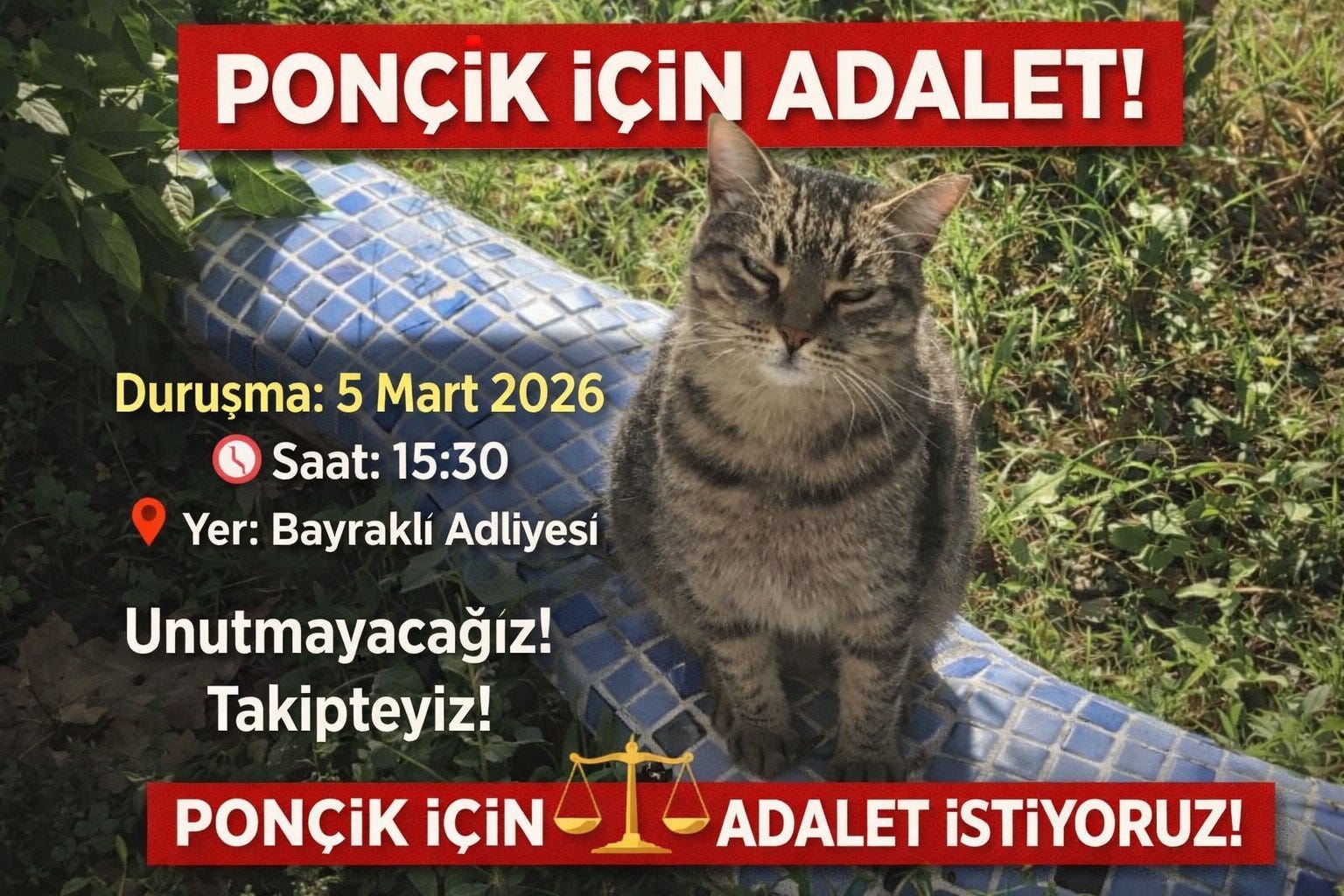
The trial will take place:
Date: 5 March 2026
Time: 15:30
Location: Bayraklı Courthouse, İzmir
Animal advocates, lawyers and citizens have called for the case to be closely monitored.
The message repeated across social media and legal statements is simple:
Poncik will not be forgotten.
A Wider Reflection
Every city with street animals faces the same moral question.
Street animals exist because humans created the environments in which they survive. They depend on communities for tolerance, protection and sometimes care.
When one of them is deliberately killed, the issue is no longer only about that animal.
It becomes a question of what kind of society we are willing to be.
Justice for Poncik is therefore not only about a single cat.
It is about whether cruelty toward the smallest and most vulnerable lives is treated as something that matters under the law.