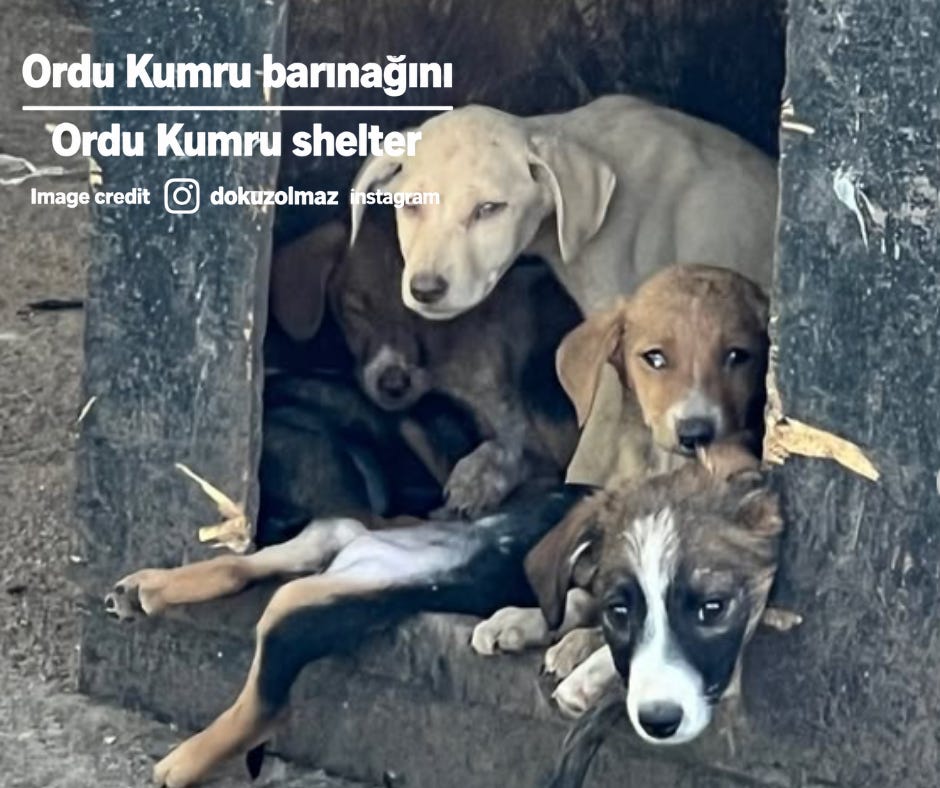
On 27 August 2026, Turkish animal welfare advocate Mr Alper Karamış published deeply concerning footage following a visit to the municipal animal shelter in Kumru, in Türkiye’s Ordu province. His visit came just weeks after the opening of a new facility there and presented a markedly different picture from the positive public record surrounding its development.
Dog Desk Animal Action has reviewed and archived the footage. Some of the material is extremely distressing and we have chosen not to reproduce the most disturbing images here. Our purpose is to document what was reported, place it within the available public record and follow subsequent developments.
Mr Karamış is a trusted animal welfare advocate whose work we have followed. He approaches shelter monitoring in a balanced and professional manner, visiting facilities, documenting what he finds and engaging with the relevant authorities. His work in Ordu was not limited to Kumru. He said that during a single day he visited one animal transfer centre and three shelters across the province.
Kumru’s facility forms part of the changing infrastructure being developed for free roaming dogs across Türkiye. As municipalities respond to changes in the country’s animal protection legislation and the collection of dogs from public spaces, shelters and so called natural living areas are being developed across the country.
In Ordu, that process has been the subject of meetings involving the Governorate, municipalities and the public bodies responsible for animal protection and veterinary services. On 21 January 2026, Governor Muammer Erol chaired a meeting examining progress on shelters and natural living areas across the province. Kumru was specifically among the districts discussed.
By July, the Governor was speaking positively about the facility being developed in Kumru, comparing it favourably with work undertaken in Ünye and indicating that work across the province was approaching completion.
Then, on 5 August 2026, local media reported the opening of Kumru’s Can Dostlar Doğal Yaşam Alanı, or Companion Animals Natural Living Area, in Çatılı.
Further developments followed quickly. On 12 August, Kumru Municipality and Kumru State Hospital signed an agreement intended to direct suitable surplus food from the hospital to animals at the facility. Mayor Yusuf Yalçuva subsequently said that more than 300 animals were being accommodated there.
The public picture surrounding Kumru’s new facility and the conditions subsequently reported by Mr Karamış are markedly different.
On 27 August, just 22 days after the reported opening, Mr Karamış published footage following his visit to Kumru.
He reported that no staff or veterinarian was present at the time of his visit. He described sick and injured dogs, animals he believed had died, sanitation problems and concerns about water and the general care available to the animals. He also said that similar concerns had been reported at the facility approximately a month earlier.
These are Mr Karamış’s observations, and that distinction is important. Dog Desk Animal Action was not present at Kumru and we are not presenting his account as findings independently made by us.
We have, however, reviewed the footage he published. It shows numerous dogs and conditions that give substantial cause for concern. Some sections contain extremely distressing imagery, including what appear to be animal remains. We have retained the footage within our evidence record rather than reproducing those images here.
The provenance of the material is also important. Mr Karamış identified the facility as Kumru following his visit and publicly brought his observations to the attention of Kumru Municipality, Ordu Nature Conservation and National Parks and the Ordu Governorate.
His observations across Ordu extended beyond the conditions he reported at individual facilities. Following his visits, Mr Karamış also discussed pressure within the wider municipal system. He said municipalities expected to provide treatment and sterilisation through their own facilities were sending animals to Ordu Metropolitan Municipality. In his assessment, this was placing additional pressure on veterinary teams and contributing to animals accumulating within the central system.
That wider context is worth recording because Türkiye’s changing approach to its free roaming dog population requires considerably more than the construction of facilities.
Once dogs are collected, the facilities receiving them need sufficient capacity, veterinary provision, staffing, food, clean water, sanitation, disease management and systems capable of identifying and treating sick and injured animals. As more dogs enter municipal care, understanding how those systems function in practice becomes increasingly important.
The chronology at Kumru is particularly striking.
21 January 2026: Ordu Governorate holds a meeting chaired by Governor Muammer Erol examining progress on shelters and natural living areas across the province. Kumru is among the districts discussed.
July 2026: Governor Erol speaks positively about the facility being developed in Kumru, comparing it favourably with the facility in Ünye.
5 August 2026: Local media reports the opening of Kumru’s Can Dostlar Natural Living Area in Çatılı.
12 August 2026: Kumru Municipality and Kumru State Hospital sign an agreement intended to provide suitable surplus food for animals at the facility.
August 2026: Mayor Yusuf Yalçuva says that more than 300 animals are being accommodated at the facility.
27 August 2026: Mr Karamış publishes his account and footage following a visit to Kumru, reporting serious concerns about the conditions he encountered. Kumru Municipality, Ordu Nature Conservation and National Parks and the Ordu Governorate are publicly alerted to his observations.
1 September 2026: Dog Desk Animal Action has identified no publicly available response from Kumru Municipality or the Ordu Governorate specifically addressing the conditions documented during the 27 August visit. We have also found no publicly available confirmation of an intervention for the dogs following that visit.
That final point requires some care. The absence of a public statement or report does not establish that no action has been taken. Discussions, inspections, veterinary interventions or changes at the facility may have occurred without being made public. Only a few days have passed since Mr Karamış published his findings, and we will continue looking for further information.
There is a wider reason we are documenting Kumru.
Türkiye’s approach to its free roaming dogs is changing rapidly, with increasing numbers of dogs being moved from public spaces into municipal shelters and natural living areas. Much of the public record understandably focuses on collection programmes, construction, capacity and the opening of new facilities.
What happens after collection is equally important.
Kumru is one facility in one province, and a visit on a single day cannot tell us what is happening across an entire national system. It can, however, provide another piece of evidence about how that system is developing in practice and where difficulties may emerge as facilities begin receiving significant numbers of animals.
That is why we will continue following Kumru.
If a response is published by the municipality or Governorate, if an inspection is reported, if Mr Karamış provides a follow-up, or if publicly available evidence emerges of veterinary intervention or changes at the facility, we will add those developments to the record.
Twenty two days separate the reported opening of Kumru’s new facility and Mr Karamış’s publication of what he encountered there.
For us, the important part of this story is what happens to the dogs next.


