
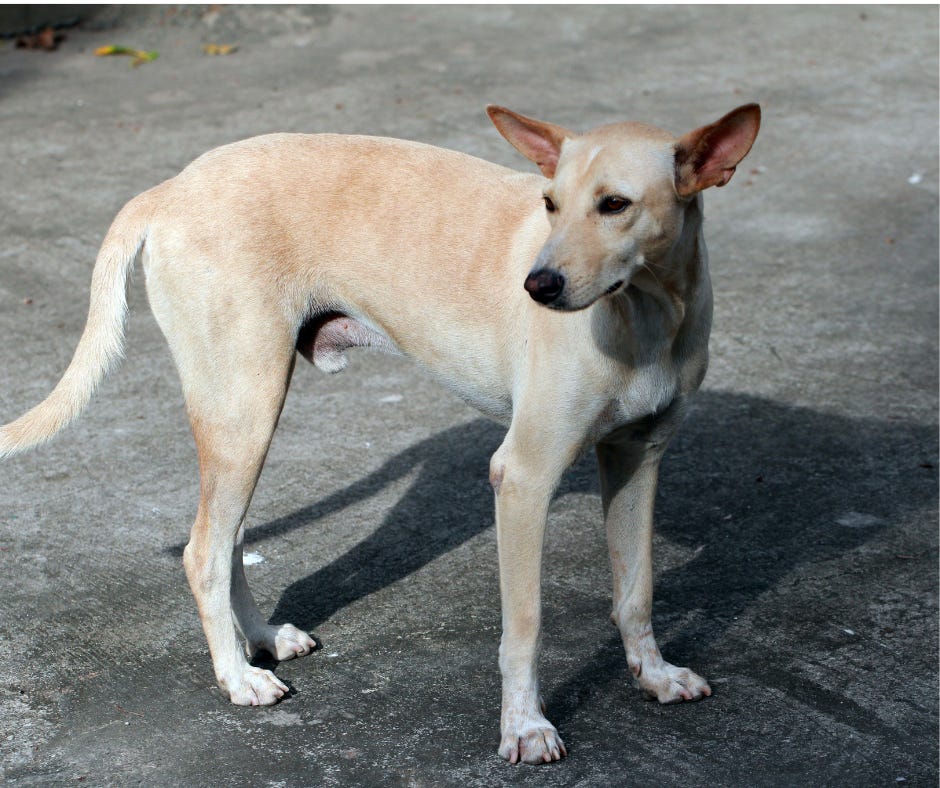
A dog died during an operation organised by Klang Royal City Council in Malaysia. A volunteer who took part in that operation has now appeared in court accused of causing the dog unnecessary pain or suffering by allegedly strangling him with a looped restraint. The defendant has pleaded not guilty. The allegation has not been proved and the case is due to return to court on 8 October 2026.
The dog, known as Rocky, died on 29 July during an operation in Taman Telok Gedung Indah, Port Klang. According to Klang Royal City Council, the operation involved 11 council officers and approximately 50 residents and neighbourhood representatives. Twelve dogs were reportedly captured before the incident involving Rocky.
Why were so many members of the public involved in physically capturing dogs?
The council says those taking part were briefed on the capture procedure and that equipment including loops and nets was used. It maintains that Rocky died during a struggle after a woman claiming ownership attempted to intervene, rather than because of the capture method itself. The woman has also pleaded not guilty to a charge alleging that she pulled the dog in a way that caused pain, as well as a separate allegation concerning the keeping of an unlicensed dog.
Those competing accounts will now be examined by the court. The wider policy questions should not have to wait.
A briefing immediately before an operation is not the same as practical, assessed training in animal handling. Catching a frightened dog safely requires an understanding of canine behaviour, restraint technique, escape risk, stress, injury and the dangers created when several people pull or close in on the same animal. A looped restraint can become lethal when it tightens around a dog’s neck, particularly during panic or physical conflict.
If residents were expected to do more than identify locations and observe from a safe distance, what training had they completed? Who assessed their competence? Who was directly supervising each capture? Were participants instructed to stop when ownership was claimed? Was there an emergency release procedure? Was a veterinarian present or immediately available? What record was made of the briefing, the people authorised to handle equipment and the sequence of events leading to Rocky’s death?
The council has said it receives approximately 50 complaints about stray dogs every month and struggles with limited enforcement staff and difficulty finding private contractors. That may explain why it sought help from residents. It does not make the risks acceptable. A shortage of trained personnel cannot be solved by transferring a dangerous public function to people whose preparation, competence and accountability have not been demonstrated.
The distinction between a stray dog and a dog with a home also matters. Rocky was outside a house and a woman claimed ownership while the attempted capture was taking place. The council says no licence was produced and ownership was disputed. But the absence of a licence does not turn a dog into an object that can be handled without care, nor does it remove the authority’s duty to pause and establish the facts when somebody says the dog belongs to them.
That is precisely why the cruelty charge matters. Its use in this case shows that alleged conduct during a municipal dog-catching operation can be examined under Malaysia’s Animal Welfare Act. Participation in an authorised operation does not place a person’s handling of a dog automatically beyond animal-welfare scrutiny.
It also arrives at a particularly troubling moment.
In Seremban, a different local authority has introduced a programme offering members of the public RM50 for every adult stray dog handed over alive and RM25 for a puppy. Seremban City Council says dogs must be delivered without serious injuries or evidence of abuse. Yet payment per dog creates an incentive to capture, and the council has still not publicly provided enough detail about training, lawful authority, ownership checks, capture methods, transport or what happens to each dog after surrender.
The Klang and Seremban programmes are separate and should not be treated as though they are one operation. Together, however, they expose the same policy danger: local authorities expanding public participation in dog capture without first demonstrating the safeguards needed to protect both dogs and people.
If residents can be recruited into a municipal operation, or offered money to deliver dogs, authorities must answer some basic questions before a single animal is touched. How will a participant distinguish a genuinely unowned dog from a roaming, lost or community cared for dog? What prevents the same dog from being pursued by several people? What equipment may be used? Who intervenes when a capture becomes dangerous? What evidence must accompany the dog? Is every dog scanned for a microchip and held for reclaim? Where is the dog taken, and what outcomes are recorded after arrival?
The public should not have to wait for another death to discover whether those safeguards exist.
Dog Desk Animal Action moved Malaysia to Watchlist following these recent developments. The court charge is evidence that the national Animal Welfare Act can be used when conduct during capture is alleged to cause suffering. That is important, but prosecution after an incident is not a substitute for preventing the incident.
Klang Royal City Council should publish the written procedure used during the July operation, the training and authorisation requirements for residents, the incident review and any changes made since Rocky’s death. It should also explain whether members of the public will continue to participate directly in captures.
Seremban City Council should suspend its payment scheme until it publishes equivalent safeguards, including training requirements, ownership checks, capture and transport rules, veterinary assessment, reclaim arrangements and complete post capture outcome records.
Rocky’s death must not be reduced to a dispute between the people who were holding the restraint. The operation existed because a public authority organised it. The public authority therefore has a responsibility to explain how it was designed, who was permitted to handle dogs and what will prevent this from happening again.


