


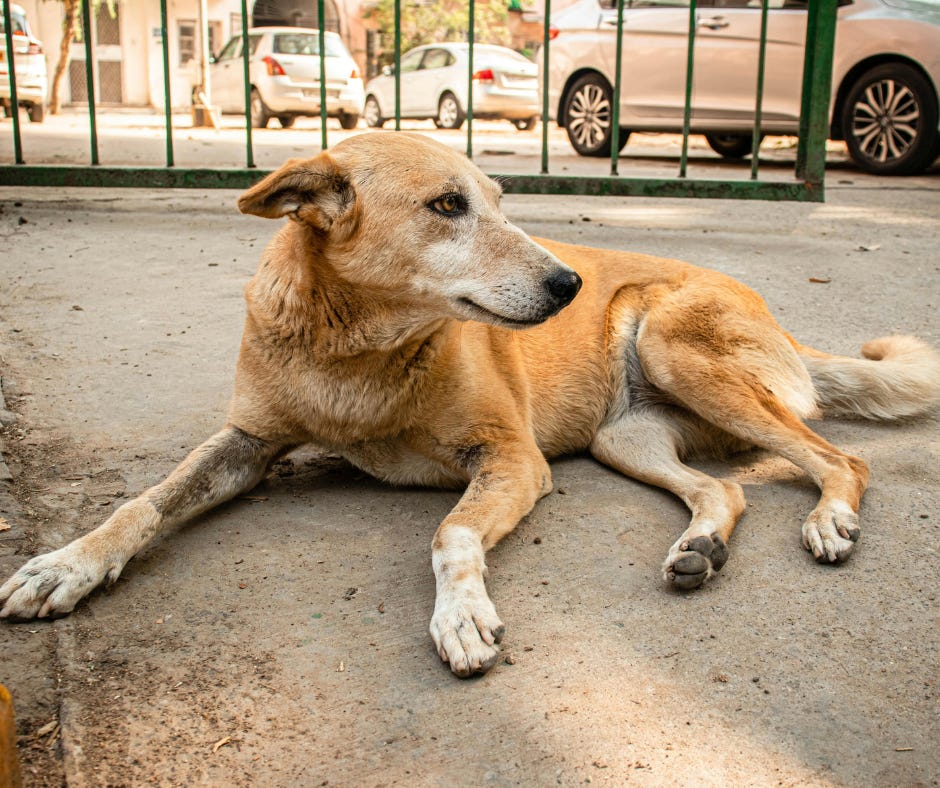
Morocco’s new law on stray animals is no longer a proposal. Law 19.25 was promulgated on 28 July 2026 and published in the Official Gazette on 10 August, bringing a new national framework for the management of stray animals into force.
On paper, the law contains measures that should improve protection. It provides for authorised centres to collect, identify, vaccinate, sterilise and track stray animals. It creates new responsibilities for owners, including identification and the reporting of lost animals. It introduces penalties for abandonment, deliberate killing, torture and other forms of cruelty. It also provides for a national database through which an animal’s identity, location, treatment and the centre responsible for them should be recorded.
Morocco has needed a clear, accountable and humane system for managing its free roaming dog population for years. Sterilisation, vaccination, identification and traceability are all essential parts of that system.
But the same law also makes it an offence to feed, treat or shelter a stray animal in a public place outside the framework established by the legislation and its implementing regulations. A person found in breach may face a fine of between 500 and 2,000 dirhams.
That restriction has come into force before the safety net intended to replace informal care is demonstrably ready.
Morocco does not yet have a nationwide network of accessible, adequately resourced centres capable of responding whenever somebody encounters a hungry, injured or sick dog. The detailed regulations governing parts of the new system may take up to two years to appear. Existing facilities have also been given time to comply with the new standards.
This creates a dangerous gap between what citizens may be told not to do and what public authorities are presently equipped to do instead.
If somebody finds a dog starving beside a road, where should they take them? If a dog is injured and no authorised centre is available, can that person provide food, treatment or temporary shelter without risking a penalty? What response time will be expected from the municipality? What happens at night, during public holidays or in areas without functioning animal care infrastructure?
The law may eventually provide answers through its implementing regulations. It does not follow that vulnerable animals can safely wait for those regulations to be written.
Moroccan animal welfare organisations have raised precisely this concern. They are calling for clear rules distinguishing prohibited activity from legitimate rescue, emergency treatment, organised feeding and temporary care. They have also asked for practical standards covering the capacity, staffing, hygiene, veterinary provision and confinement conditions of the new centres.
Those questions are not objections to regulation. Feeding animals in ways that create large congregations, leave waste behind or cause conflict in residential areas can create genuine problems. Public feeding can and should be managed responsibly. But regulating how feeding takes place is very different from leaving citizens afraid to help an animal when no adequate public alternative exists.
The same scrutiny must be applied to collection. Under Law 19.25, centres will be able to collect animals, assess their health and behaviour, sterilise and vaccinate them, and return them to their original environment or another suitable location when conditions allow. Euthanasia may be performed under veterinary supervision when recovery is considered impossible or an animal is judged to present a danger to people or other animals.
The words “when conditions allow” will matter enormously. So will the way danger is assessed, the qualifications of the person making that decision and the records created to justify it. A legal provision permitting return is not the same as a legal presumption that healthy, sterilised and vaccinated dogs will be returned. Without precise rules, consistent oversight and published outcome data, collection can become the visible action while the fate of the dogs remains hidden.
The planned national database could become one of the strongest elements of the law, but only if it records meaningful outcomes and the information is subject to independent scrutiny. Every collected dog should have an identifiable record showing where they were found, where they were taken, what treatment they received and whether they were returned, adopted, transferred, remained confined, died or were euthanised. Aggregate figures should be published regularly by municipality and by centre. Without that transparency, a database risks becoming an administrative claim rather than a safeguard.
There is another contradiction at the centre of this law. Morocco is placing restrictions on the people who have often filled gaps left by the state, while some of the public structures expected to replace their work have not yet been created or properly tested. Informal carers cannot provide a national population management strategy, but many dogs survive because somebody leaves food, reports an injury, arranges veterinary treatment or offers temporary safety. Removing that intervention before a reliable replacement exists does not create order. It creates abandonment by law.
This is why Dog Desk Animal Action will retain Morocco at Crisis on the Global Stray Dog Crisis Map. Law 19.25 contains potentially valuable measures, including sterilisation, vaccination, identification, anti abandonment penalties and digital tracking. Those measures should be recognised. They do not cancel out the serious risks created by restricting feeding and treatment before accessible public provision has been demonstrated.
The next stage will determine whether this becomes an animal protection law in practice or primarily a mechanism for removing animals and restricting the people trying to keep them alive.
Morocco must publish the implementing regulations without delay. They should protect emergency rescue and treatment, provide lawful routes for organised feeding, establish firm welfare and capacity standards for every authorised centre, require qualified behavioural and veterinary assessments, define when dogs must be returned and make outcome records publicly accessible.
Until those safeguards exist, the most important question is not whether Morocco now has a law bearing the word protection. It is whether a hungry, sick or injured dog will actually be safer because of it.