

Muzzles: A Misunderstood Tool for Dogs

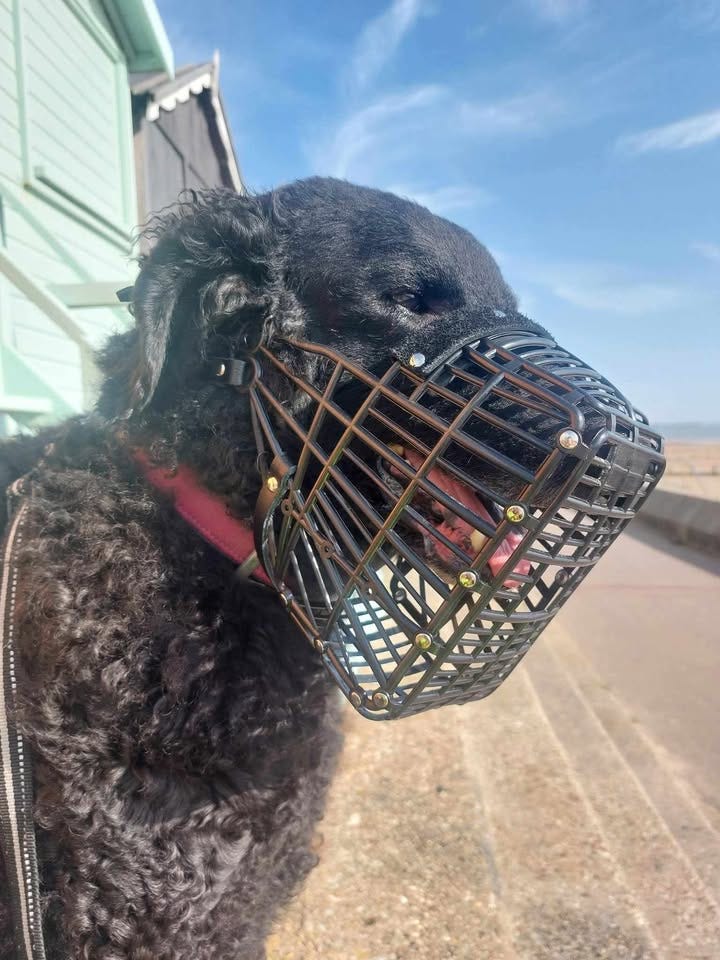
I remember listening to a colleague’s radio show some time ago where the topic of reactive dogs came up. Muzzle use was briefly mentioned, and it made me realise something: I had always held the misguided belief that muzzles were only for “bad” dogs, designed solely to prevent bites.
As it turned out, I wasn’t alone in this assumption. Nearly everyone I spoke to thought the same. A poll of 168 dog guardians asked whether we should be training dogs to accept muzzles. 65.5% said they saw no need for it even though many acknowledged there could be valid reasons for a dog to wear one.
This misunderstanding is bad news for dogs. The stigma surrounding muzzles limits the use of what can be an incredibly valuable and humane piece of equipment.
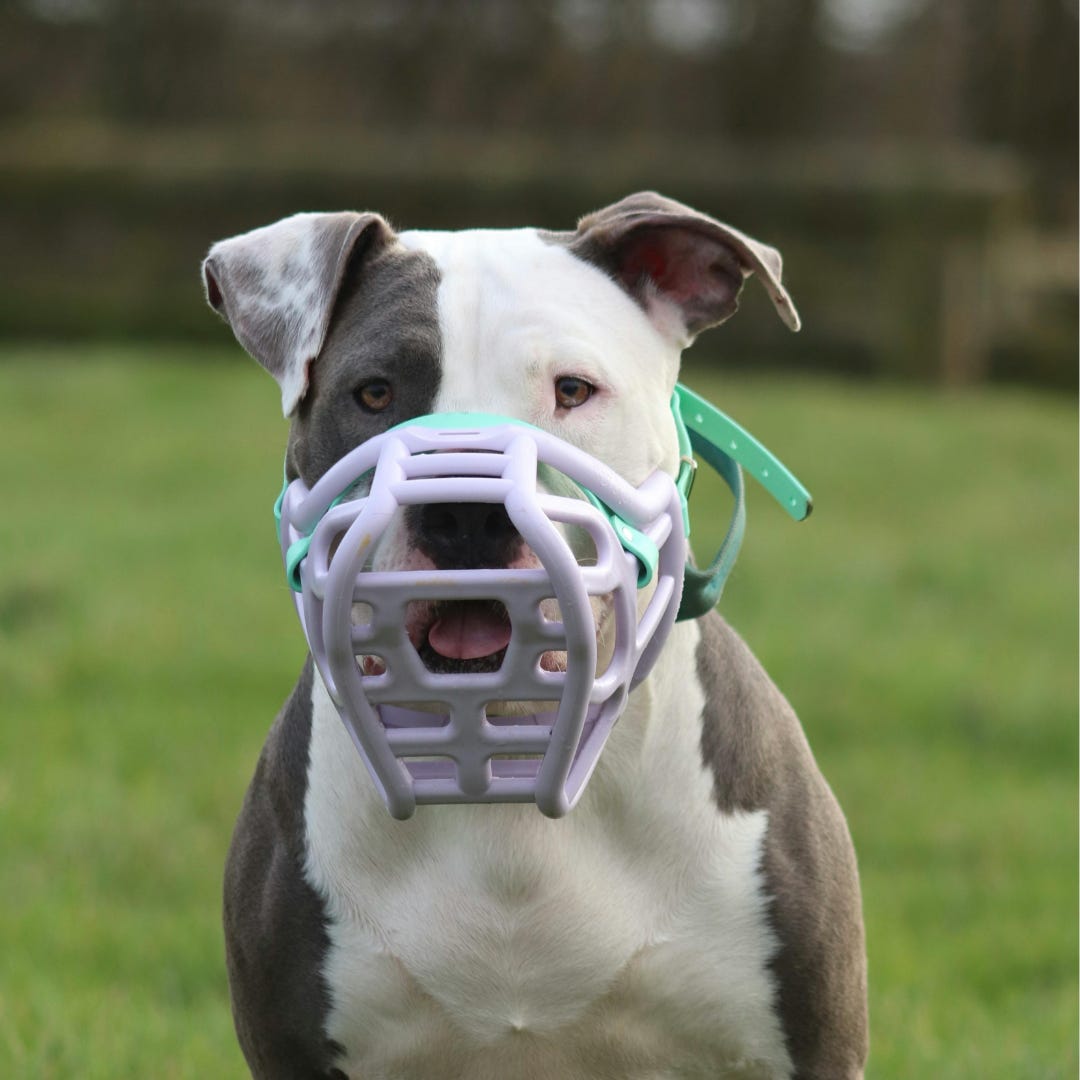
Why Might a Dog Need a Muzzle?
1. When a Dog Is in Pain
Pain changes behaviour. A normally gentle dog may growl, snap, or bite when touched, moved, or picked up while unwell. During treatment, wound care, or when administering medication, a muzzle can protect both the dog and the humans helping them.
2. At the Vet’s
Many dogs feel vulnerable during examinations. A muzzle can allow a vet to carry out a thorough check-up without the risk of a bite, helping to ensure the dog receives the care it needs quickly and safely.
3. For Anxious or Fearful Dogs
Just like humans, dogs have different personalities. Some are confident, others shy, anxious, or easily overwhelmed by new situations. Fearful dogs may bite out of panic. A muzzle can provide an extra layer of safety while a trainer or behaviourist works with the dog to build confidence.
4. After Surgery
Certain medical procedures, especially those involving the face, may require a dog to wear a muzzle during recovery to prevent them from interfering with stitches or wounds.
5. Breed-Specific Legislation
Sadly, in some countries dogs must wear muzzles in public simply because of how they look. Breed-specific legislation unfairly labels entire breeds as “dangerous” regardless of the individual dog’s behaviour.
6. Ageing Dogs
Older dogs can develop cognitive decline or “doggy dementia.” Confusion and fear may lead them to lash out unpredictably. A muzzle can help manage these situations compassionately.
7. Protecting Dogs From Themselves
Some dogs are relentless scavengers, hoovering up anything remotely edible on a walk. In these cases, a well-fitted, gentle muzzle can stop them from swallowing harmful litter or toxic items.
8. Around Other Dogs or People
Some dogs dislike other dogs. Others may have a deep-rooted fear of certain people because of past trauma. A muzzle offers peace of mind—it keeps everyone safe and allows the dog to navigate the world without being mislabelled “dangerous.”
Breaking the Stigma
The truth is simple: a muzzle does not mean a bad dog.
It means a responsible guardian.
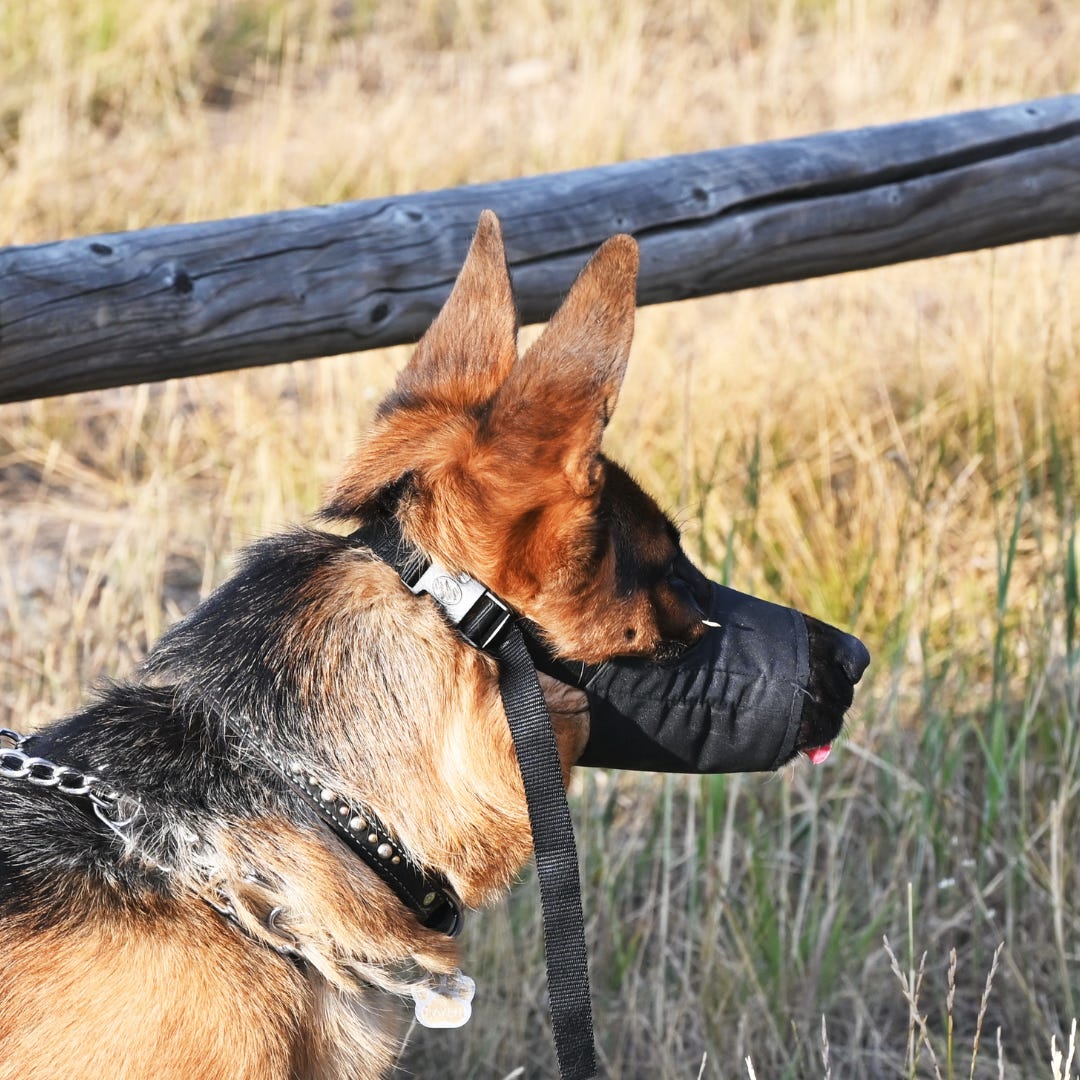
Muzzle training should always be positive, slow, and patient. A trainer or behaviourist can guide you so your dog learns to see the muzzle as something safe, not scary. Done right, it becomes just another piece of kit like a collar or harness.
So let’s change the conversation. Share this knowledge in your communities. The more people understand that muzzles are about safety and kindness, the less our dogs will be stigmatised for wearing them.
Because at the end of the day, a muzzle isn’t a mark of shame, it’s simply good practice.