

One in Two Dogs Dead Inside Alanya’s Municipal Shelter
If half the dogs entering a shelter die, the system designed to protect them is clearly not working.

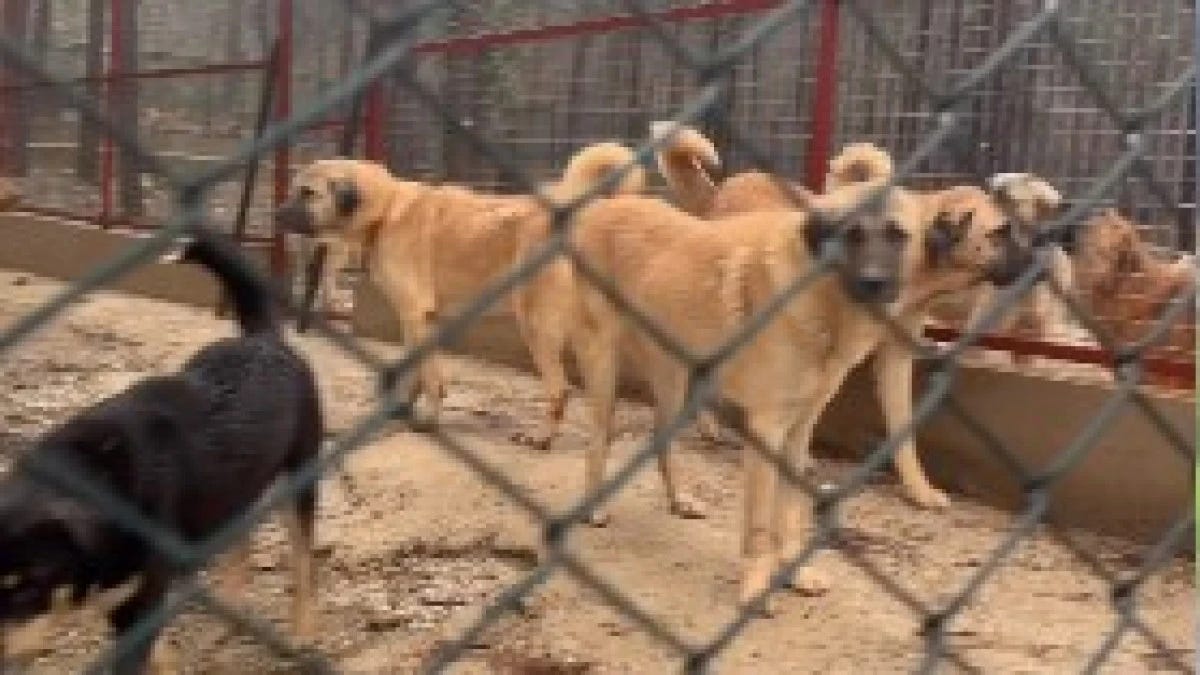
A number that should stop everyone
The figures emerging from the municipal animal shelter in Alanya are not simply troubling. They are devastating.
According to data obtained through an official information request, the shelter recorded the following figures for 2025:
1,308 dogs taken into the shelter
194 dogs adopted
552 dogs recorded as dying from natural causes.
If these numbers are correct, they reveal something deeply disturbing.
Nearly one out of every two dogs entering the shelter dies.
Even if every adoption is counted as a success, the mortality rate among the remaining dogs exceeds 40%.
That is not a rescue system. That is a system where dogs disappear into statistics.
Natural causes cannot explain half the dogs dying
The figures were highlighted by Vildan Yazar Ülgenoğlu, president of the Social Life and Equality Association, who has publicly questioned how such a death rate can be considered normal.
The explanation given for these deaths, natural causes, raises immediate and serious questions.
Dogs arriving at municipal shelters come from the streets. Some will be injured. Some will be ill. Some will be elderly. But shelters exist precisely to provide veterinary care and stabilisation.
A system in which hundreds of animals die inside the facility meant to protect them demands scrutiny.
Not vague explanations. Not bureaucratic language.
Real answers.
Where did the dogs go?
Across Turkey, community caregivers know their neighbourhood dogs intimately.
They know which dog sleeps near the bakery. Which one follows schoolchildren.
Which one waits patiently by the market.
Now many of those same caregivers are asking a devastating question:
Were their dogs among the 552 recorded deaths?
The uncertainty itself reflects a deeper problem, a lack of transparency about what happens behind shelter gates. Many of which are closed to the public who fund them
A 29-page violation file
Animal advocates have reportedly compiled a 29-page file documenting alleged violations at the shelter and submitted it to authorities.
Among the concerns raised:
Lack of transparency from the municipality
Questions about the management of the veterinary department
Claims that shelter operations are being handled by unqualified individuals under a volunteer label
These allegations now demand investigation. Because the numbers alone are alarming.
But numbers without accountability become normalised frighteningly quickly.
A national pattern emerging
The Alanya case is not appearing in isolation.
Across Turkey, municipal shelters were originally designed as temporary treatment and sterilisation centres.
Dogs were meant to be:
Collected
Treated and vaccinated
Sterilised
Returned to their territories
But following legislative changes in 2024, the system shifted dramatically.
Instead of functioning as treatment hubs, many shelters are now expected to house large numbers of dogs indefinitely.
The infrastructure for that transformation simply does not exist.
The result is predictable:
overcrowded pens
inadequate veterinary care
disease outbreaks
rising mortality
The warehousing of sentient beings
Alanya now appears to be another example of this structural collapse.
Warehousing animals is not animal welfare
There is a fundamental truth that policy makers cannot escape.
You cannot remove thousands of street dogs from their territories and simply store them somewhere.
Without sufficient space, veterinary staff, funding, and oversight, shelters become warehouses.
And warehouses quickly become places where animals quietly disappear.
The statistics emerging from Alanya raise a serious question for authorities:
Are municipal shelters still functioning as treatment centres or have they become places where dogs simply die out of sight?
What must happen next
The figures released demand an independent review.
At minimum, authorities must clarify:
The causes of the 552 recorded deaths
Veterinary staffing levels at the shelter
Disease management protocols
Intake and mortality records
Adoption and release procedures
Because when hundreds of animals die inside a public facility, the public has the right to know why.
Behind every number is a dog
Statistics are useful for understanding the scale of a problem. But they also risk hiding what is really happening.
Each of those 552 deaths was a living animal. A dog that once walked the streets of Alanya. A dog someone fed. A dog someone recognised. A dog someone hoped would be safe.
If shelters are to exist at all, they must represent protection. Not disappearance & death
When a System Fails, It Must Be Replaced
Alanya should not be dismissed as a local scandal. When shelters record hundreds of deaths and nearly half the animals entering them never come out alive, the system designed to protect dogs is clearly not working. Across Turkey, similar conditions are emerging elsewhere. If you believe animals deserve a humane and effective approach to population management, one based on sterilisation, veterinary care and transparency rather than confinement and disappearance please sign our petition calling for the repeal of Turkey’s slaughter law and the closure of failing shelters
https://www.change.org/repealturkeyslaughterlaw
Because a shelter where half the dogs die is not protection it is a system that must change.
Where is this place?