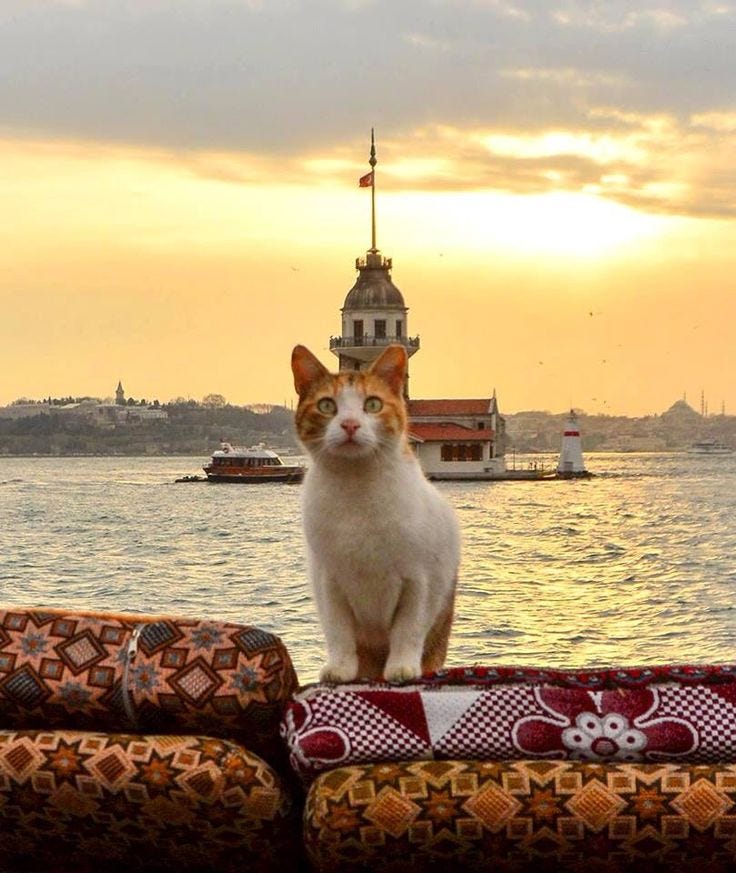
Our Humanity Is on Trial
Across Turkey, an unspoken battle plays out every single day, a battle between those who believe compassion is a duty, and those who would rather turn their heads away. It’s a fight not only for food and water, but for recognition that the lives of stray animals matter. That they deserve more than to be slowly starved out of existence because their presence has been labelled a nuisance.
But this fight is about far more than bowls of kibble on street corners.
It is a fight about who we are, and what kind of society we choose to be.
The Animals Did Not Put Themselves on the Streets We Did
One of the hardest truths to confront is this: the dogs and cats living on our streets did not choose this life. Generations ago people created today’s street populations. More recently, failed policies and broken promises of collect, neuter, return have kept the cycle alive.
These animals are here because humans put them here, intentionally or through neglect.
To punish them now for simply surviving by denying them food, chasing away volunteers, or even proposing starvation as a solution is not only illogical, but profoundly unjust.
Our streets are shared spaces. Our responsibility to the beings we placed there is non-negotiable.
In some regions, authorities and residents have openly discussed or quietly enacted starvation as a strategy to control stray populations. Bowls are confiscated, volunteers are threatened, feeding bans are enforced. The idea is simple, brutal, and wrong: remove food, and the animals will die.
But here’s the truth that no one defending this approach wants to look at:
Starving an animal to death doesn’t solve a problem
it exposes one.
It exposes our willingness to tolerate suffering.
It exposes how easily some people detach themselves from compassion.
It exposes the fracture lines in a society’s moral compass.
When we decide that a sentient being, one capable of fear, hunger, and hope should be allowed to slowly waste away, what does that say about us?
When did convenience become more important than kindness?
When did silence become easier than empathy?
Compassion Is Not a Crime
And yet, the feeders persist.
In the dead of night, in the blistering heat, in the snow, in the rain, people from every walk of life carry bags of dry food down forgotten alleys and dusty roads. They refill water bowls outside industrial estates. They leave food beneath benches, behind bins, on the edge of highways. They patch up wounded dogs, remove ticks, take sick animals to vets they can’t afford. They argue with neighbours, councils, and officials who want them to stop.
They do it quietly, without recognition
because compassion is not a performance.
It is a lifeline.
Every time a feeder kneels to pour food into a bowl, they are saying something loud and clear:
“Your life matters. I will not look away.”
Hunger Hurts Everyone But Kindness Heals
Letting animals starve doesn’t only affect the animals. It affects communities:
Starving animals become desperate, scavenging dangerously.
Disease spreads faster among the malnourished.
Aggression increases under extreme hunger.
Dead and dying animals become a public health risk.
Feeding, sterilisation, and humane management are not only kinder they are safer, smarter, and internationally recognised as the only effective approach.
To feed an animal is not to invite chaos.
It is to stabilise a population and reduce suffering.
What Kind of People Do We Want to Be?
At its heart, this crisis forces a single, uncomfortable question:
Do we want to be the kind of society that watches a living being starve,
or the kind that steps in to help?
Our answer defines us.
History will not remember the excuses made for cruelty.
But it will remember the people who carried sacks of food down empty streets when no one else would.
It will remember the volunteers who stood between hunger and hope.
It will remember the hands that fed.
We Can Choose Humanity Every Day
Feeding is not the whole solution, but it is a crucial part of it. It is a declaration that we refuse to accept cruelty as normal. Every bowl filled is an affirmation of values we should be proud to hold: empathy, responsibility, and compassion.
And so we continue.
Not because it is easy.
Not because it is convenient.
But because it is right.
If we want a kinder world, we have to build it, one full stomach at a time.


Well said! To punish compassion is to turn everything upside down. It's such a shame, especially because Turkey used to inspire people across the globe, with its images of food dispensers in the streets and by generally being a model of urban interspecies coexistence. I hope that the bans and the law get overturned.
Of course the feeders would not give up. Would one not feed their hungry child, their brother or their human friend? One gets just as attached to the animals, and friendship would count for nothing if you let your friend starve because the authorities said so. However, I guess that casual passersby could be discouraged from sharing their leftovers with random animals, which may cause dogs to congregate in larger packs in remote areas secretly frequented by the bravest humans, thus becoming less socialised because they no longer see people as a source of treats.
It's incredibly short-sighted and cruel. Unfortunately, I feel that over the years, animal welfare activists have contributed to this idea of using starvation to "control the dog/cat problem" because they sometimes endorse "waste management" without much thought. While it may be true that free-living animals proliferate if there's more food available, including from spilled waste or open bins, the whole idea of switching to humane methods (sterilisation) is that we don't want to kill the animals or cause them to suffer, directly or indirectly. Since I'm not aware of any evidence that either dogs or cats can decide to have fewer kids in times of food scarcity, we must always emphasise that the animals who already exist must be given food, water and the basics to live a decent life... It's the only responsible and just way to treat domesticated beings. (I may have been guilty of what I describe here myself, a long time ago.)