
Redefining Happy Endings for Stray Dogs
Why Living in a Home Isn’t Right for Every Stray Dog
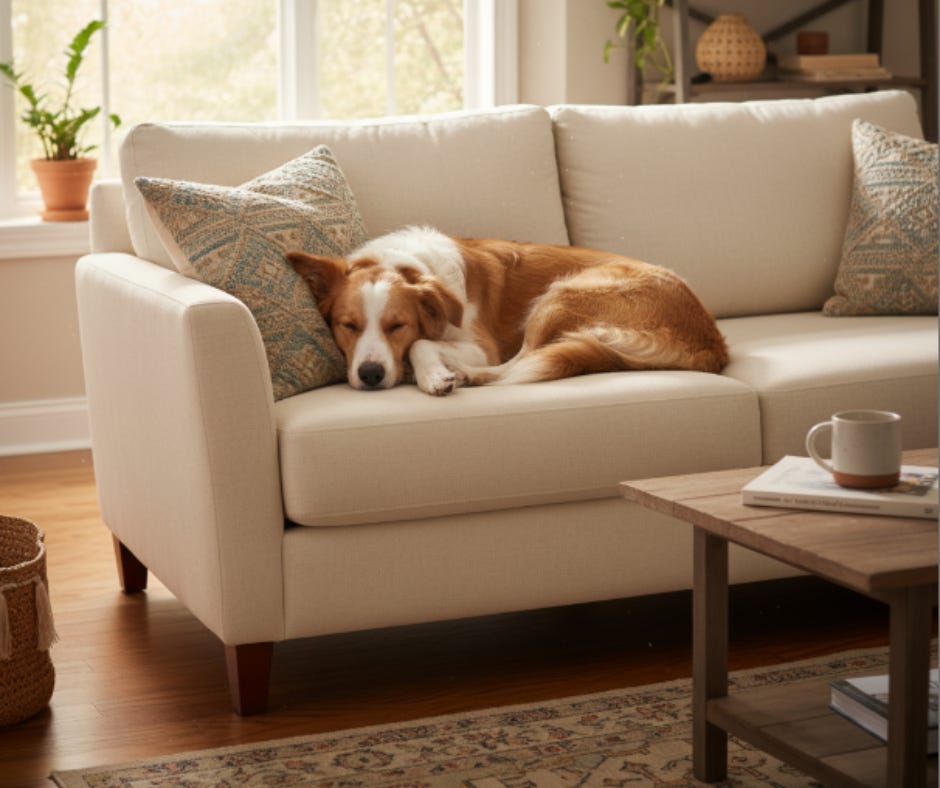
When we think of rescuing stray dogs, most of us picture the perfect happy ending: a once-forgotten dog curled up on the sofa, safe and warm inside a loving home. And for many, this vision does become reality. With time, patience, and guidance, countless dogs who once roamed the streets successfully make the transition into family life. They learn to trust, they bond with humans, and they discover the simple joys of domestic comfort.
But after years of working with strays in different settings, we at Dog Desk Animal Action have come to understand something important: not every dog is suited to this life.
For a small number, being indoors full-time is not just challenging, it’s profoundly stressful. These dogs thrive instead in what we call a half-in, half-out lifestyle, where they have both the security of human support and the freedom to live more naturally alongside their canine companions.
Recognising this difference is vital if we want to provide the kindest possible outcome for every dog we rescue.
Why Most Strays Adapt And Why Some Struggle
Many strays settle into home life as if they were born for it, taking to the sofa, the routine, and the security like a duck to water. Others need a little more time, gradually learning to trust, to relax, and to understand that food and affection are constants now, not privileges that can be snatched away. Just like people, every dog is different. Their past experiences, personalities, and resilience shape how they adapt, and it’s our role to give them the patience and support they need to find their place.
It’s worth emphasising that the majority of strays do adapt to living in a home. For many, the first weeks or months are daunting: they may shy away from human contact, react fearfully to household noises, or pace and whine when left alone. These behaviours reflect years of survival instincts on the streets, where vigilance was essential and trust in humans was not always rewarded.
With patient adopters, however, most dogs find their footing. They begin to associate people with kindness, discover the comfort of a soft bed, and learn that meals will always come. Slowly but surely, their resilience shines through. We’ve seen countless transformations where a once-anxious stray becomes the most devoted, affectionate companion imaginable.
But ,and it is an important but — not all dogs reach this point.
When a House Doesn’t Feel Like a Home
For some dogs, the indoors never feels safe. Imagine a dog who has lived for years under the sky, moving freely in familiar territories, always surrounded by canine companions. Suddenly, they are placed inside a house: walls close them in, windows block familiar sights and smells, and human routines dominate their day.
Instead of comfort, they may feel:
Anxiety: Pacing, panting, or trying desperately to escape indoors.
Fear: Reacting to ordinary household activity — vacuum cleaners, televisions, even doors closing — as if they were threats.
Distress from isolation: Missing the companionship of other dogs they are used to living alongside.
Frustration: Struggling with the restrictions of leashes, closed doors, and lack of freedom.
In these cases, persisting with the idea of a “conventional adoption” can cause unnecessary suffering. For the dog, what we see as rescue feels more like confinement.
The Half-In, Half-Out Lifestyle
A half-in, half-out arrangement offers a kinder, more realistic solution for these dogs. It means they have access to the basics every dog deserves — food, shelter, veterinary care, and safety but also the freedom to move, socialise with other dogs, and choose whether to be inside or out.
This lifestyle can take many forms:
Sanctuaries and safe shelters where dogs live in groups with both indoor and outdoor spaces. They can rest under cover when they choose but also run, play, and interact with other dogs.
Rural homes and farms where secure land allows dogs to live more freely while still benefiting from human support.
Community-supported living in regions where groups of dogs are cared for in situ, receiving food, medical care, and protection without being removed from the life they know best.
For dogs who find a full-time indoor home too stressful, these arrangements offer the best of both worlds.
Our Experience: Observing Dogs in Many Settings
At Dog Desk Animal Action, we are one of the leading organisations observing and supporting stray dogs in a wide range of situations from the streets and municipal shelters, to homes and long-term sanctuaries. This breadth of experience has given us unique insight into what makes strays thrive.
We’ve seen:
Dogs who seemed “unadoptable” at first, but blossomed after months of careful support in a home.
Dogs who coped well in foster care, but visibly declined when attempts were made to confine them indoors full-time.
Dogs who flourished in half-in, half-out sanctuaries, living peacefully in groups with access to both freedom and shelter.
What these cases teach us is simple: dogs are individuals. Just as people differ in temperament, resilience, and preferences, so do dogs. A one-size-fits-all rescue model doesn’t do justice to their needs.
Respecting the Dog in Front of Us
The essence of good rescue work lies in observation, respect, and compassion. Instead of imposing our own idea of a happy ending, we must ask: What does this dog need to feel safe, secure, and content?
For the majority, the answer is clear: with enough time and love, they adapt to domestic life and enjoy the sofa, the garden, and the bond of family. But for the minority, the kindest answer is different. Their best life is not a human-centric one indoors, but a shared life - part freedom, part care, part companionship where they can simply be dogs.
Redefining the “Happy Ending”
Rescue stories often conclude with a photo of a dog in their new home, lying by the fire or nestled into their adopter’s side. And while those moments are beautiful, they are not the only measure of success.
A happy ending can also be:
A group of dogs resting together in the sunshine, with the security of knowing food and shelter are always available.
A once-nervous stray who now trots happily between indoor and outdoor spaces, choosing where they feel most comfortable.
A dog living safely in a sanctuary, surrounded by friends, no longer hungry, cold, or afraid.
What matters most is not the setting itself but the welfare and happiness of the dog.
In the End: Choice Equals Compassion
Not every stray will want, need, or benefit from life in a traditional home. And that is okay. The role of rescue is not to force all dogs into the same mould, but to provide each one with the environment in which they can flourish.
Whether that’s a sofa by the fire, a sunny spot in a sanctuary, or a half-in, half-out life surrounded by friends, the real goal is always the same: to give every dog the chance to live their best, most fulfilling life.
And sometimes, the kindest thing we can do is to let them choose.


