
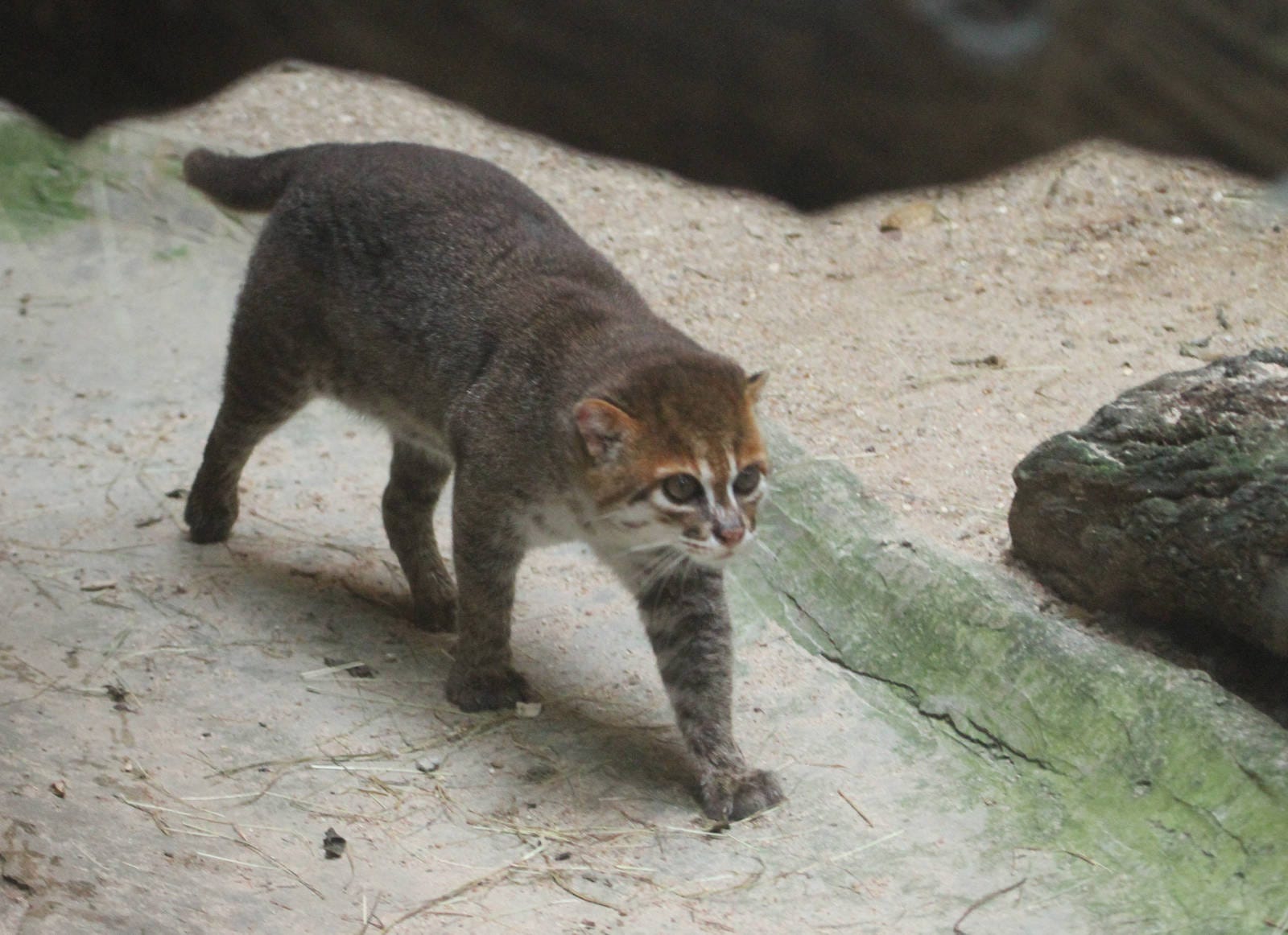
Rediscovery of a Lost Wild Cat in Thailand Is A Triumph for Conservation
In an extraordinary turn of events for wildlife conservation, scientists have rediscovered a rare wild cat in Thailand that hadn’t been documented in the country for nearly 30 years. Once feared locally extinct, this elusive feline has returned offering fresh hope for endangered species and the fragile ecosystems they depend on.
The Flat-Headed Cat: Southeast Asia’s Hidden Feline
The species at the heart of this discovery is the flat-headed cat (Prionailurus planiceps), one of the least seen wild cats in the world. These cats are distinctive for their flattened foreheads, short bodies, slim legs and webbed toes adaptations that help them hunt in wetland environments, where they feed on fish, frogs and other aquatic prey.
Flat-headed cats are small often weighing less than a domestic cat and extremely shy, making them difficult to study. Their range includes isolated areas of Brunei, Indonesia, Malaysia and southern Thailand, but they were last reliably recorded in Thailand in 1995. Since then, scientists assumed the species was likely extinct within the country
Captured on Camera After Decades
Recent surveys using remote camera traps in the Princess Sirindhorn Wildlife Sanctuary in southern Thailand have changed that belief. Researchers documented several flat-headed cats, including a female with her cub a remarkable indication that the species is not only present but also breeding locally.
These images represent the first confirmed sightings in Thailand in nearly three decades, and scientists describe this rediscovery as one of the most exciting wildlife conservation breakthroughs in the region in years.
What This Rediscovery Means
The re-emergence of the flat-headed cat in Thailand is not just a cool story it’s a symbol of what dedicated protection and careful monitoring can achieve:
Hope for Endangered Species: The flat-headed cat is classified as Endangered, with global populations under threat from habitat loss and human activity.
Importance of Wetlands: These cats rely on wetland ecosystems like peat swamps and freshwater forests. Protecting these habitats benefits countless other species too.
Conservation Progress: Long-term surveys and partnerships between Thai authorities and conservation organizations such as Panthera were crucial in this rediscovery
A Reminder and a Challenge
While this news is uplifting, it also reminds us that many species remain on the brink, often disappearing before science can even fully understand them. The flat-headed cat’s return encourages greater investment in habitat protection, research, and sustainable coexistence between humans and wildlife.
As conservationists say, “Species once thought lost can still thrive if we give them a chance.”


