

Remembering Hanna, the Rescue Dog Who Found Over 170 People

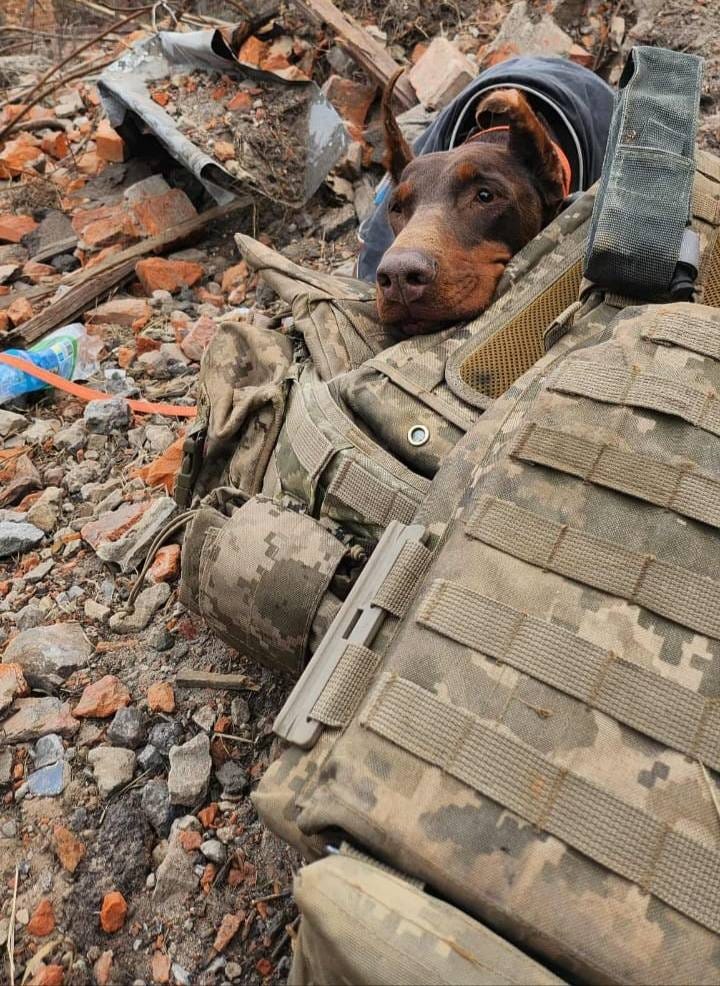
In war, there are stories that make headlines and others that quietly hold the line between life and death. Hanna was one of those stories.
A Doberman working with the Pavlohrad Search and Rescue Canine Unit Antares, she was not a symbol, not a mascot, but a working dog operating in the most unforgiving conditions imaginable. Her job was simple in description and devastating in reality, find people in the aftermath of destruction.
And she did.
Over the course of her life, Hanna helped locate more than 170 people across Ukraine, working in regions repeatedly struck during the war, including Kharkiv, Donetsk, Zaporizhzhia, and Dnipro.
She searched for the living. She searched for the dead. She worked where buildings had collapsed, where families were buried, and where time mattered more than anything.
Precision, Persistence, and Survival
Search and rescue dogs are not just trained they are conditioned to operate inside chaos. Hanna took part in hundreds of missions, often in areas that were still unsafe, still under threat, still shifting beneath rescuers’ feet.
Her work required:
Navigating unstable rubble
Detecting human scent beneath debris
Working alongside emergency services and police
Continuing searches for days, even when hope was fading
On one occasion, she located a person alive seven days after they had gone missing. That is not luck. That is endurance, training, and an animal that refused to stop.
More Than Search and Rescue
Hanna’s role extended beyond disaster zones. She was also used in therapeutic and psychological support, visiting hospitals and even entering intensive care units to comfort patients.
In a war defined by trauma, that work matters. Not as an add-on but as part of the same system of care. Finding people is one form of rescue. Helping them cope afterwards is another.
What Her Life Represents
Hanna has been described by her unit not just as a dog, but as a soul who gave everything to her work. That language matters, because it reflects something many people still struggle to articulate clearly.
Dogs are not tools. They are participants. They carry responsibility, they form bonds, and they absorb the environments we place them into.
Hanna’s life forces a difficult but necessary reflection:
We rely on dogs in our most critical moments
We trust them with human lives
And often, we do not fully acknowledge what that demands of them
The Quiet Line Between Life and Loss
In the context of war, it is easy to focus on numbers, casualties, rescues, statistics.
But Hanna’s life reminds us that behind every number is a chain of effort:
A handler, a team and sometimes, a dog working in silence, navigating dust, heat, fear, and collapse
to to find someone who might still be alive.
Reflection
Hanna did not know she had saved 170 people. She did not understand war, politics, or headlines. She followed scent, she followed training and she stayed until the work was done or until her body could no longer continue.
That is what her life represents. Not heroism in the abstract but commitment in its purest form.
Editor’s Note
Ear cropping is illegal in the United Kingdom under the Animal Welfare Act 2006 and widely recognised as unnecessary and harmful.
While some choose not to publish images of dogs with cropped ears to avoid normalising the practice, we do not take that approach.
We do not support ear cropping. But we will not remove or diminish a dog’s story because of it.
Hanna should be seen for her life and her work, not her ears.