


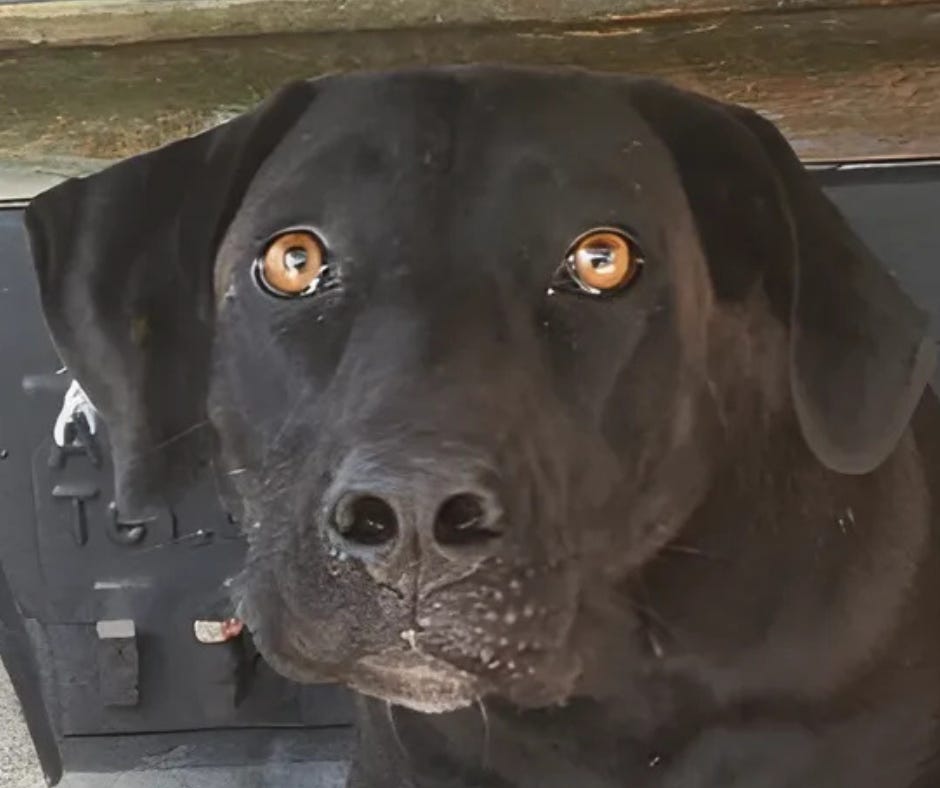
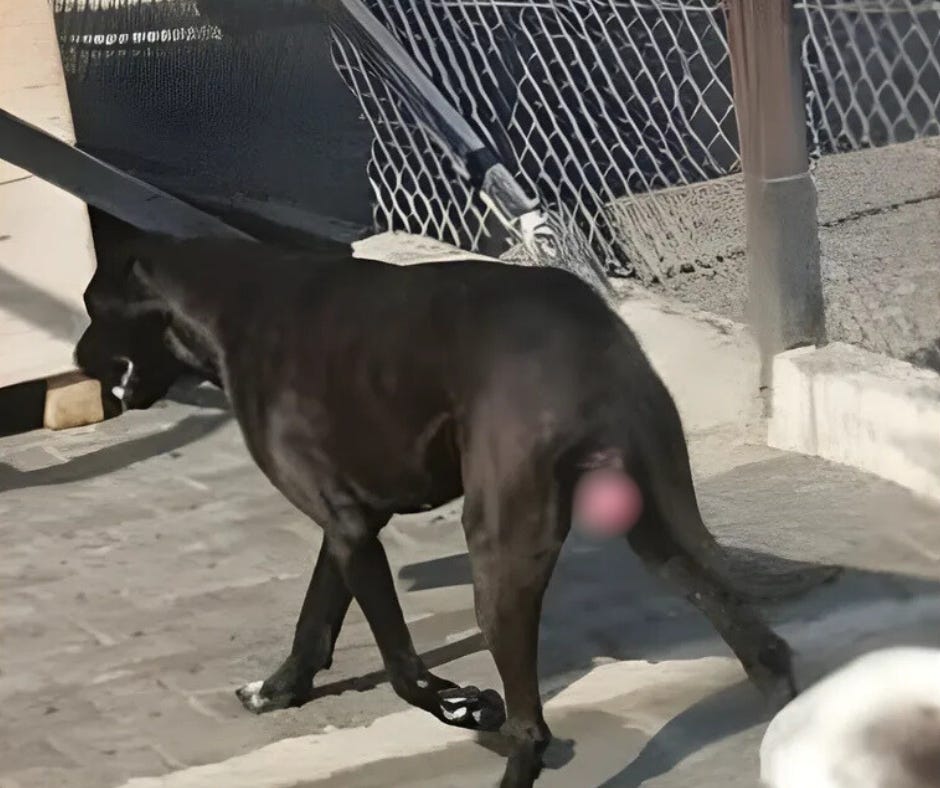
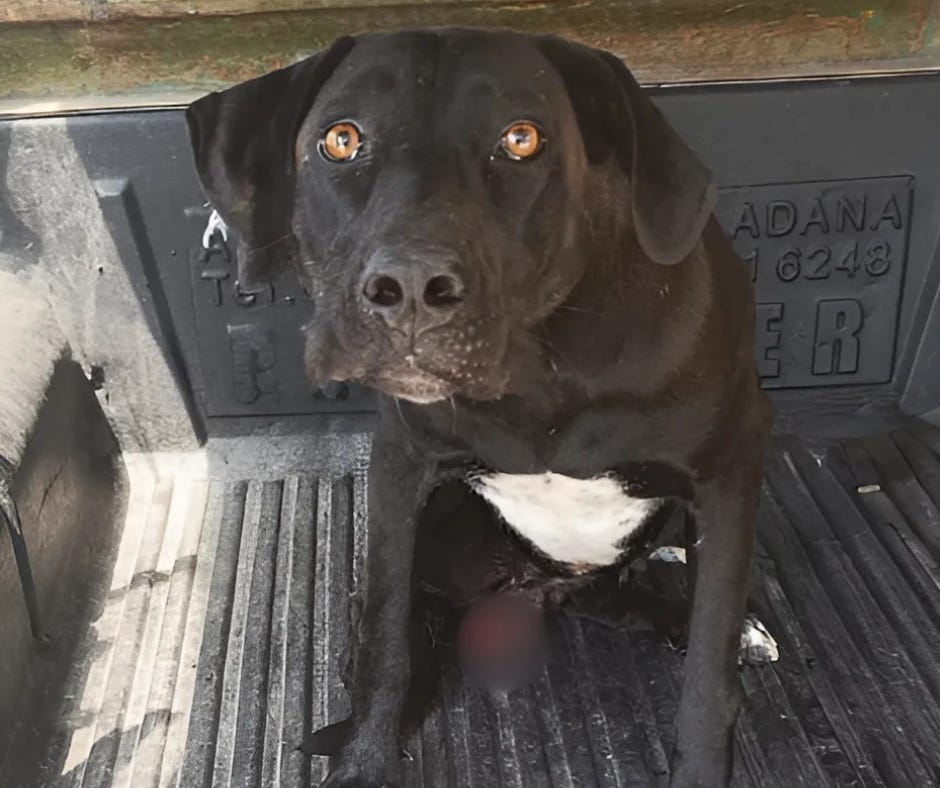
When Roxy came into our care, we immediately noticed that she was suffering with vaginal hyperplasia. This condition, caused by hormonal changes during a female dog’s cycle, causes the vaginal tissue to swell and protrude outside the body. It can be painful, distressing, and, if left untreated, can lead to serious complications.
What puzzled us was that Roxy had already been spayed. Vaginal hyperplasia is a hormone-driven condition, and in spayed dogs it simply shouldn’t occur.
The Shocking Truth
On closer investigation, our vets discovered that Roxy’s original spay surgery had not been carried out properly at all. Both of her ovaries were still completely intact.
This meant that despite being recorded as “spayed,” Roxy’s body was continuing to produce the same levels of reproductive hormones as an unspayed female. Those hormones were the direct cause of her painful vaginal hyperplasia.
This is very different from ovarian remnant syndrome, where tiny fragments of ovarian tissue are mistakenly left behind. In Roxy’s case, the situation was far worse — neither ovary had been removed at all.
The Corrective Surgery
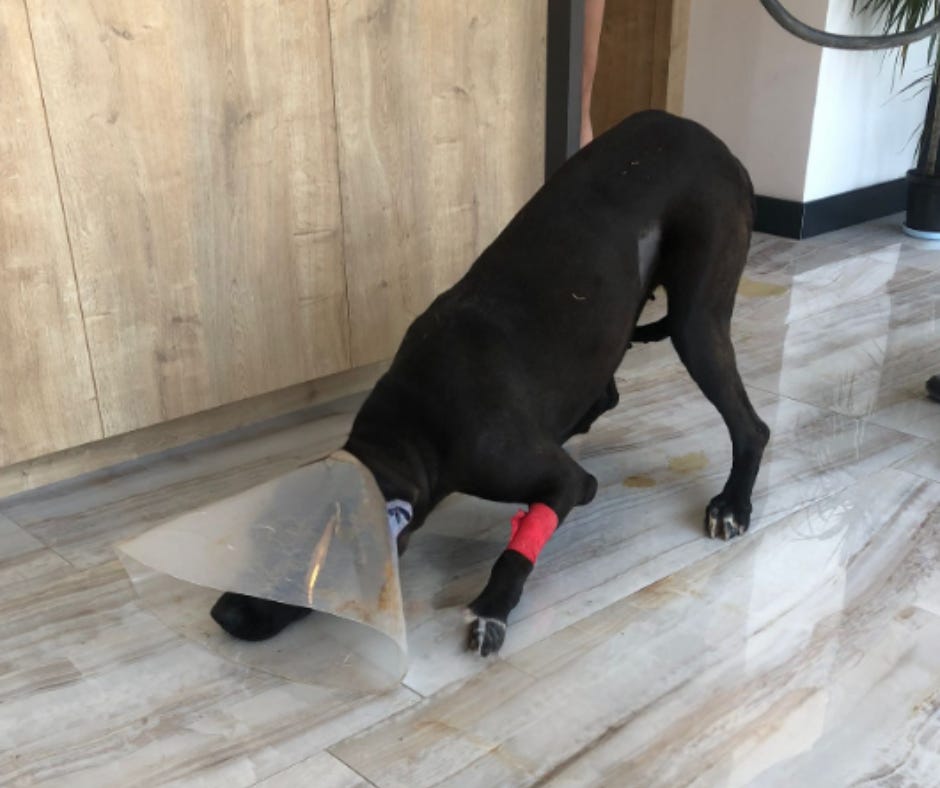
Once the problem was identified, Roxy underwent proper surgery to finally remove both ovaries.
Now, for the first time, Roxy is free from the pain and distress she endured for so long.
Why Roxy’s Story Matters
Roxy’s case highlights how vital it is that spay surgeries are performed thoroughly and correctly. A spay is not just a routine procedure — it is a major surgery that, when done improperly, can cause a great deal of suffering.
It’s important for owners to be aware of the warning signs that something may be wrong even in a supposedly spayed dog:
Signs of being “in heat”
Vulval swelling or discharge
Hormone-driven behaviours such as nesting
If you notice these, contact your vet right away. As Roxy’s story shows, mistakes do happen — but they can be corrected.
A Brighter Future Ahead
Roxy is now recovering, finally able to live in comfort without the constant cycle of pain and swelling.
Her story is a reminder of why we fight so hard for dogs like her — to make sure they receive the care and respect they deserve.