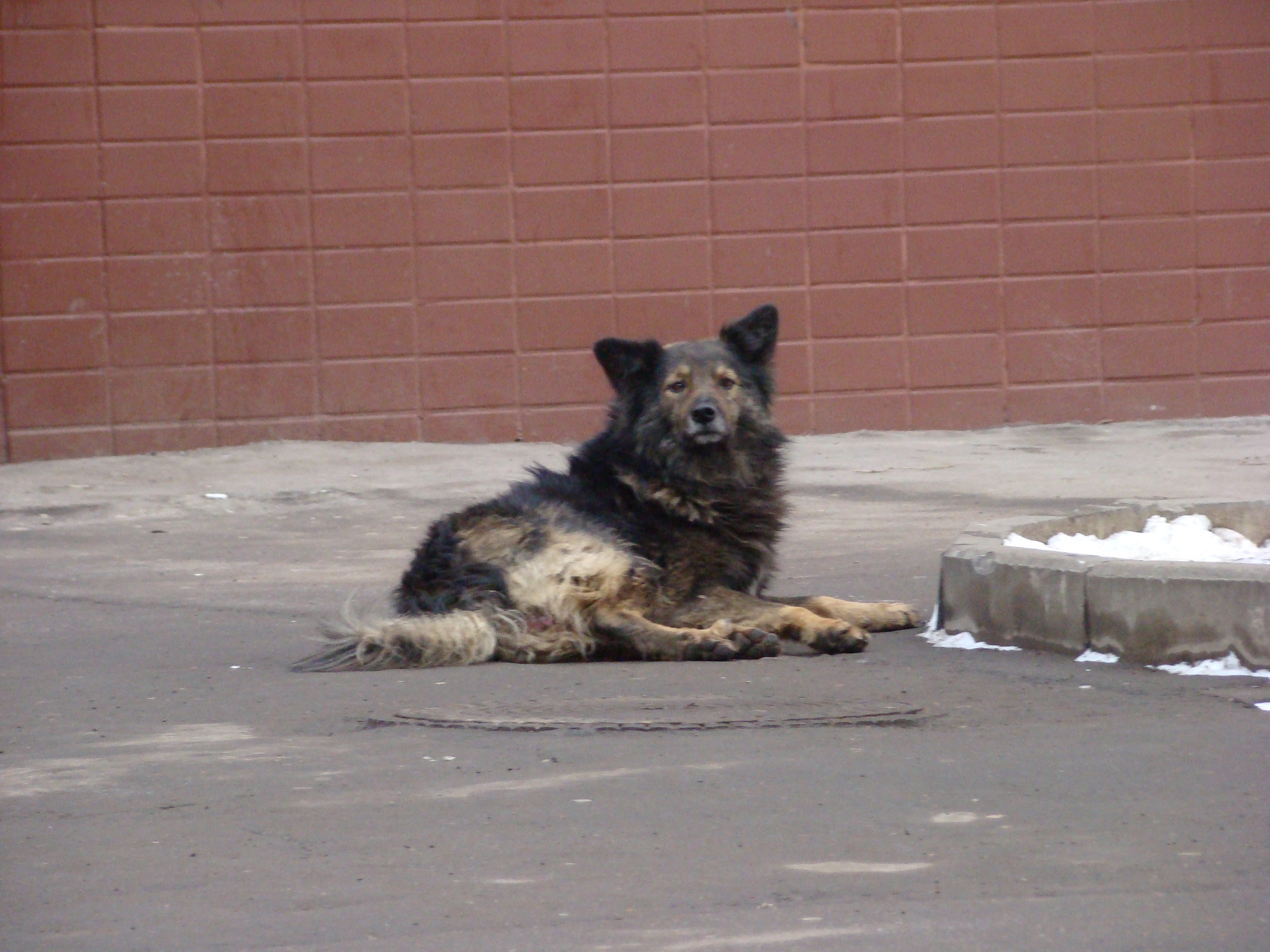
Illustrative image: A street dog in Moscow, Russia, photographed in 2007. Photo by Andrey via Wikimedia Commons, licensed under CC BY 2.0.

Dog Desk Animal Action CIC is moving Russia from Watchlist to Crisis on our Global Stray Dog Crisis Map. The available records show sustained, publicly funded killing across multiple regions. In Astrakhan, the city is still seeking contractors for services that include killing dogs in temporary holding and disposing of their bodies.
When we first reported on Astrakhan’s contracts, we asked what happened to the dogs once they were taken off the streets. Astrakhan’s regional veterinary service has since reported 9,224 captures across the region between January and August 2026. We could find no public breakdown showing how many dogs went home, were returned to the streets, remained in holding or were killed. The figures tell us how many captures the authorities recorded. They should also tell us where those dogs are now.
Why Russia has crossed the threshold
A November analysis of procurement records and official statements counted 15,343 dogs killed with public money without a documented medical indication across ten regions since late 2023. The cases it traced included 7,940 in Astrakhan Oblast, 3,362 in Stavropol Krai, 1,697 in Buryatia, 1,484 in Tuva and 667 in Orenburg Oblast. The periods covered vary by region, and the total reflects the records the investigation could obtain.
Under our published criteria, officially permitted killing and sustained serious harm can justify a Crisis classification on our Global Stray Dog Crisis Map. Here, there are records of killings carried out over several years in multiple jurisdictions, alongside new procurement showing that the risk continues. That is the basis for the change. What happens in each region still needs to be tracked separately, because local rules and their enforcement differ.
Astrakhan can tell us the price
On 19 and 20 November 2026, Astrakhan city advertised three procurements with a combined ceiling of just over 22.24 million roubles. Two notices list the same rates: 1,725.46 roubles to kill one animal in temporary holding and 1,260.51 roubles to dispose of the body. Capture and care are priced separately. These are advertised rates; the notices give no kill quota and do not establish that any dog has been killed under the new procurements at the time of our publication. Tender 0959 · Tender 0960.
Local reporting says the extraordinary measures in Astrakhan city and neighbouring Privolzhsky district allow even sterilised, tagged dogs to be caught again. For anyone who has cared for a dog on those streets, a tag can be the detail that helps them recognise the dog in a holding facility. It should also help the authorities trace what happened after capture.
An extraordinary measure needs an end date
Russia’s Constitutional Court has said that overcrowding and cutting costs cannot, on their own, justify killing. Broader measures in an extraordinary situation are subject to conditions: they must be temporary, other measures must be unable to resolve the danger, and owners must have a reasonable chance to find their animals. In February 2026, Tuva suspended a provision requiring unclaimed animals to be killed after 14 days during an extraordinary situation, following a court decision. Authorities invoking these powers should publish why they are needed, when they expire and what evidence supports any extension.
Tell us what happened to the dogs
On 20 November, Buryatia’s veterinary authority reported nearly 4,500 captures in 2026. More than 1,000 animals had gone to new homes, 77 had been reunited with their owners and about 1,200 dogs were in temporary holding. The published account gave no figure for how many had been killed. The region has reported that distinction before: its 2025 figures recorded 1,039 animals killed under the amended law and 308 deaths from illness or natural causes separately.
Dog Desk Animal Action is asking authorities to publish a record that follows each dog from capture to their final outcome. It should tell us where and when the dog was taken, which facility received them, what was done to find an owner and what happened next. Where a dog was killed, the record should say when, why and who authorised it.
If a city can put a price on killing a dog, it can tell the public which dog it killed and why.