Across Sri Lanka, explosive devices concealed in food continue to cause devastating injuries to animals and people. Known locally as hakka patas, or jaw bombs, they are commonly used in illegal hunting, particularly to target wild boar. When an animal bites into the bait, the device detonates, destroying the mouth and jaw and often leaving the victim unable to eat or drink.
Much of the attention surrounding these explosives has understandably focused on elephants. Their injuries have been documented by conservation organisations, investigated by wildlife authorities and included in national mortality reporting. But elephants are not the only animals encountering these devices. Dogs are also among the victims, and their suffering is far less visible in the country’s published records.
Sri Lankan journalism has documented dogs dying from injuries caused by hakka patas, while veterinary accounts describe animals surviving shattered jaws only after extensive treatment. They are recorded incidents involving animals living alongside people, searching for food or moving through areas where explosive bait has been placed.
Yet despite the evidence that dogs are being injured, we have been unable to establish how many are affected each year, how many survive or how many die without receiving veterinary treatment.
Sri Lanka knows these explosives are causing harm. What remains unclear is whether its recording systems can tell us the full extent of that harm to dogs.
An Illegal Hunting Method That Cannot Distinguish Its Victims
Hakka patas are associated with illegal hunting and attempts to prevent wild animals from damaging agricultural land. Their intended targets are frequently wild boar, but once explosive bait has been placed, there is no way to control which animal encounters it. A dog scavenging along the edge of a field may find the same bait intended for a wild animal. So may livestock or another species moving through the area.
The consequences can be catastrophic. The explosion occurs at the point of contact, often causing extensive damage to the jaw, tongue and surrounding tissues. Even when an animal survives the initial blast, the injuries can make feeding impossible without prolonged veterinary intervention.
Sri Lankan forensic researchers examined injuries caused by improvised explosive devices in a paper published in the Medico-Legal Journal of Sri Lanka in December 2023. Their work documented the serious consequences of these explosives, including a case involving a child whose injuries required a below-knee amputation. The researchers also highlighted the need for stronger enforcement against illegal homemade explosive devices.
This evidence places hakka patas beyond the boundaries of wildlife conservation alone. Their manufacture, distribution and use raise questions about public safety, illegal hunting, veterinary treatment and the protection of domestic animals.
Dogs Are Already Present in Sri Lanka’s Recorded Cases
In March 2020, The Sunday Times published an investigation into the danger jaw bombs posed to children and pets. Among the cases examined was a four-year-old German Shepherd in Badulla District whose jaw was shattered by an explosion. The dog underwent extensive veterinary surgery but subsequently died.
Other published veterinary accounts describe dogs surviving similar injuries after complicated treatment and prolonged recovery. Some were left with permanent difficulties eating and required continuing assistance.
These cases establish that dogs are being injured and killed by explosive bait. They also demonstrate the extraordinary level of veterinary intervention that may be required when an animal survives.
But individual cases cannot tell us the scale of the problem. They represent animals whose injuries were recognised, whose treatment was documented and whose experiences became public. They tell us nothing about the number of dogs that may have died before being found, those treated without publicity or incidents that were never formally reported.
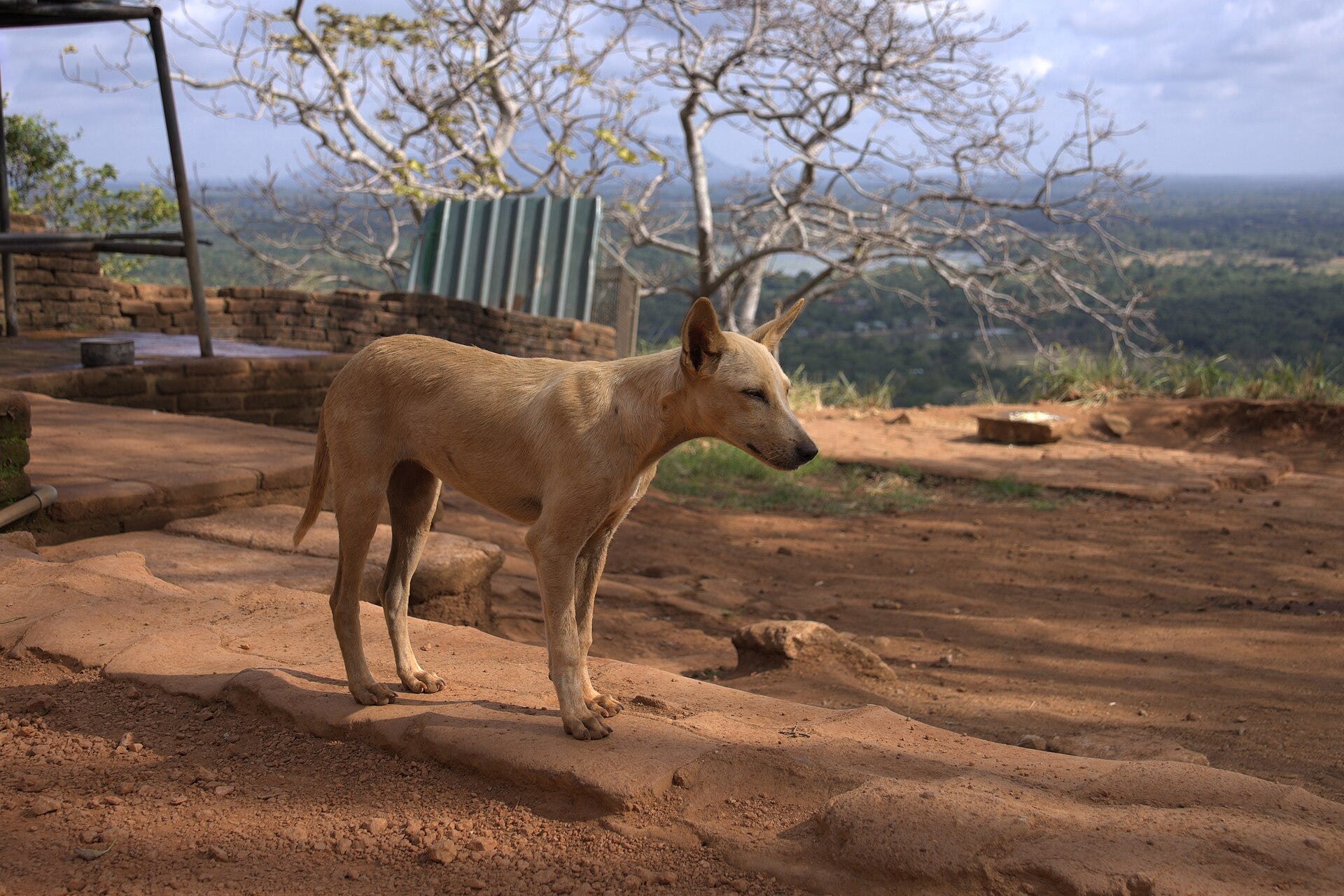
That distinction becomes particularly important when considering free-roaming dogs. An owned animal may have someone who notices its injuries and arranges emergency treatment. A street dog may depend entirely on whether someone encounters it, recognises what has happened and can obtain veterinary assistance.
Sri Lanka Has Records. The Question Is What They Record.
Sri Lanka maintains several systems that document different aspects of animal welfare, public health and illegal activity. Police investigate offences involving explosives and illegal hunting. Wildlife authorities investigate threats to protected species. Medical and forensic services record injuries to people, while veterinary authorities collect information concerning animal health and disease control.
The country also publishes substantial information about dogs through its rabies prevention programmes. The Ministry of Health’s Annual Health Bulletin 2024 contains dog-related vaccination and surveillance data, while parliamentary reporting in October 2026 included information concerning dog sterilisation and expenditure on rabies prevention.
These are established reporting systems capable of producing national figures. They demonstrate that dog-related information can be collected, organised and published.
But the records we have examined do not provide a comparable national account of dogs injured or killed by hakka patas.
A dog admitted to a veterinary hospital with a shattered jaw may appear in clinical records without being included in national statistics concerning explosive injuries. A police investigation may record the recovery of illegal bait without separately identifying every animal injured by it. Wildlife mortality figures may document elephants while excluding domestic animals altogether.
Each institution may be recording information relevant to its own responsibilities, yet the overall consequences remain difficult to establish when those records are not brought together.
This does not mean that the information does not exist. Veterinary hospitals, police departments and local authorities may hold records that have not been published or made accessible through national reporting.
What we have not found is a public system that allows those records to be examined together to establish the number of canine victims.
The Government Has Acknowledged That These Explosives Remain in Circulation
On 29 September 2025, Sri Lanka’s Ministry of Defence issued a statement addressing the illegal manufacture, distribution, storage and sale of hakka patas and related explosive devices. The ministry acknowledged that these activities continued despite existing restrictions and recognised the serious injuries and deaths associated with their use.
The statement established that the problem was not confined to isolated historical incidents. There was continuing concern about the supply and circulation of illegal explosives.
That concern remained evident throughout 2026.
In October, The Sunday Times reported investigations into suspected hakka patas manufacturing activity in the Galgamuwa area. Police and wildlife personnel were examining locations associated with the production of explosive devices and other illegal hunting equipment.
On 2 November, authorities launched Operation Hasthi Sena in the Kala Wewa area, involving wildlife officials and military personnel. The operation targeted illegal firearms, snares, explosive traps and other threats to animals. Reports confirmed the recovery of prohibited equipment, including explosive bait, with seized material intended for legal proceedings.
These operations demonstrate that Sri Lankan authorities are taking enforcement action. They also establish that the devices remain sufficiently prevalent to warrant organised investigations and seizures.
What they do not establish is how many animals have already been injured by the explosives being recovered, or how many dogs have been affected in the districts where enforcement operations are taking place.
Counting seized devices is important, but it is not the same as counting their victims.
A Dog Carried an Explosive Device Home in August 2026
An incident reported by Lankadeepa on 27 August 2026 illustrates how the danger extends beyond the intended hunting environment.
A pet dog reportedly brought an explosive device home from the Mee Oya reserve. The device subsequently detonated, injuring two women.
The report did not establish that the dog itself was injured, and it should not be counted as a canine casualty. Nevertheless, the incident demonstrates how easily an animal can encounter an explosive device and carry it into a place where people and other animals are present.
It also challenges any assumption that the danger is confined to remote wildlife habitats.
Dogs move between villages, agricultural land, roadsides and rural settlements. Some are searching for food. Others are accompanying people or moving freely around their homes. An explosive device concealed in bait can be encountered by any animal attracted to it, regardless of why it was originally placed there.
The August incident provides recent evidence of that exposure, even though the dog’s own outcome was not reported.
What Happens When a Dog Is Injured?
One of the most important questions concerns what happens after an injured dog reaches veterinary care.
Are injuries caused by hakka patas recorded under a specific diagnostic category, or are they entered more generally as traumatic injuries to the mouth and jaw? Can veterinary authorities distinguish confirmed explosive injuries from suspected cases? Are deaths recorded separately from animals that survive treatment?
Without knowing how these cases are classified, it is difficult to determine whether existing veterinary records could produce meaningful annual figures.
The same questions arise in relation to police investigations. When an explosive device injures a dog, is the animal recorded as a victim of the offence? Does the investigation identify whether the dog was owned or free-roaming? Can those cases be distinguished from investigations involving illegal possession of explosives where no injury has been reported?
And when wildlife officers recover hakka patas during enforcement operations, are reports limited to the devices seized and wildlife affected, or do they also record evidence of injuries to domestic animals?
The Danger of Measuring Only What Is Most Visible
Sri Lanka’s elephant mortality figures provide an important record of the consequences of explosive bait. They help conservation authorities identify threats, monitor deaths and assess the continuing impact of illegal hunting practices.
But an elephant injured by hakka patas and a dog injured by the same device are part of the same underlying problem.
If national reporting concentrates on one category of victim, the wider consequences may remain obscured.
Dogs are particularly vulnerable to this kind of omission because their circumstances vary so widely. Some belong to families. Others live around farms, businesses or communities without an individual owner. Free-roaming dogs may be injured in places where there is no immediate veterinary assistance and no person responsible for reporting what happened.
Even where treatment is provided, the resulting information may remain within individual veterinary practices or local records.
It is therefore possible for a country to maintain extensive information about illegal explosives and still lack a publicly accessible account of their consequences for dogs.
Whether that is happening in Sri Lanka can only be established by examining the relevant recording systems.
Enforcement Needs More Than Seizure Figures
Sri Lanka’s operations against the manufacture and use of illegal explosive devices are an important part of preventing further injuries. Identifying manufacturers, recovering devices and pursuing legal proceedings can reduce the danger to wildlife, domestic animals and people.
But the effectiveness of those measures cannot be understood through seizure figures alone.
We need to know whether incidents are becoming less frequent, whether particular districts continue to experience repeated discoveries, and whether injuries to animals are declining as enforcement activity increases.
That requires information about outcomes as well as interventions.
A record showing that explosive bait was recovered from a particular area tells us something about enforcement. A record showing that dogs, livestock or wildlife were injured in the same area tells us something about the consequences of the illegal activity.
Together, those records could provide a much clearer picture of where prevention efforts are needed and whether they are working.
Without that connection, the public can see that action is being taken but cannot fully assess its effect on the animals exposed to these devices.
Who Is Counting the Dogs?
Sri Lanka has acknowledged the continuing illegal circulation of hakka patas. Its authorities have investigated suspected manufacturers, seized explosive devices and documented injuries to people and wildlife.
There is also credible published evidence that dogs have been injured and killed.
Yet the available national records do not allow us to establish how many canine victims there have been, where the incidents are concentrated or whether their numbers are changing.
Dog Desk Animal Action will continue examining Sri Lankan veterinary, police, parliamentary and government records to determine whether that information is being collected and, if so, how it can be brought into the public record.
This is not a question of giving dogs priority over elephants or any other species. It is a question of understanding the full consequences of a dangerous and illegal practice.
An explosive device does not distinguish between protected wildlife, livestock, an owned pet or a dog living on the streets.
Sri Lanka is recording the explosives it seizes and the elephants it loses. We need to establish where, and how, it records the dogs.