
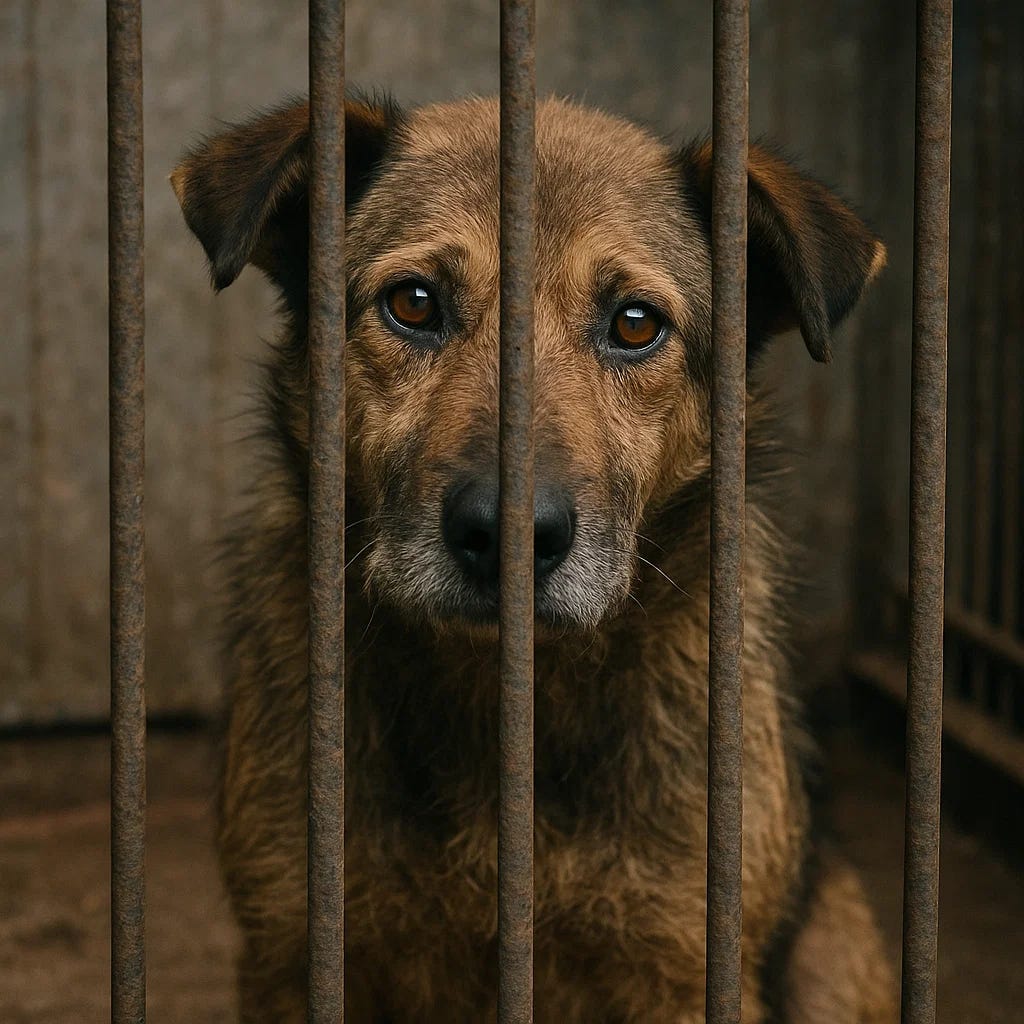
Stray Dogs in the UK: the scale, the cost, and the safety net NGOs provide
Stray dogs touch every part of the UK’s animal-welfare system from council budgets to rescue-centre waiting lists and family living rooms.
Here’s what the latest data shows about how many dogs are involved, how many are being euthanised, what this is costing local authorities, and the critical role charitable organisations play in holding the system together.
How many dogs are UK councils handling?
In the most recent Dogs Trust Stray Dog Survey (2023–24), UK local authorities were estimated - via a weighted analysis to have handled about 36,965 dogs in the year to 31 March 2024 (simple average estimate: 39,720).
Only about 39% of dogs taken in were reunited with their owners (excluding unknown outcomes), a notable drop from earlier years.
For the first time since the survey began, more dogs were transferred to welfare organisations than reunited by councils.
How many are euthanised?
Councils reported 1,478 dogs put to sleep during the study period; Dogs Trust estimates this equates to around 2,493 dogs across the UK for 2023–24. That’s about 6% of all dogs handled (or ~8% when unknown outcomes are excluded).
Where reasons were known, behavioural issues (42%) overtook ill-health (25%) as the leading reason, with Dangerous Dogs Act cases rising to 24% from 7% the previous year.
What does this cost councils?
There is no single national price tag, costs vary by area, contractor rates, and case complexity but public reports illustrate the scale:
Horsham District Council budgets “around £24,000 per year” for collection, kennelling, rehoming, microchipping and related transport/vet care.
Wakefield Council disclosed £56,388 spent on stray dogs in 2024–25, up from £44,654 the year before.
Councils try to recover some costs from owners.
Typical charges include the statutory £25 fee, plus collection/administration and daily kennelling (often ~£17–£32 per day), with any veterinary costs on top, for example, Lambeth lists £25 statutory fee + £80 return fee + £20 per-day kennelling; Enfield lists a £175 pick-up fee + £17.50 per day; Winchester lists £25 statutory + £30 admin + £32 per day kennelling.
The load NGOs carry
Councils passed on 8,030 dogs to welfare organisations in 2023–24—33% of all cases (or ~42% when unknown outcomes are excluded). That hand-off now larger than the number reunited by councils shows just how essential charitable organisations are to prevent needless euthanasia and create adoption pathways when owners can’t be found.
Compounding the pressure, only about 38% of dogs arriving with a microchip had correct owner details recorded, making reunions slower and costlier pushing more dogs into rescue space.
What would help practically and fast
Fix the microchip gap. Enforce up-to-date chip registration (and penalties for non-compliance), and fund targeted “chip-check & update” drives in high-intake areas.
Backstop councils and rescues. Provide ring-fenced grants for council stray services and capacity-building funds for rescues taking council transfers. (The data show transfers are now the plurality outcome.)
Lower barriers to reclaim. Where appropriate, allow payment plans or fee waivers for low-income owners so dogs go home faster, freeing kennel space and reducing public spend.
Prevention at the front door. Invest in behaviour support and crisis-prevention schemes (temporary boarding, pet food banks, vet-bill assistance) to reduce abandonments during the cost-of-living squeeze.
Our position
Stray dog management is a public duty but without the charity sector, thousands more dogs would be left in limbo.
The latest figures show growing reliance on NGOs alongside rising local costs and stubborn reunite rates.
If we want fewer dogs euthanised and lower bills for taxpayers, we must fund early prevention, enforce microchip accuracy, and resource the rescue pipeline that is already rescuing councils from crisis.


