
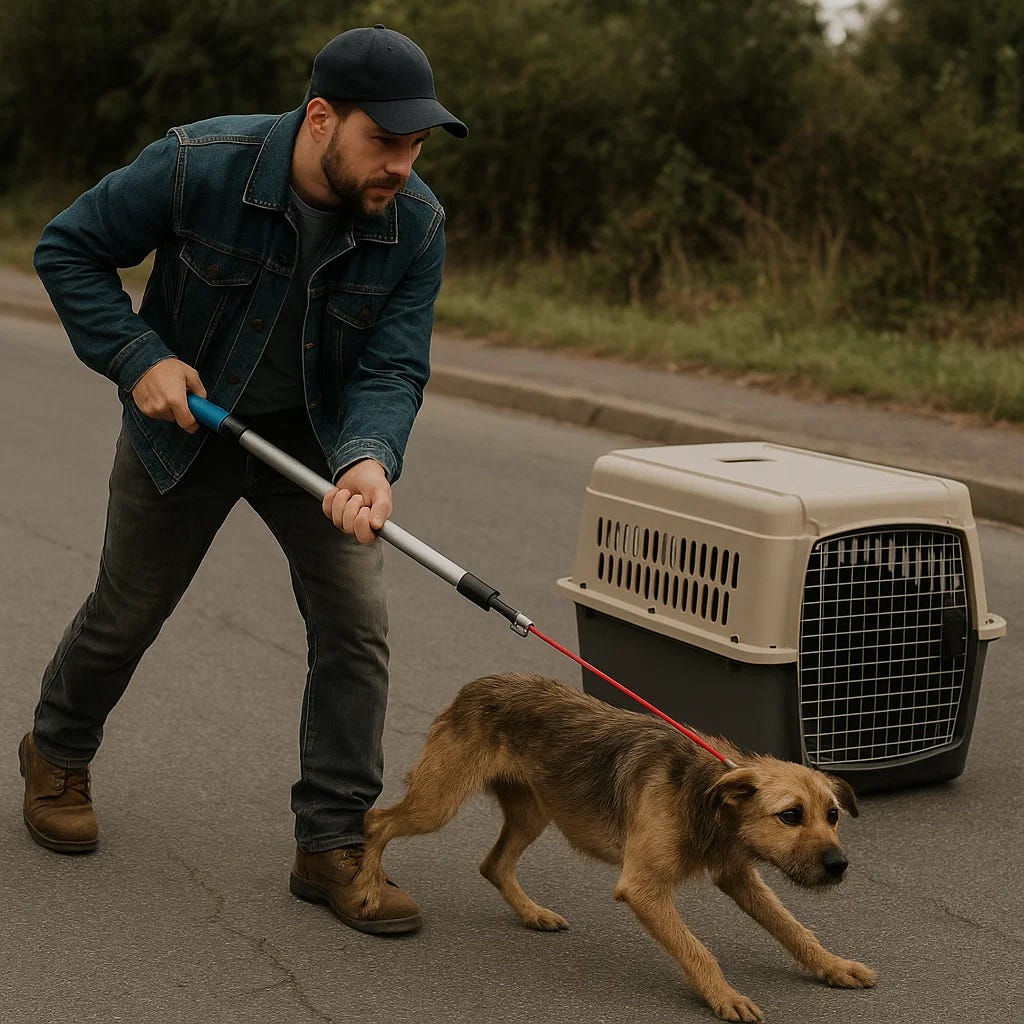
The Catch Pole: A Tool for Safety, Not for Show
The catch pole – also known as a control pole – is an essential piece of equipment for animal professionals, designed to protect both the handler and the dog in high-risk situations.
When used correctly, it can mean the difference between a safe intervention and a serious injury.
Unfortunately, misuse of catch poles is increasingly being broadcast to vast online audiences, often normalising poor handling techniques that place dogs at risk and undermine years of welfare education.
Correct Use of a Catch Pole
Catch poles are not everyday tools. They are intended for last-resort use, where a dog cannot be safely handled by alternative, lower-stress methods such as leashing, coaxing, or using barriers. Best practice dictates that:
Minimal force is applied: The pole should never be used to lift, drag, or suspend a dog.
Positioning matters: The loop is placed safely around the dog’s neck and/or chest, avoiding pressure on the airway.
The goal is de-escalation: Once under control, the catch pole should be transitioned to a safer restraint method as quickly as possible.
Calm handling is essential: Dogs already in distress should not be subjected to rough or prolonged restraint.
In the right hands, a catch pole is a protective measure. In the wrong hands, it becomes an instrument of unnecessary fear, pain, and trauma.
Misuse in the Spotlight
Videos circulating on social media have shown dogs being hoisted into the air, dragged across floors, or restrained unnecessarily long with catch poles. These practices are not only harmful, but they risk causing lasting psychological damage to the animals involved.
Worse still, when such content is shared by accounts with hundreds of thousands of followers, it frames poor practice as acceptable – even entertaining. Viewers, many of whom may be inexperienced handlers or rescuers, may believe these methods are standard or endorsed by professionals.
The Responsibility of Large Accounts
With a large following comes influence – and influence comes with responsibility.
Animal welfare accounts with significant reach are shaping public perception of what “rescue” looks like. If they normalise harmful techniques, they undo the hard work of countless trainers, behaviourists, and rescuers who advocate for fear-free, humane handling.
Best practice is not optional. It is the foundation of responsible rescue and handling. Large platforms must lead by example, demonstrating restraint, compassion, and professionalism in every interaction they broadcast.
Leading by Example
If you are a rescuer, handler, or organisation:
Educate your audience: Show safe, humane methods of restraint.
Use catch poles sparingly: Only when truly necessary.
Be transparent: Explain why a catch pole is being used in a particular case.
Commit to welfare: Make sure every video you post reflects the values of compassion and safety.
Normalising rough handling helps no one – least of all the dogs who depend on us. The catch pole is a tool for safety, not a spectacle. Used with care, it protects. Misused, it harms.


