
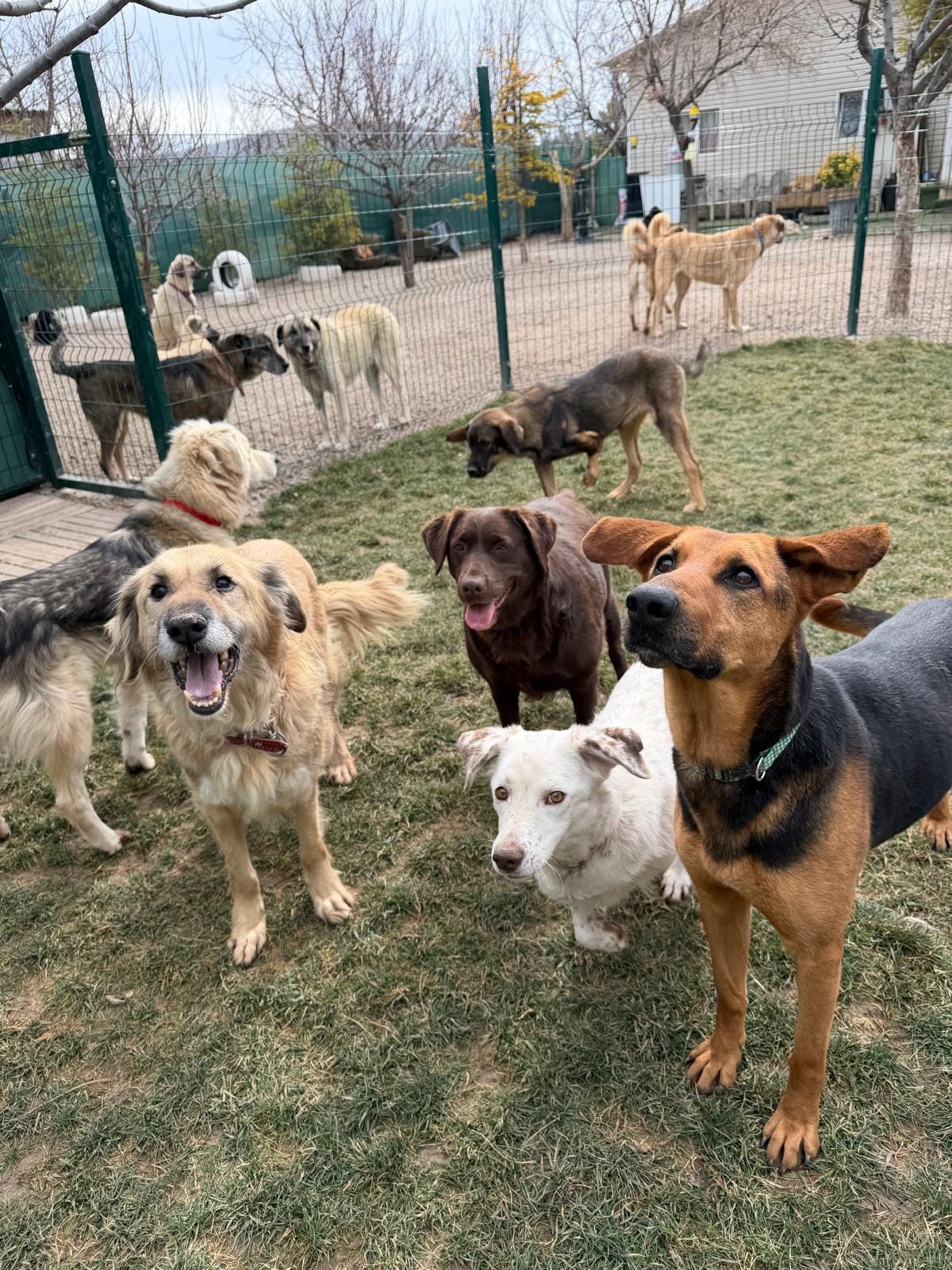
When people hear the word sanctuary, they imagine the end of the road. A place for the unadoptable. The forgotten. The ones nobody chose.
But that isn’t how we see it.
Our sanctuary project was never meant to be a waiting room for forever residents.
It is a stepping stone, the closest thing we can create to a real home environment so we can finally understand who a dog actually is when survival is no longer the priority.
And sometimes what we learn surprises people. Because not every dog wants the life we think they should want.
The Truth About Adoptability
In traditional kennels, behaviour is compressed. Noise echoes. Movement is constant. Every smell is layered over another. Dogs react not just to people but to each other’s tension. What you see there is coping, not personality.
A quiet dog might be shut down. A barking dog might be overwhelmed.
A still dog might be afraid to move.
You cannot decide a dog’s future inside permanent alertness.
The sanctuary programme changes that.
Space replaces walls. Routine replaces uncertainty. Humans exist without constantly appearing and disappearing. And only then does the real dog emerge.
When the Mask Comes Off
Many dogs blossom in this environment.
They soften, attach, play, seek affection, and clearly choose human companionship. Those dogs are ready for homes and homes are right for them.
But a smaller group tells us something else.
They don’t relax indoors. They don’t seek sofas. They sleep better outside even when beds are available. Doors open and they choose the garden.
Humans sit beside them and they move a short distance away, not fearful, just uninterested.
They are calm, healthy, content and independent. This is the moment expectations collide with reality.
Some Dogs Are Not Designed for Houses
Domestic dogs exist on a spectrum shaped by generations of environment.
Some were bred to live inside human households, to monitor facial expressions, to seek constant social feedback. Others come from long lines of free-living street populations where survival depended on awareness, space, and controlled distance rather than closeness.
These dogs are not less domesticated. They are adapted to a different social contract.
Inside a home:
sounds are trapped and amplified
exits are limited
movement is restricted
human proximity is constant
For many dogs this feels safe. For some it feels like confinement.
We often see them relax only outdoor, posture loose, breathing slow, sleep deep. Indoors they remain polite but vigilant, waiting for release.
Not anxious. Not distressed. Simply not comfortable.
What They Are Telling Us
A dog that refuses indoor life is not rejecting care. They are expressing preference.
Given consistent food, medical support, and companionship at their own distance, they thrive just not in the way we culturally picture pet ownership.
They form bonds differently:
They walk with you but not on you. They greet but do not cling. They rest nearby, not against. Their relationship with humans is cooperative rather than dependent.
And once you recognise it, you realise something important:
They are not missing out.
Why We Think That Is Okay
Adoption is often treated as the universal happy ending. But welfare is not defined by matching human expectations. It is defined by meeting the animal’s needs.
For these dogs, forcing indoor living would not be kindness. It would be insisting they perform comfort rather than experience it.
In the sanctuary programme they have:
predictable meals
veterinary care
social groups they choose
shelter from weather
freedom of movement
human interaction without pressure
Their stress behaviours disappear. Their health stabilises. Their days are calm.
The goal of rescue is not to make every dog live the same life.
It is to give every dog a life where they feel secure.
The Meaning of Forever
So yes some dogs here will never be adopted.
Not because nobody loved them. Not because they could not adapt. Because once given a genuine choice, they chose a different kind of belonging.
They do not need ownership to have safety. They do not need a sofa to have comfort.
They do not need a house to have home.
A Different Success Story
The sanctuary programme is not a place where hope stops. It is where assumptions stop.
Most dogs in this environment tell us they would like home environment & can be placed with confidence.
A few stay and build a stable social world of their own, one that suits their nature better than any living room could.
We don’t see them as the ones left behind. We see them as the ones finally understood.
Sometimes rescue means finding a family. Sometimes it means becoming the right environment instead.
That is not a failure of adoption. That is success, just in a form people rarely expect or accept.


