


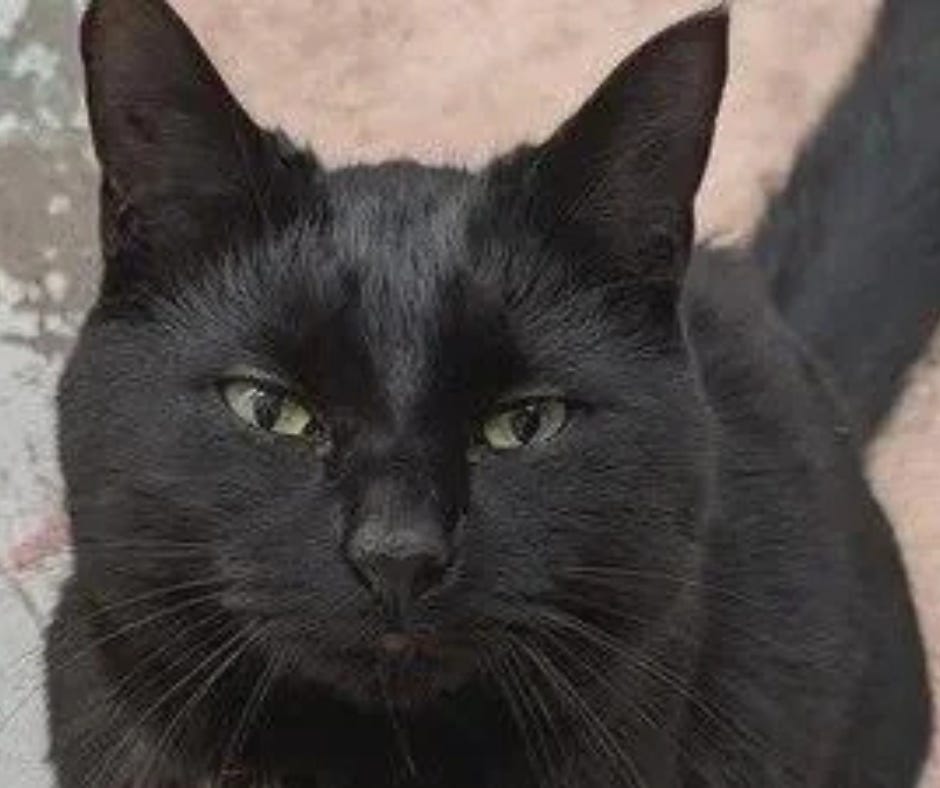
For years, Frank lived quietly among the engineers, drivers and staff at the Exeter Stagecoach depot.
He was not a pet in the traditional sense. He was something many communities understand instinctively but struggle to explain to outsiders: a community cat. A familiar presence. Part of the landscape. A small life woven into the rhythm of a workplace.
Staff fed him. Shelters were built for him. People looked out for him during cold weather. Over time, Frank became more than a stray cat surviving on the edges of a depot. He became part of the culture there.
In 2025, local media even celebrated him as the depot’s unofficial mascot. He was described affectionately by staff and embraced as part of the team.
Now that relationship appears to be under threat.
Over the last 24 hours, growing concern has spread online after claims that Frank may no longer be allowed to remain at the depot due to alleged health and safety concerns. Supporters fear he could be removed from the only territory he knows.
The reaction has been immediate and emotional.
A petition has begun circulating. The story is blowing up on social media. People who have never met him are suddenly invested in his future because, in reality, stories like this are never only about one cat.
They are about what animals become to people.
Community animals are not just strays
Across the world, many animals exist in a space between ownership and complete abandonment. Street dogs. Community cats. Stable cats. Yard dogs. Factory cats. Sanctuary animals. They may not belong to one individual, but they still belong somewhere.
Animals like Frank often develop stable territories, routines and trusted human relationships over many years. Relocating them is not always simple and can sometimes place them at risk physically and psychologically.
This is particularly true for semi-feral cats who know one environment intimately and may struggle to adapt elsewhere. People understand this instinctively, which is why the idea of removing Frank has triggered such a strong public response.
Why these stories resonate
There is also something deeper happening beneath stories like this.
Modern life can feel increasingly impersonal. Many workplaces are dominated by targets, liability concerns, risk assessments and corporate language. Animals like Frank cut through that.
They remind people of softness, of routine kindness & of the small relationships humans build without even noticing.
A cat waiting for workers at the end of a shift may seem insignificant to some people. To others, especially during difficult periods of life, those moments matter enormously. That is why community animals often become symbols of something much larger than themselves.
What happens next?
At the time of writing, there has been no widely reported official public statement from Stagecoach. Most information is currently spreading through supporters, local discussions and social media posts. It is also unclear whether any compromise or welfare-based solution is being explored behind the scenes.
What is clear is that many people care deeply about Frank’s future. And perhaps that matters more than some would expect. Because in a world where compassion can often feel in short supply, the public reaction to one quiet depot cat in Exeter says something hopeful about people too.
Sometimes a small life becomes important simply because people chose to care.
You can sign Franks petition here https://t.co/nbITMFdH1J
Signed yesterday and I´m happy that since then a lot of people have signed, too!