

The Grand National Is Killing Horses in Plain Sight

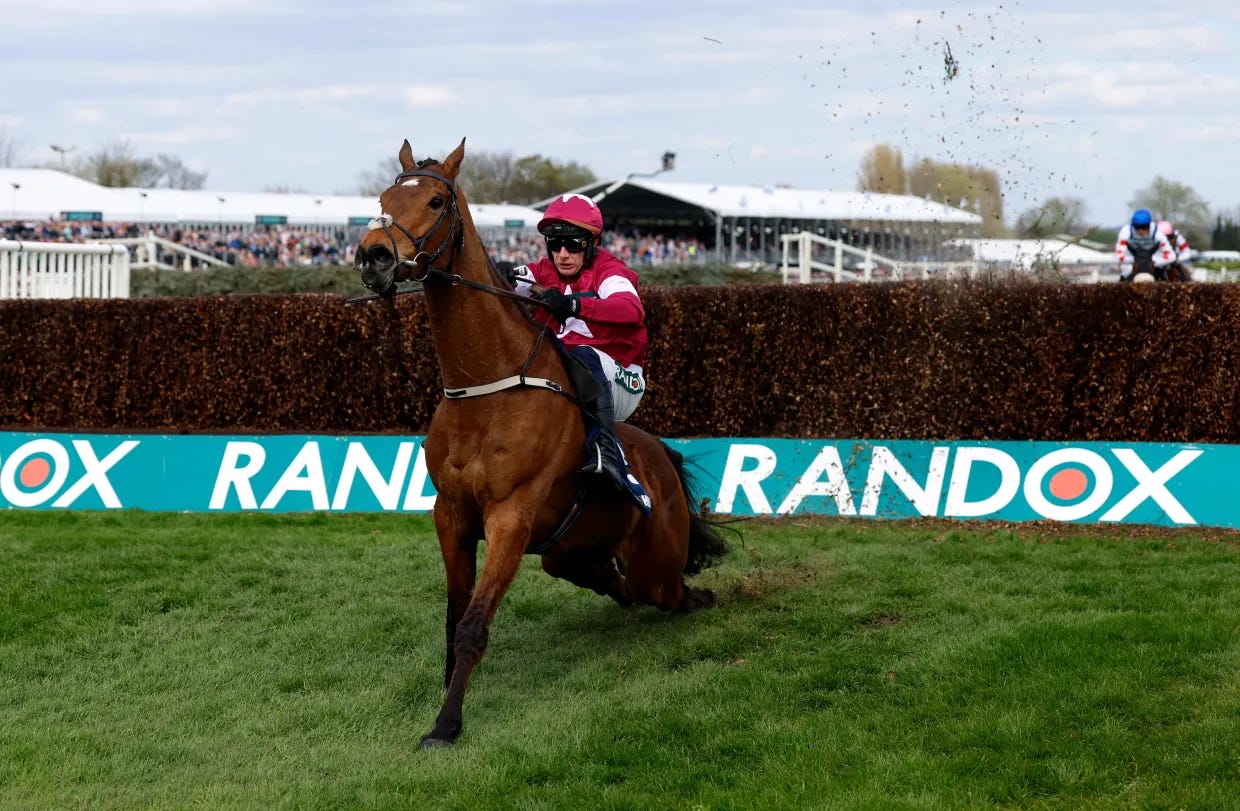
The Lie of the Finish Line
They will tell you Gold Dancer won.
They will show you the replay. The stride. The clearance. The moment he crossed the line first at the Grand National.
They will call it triumph. But the truth is this:
Gold Dancer ran to his death.
A catastrophic injury at the final fence. A body pushed beyond its limit for the sake of spectacle. A life ended within minutes of victory.
This is not sport at its finest.
This is what it looks like when entertainment demands everything and the animal pays the price.
This Is Not Tragedy. It Is Design.
Every time a horse dies at Aintree, the language softens:
“Freak accident”
“Part and parcel of racing”
“The risks are known”
But nothing about this is rare. Nothing about this is unexpected.
The Grand National is engineered to push horses to the edge, long distances, high fences, speed under pressure. When bodies break, it is treated as unfortunate.
It is not unfortunate. It is inevitable.
The Numbers They Hope You Don’t Sit With
Let’s strip away the commentary and look at reality:
Around 88 horses have died in the history of the Grand National
Approximately 65 have died at the wider Aintree Festival in the last 25 years
More than 3,000 horses have died on British racecourses since 2007
These are not outliers. These are the cost of doing business. And every single one of those deaths was preceded by the same thing:
A horse doing exactly what it was asked to do.
The Illusion of Care
There will be statements. There always are. Carefully worded, measured, calm:
“The horse received immediate veterinary attention”
“Our thoughts are with connections”
“Welfare remains a priority”
But welfare does not exist in a system where death is routine. You cannot build a spectacle on risk, speed, and physical exhaustion and then claim surprise when bodies fail.
Gold Dancer was not failed by a moment. He was failed by a system that required him to run in the first place.
What We Are Really Watching
This is not about one fence. One misstep. One race. This is about a structure where:
Animals are bred for performance
Trained for compliance
Entered into events where failure can be fatal
Replaced when they are no longer useful
And the public?
We are asked to cheer. To celebrate. To call it heritage.
The Line That Should Already Have Been Drawn
Any sport requiring the regular deaths of animals should not exist.
For some reason, we have decided the deaths of horses in the Grand National is acceptable. Wrapped in tradition. Protected by industry. Normalised through repetition.
Gold Dancer exposes that lie.
Stop Calling This Sport
There is a point where language itself becomes part of the problem. Because calling this sport implies fairness.
It implies choice. It implies a level playing field. There is none of that here.
There is only risk imposed on an animal that cannot consent.
Gold Dancer Is the Question We Keep Avoiding
He ran. He cleared the fences. He won.
And it killed him.
So the question is no longer whether racing can be made safer. The question is
Why are we still asking horses to do this at all?
Most racing fans will tell you these horses were born to race, they love it and who would look after them if they didn't race!? Well we all know exactly what happens to most of them when they've made the owners a packet and the winning stops, it's rarely a long and happy retirement! As for loving it? I think even if they don't fully believe it, it still gives a warm fuzzy guilt free feeling placing a bet when the reality of "You Bet They Die" definitely doesn't. We all have to take responsibility for our own actions, betting, attending race meetings is complicity and contributes to every death and every abuse.
There should be two selections in Substack, one for “Like,” and one for “Wholly Support.” “Like” seems to be an abysmal expression for something so serious as this. I stand with you on this matter, and am grieved for the horses, and outraged that our own species can have such cavalier, entitled attitudes towards the other animals on this planet.