
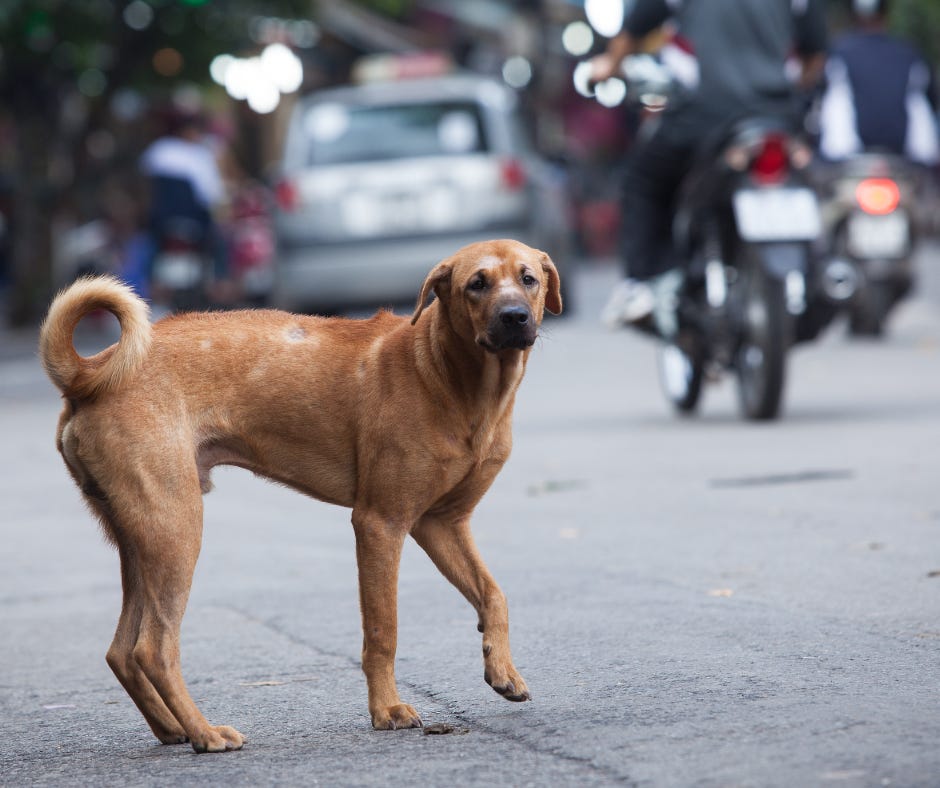
The Philippines has been on the Dog Desk Animal Action Global Stray Dog Crisis Map Watchlist because of growing concerns about the way free roaming dogs are being managed. We have been watching municipal collection operations, impoundment, the fate of dogs once they enter pounds and the balance between lethal control and programmes designed to prevent populations from growing in the first place.
In Davao City, dog catching operations took place on 17 and 18 August across several barangays in Talomo, Buhangin and Tugbok districts. Dogs collected during those operations entered a system that gave owners a short opportunity to reclaim them, followed by a limited period in which the animals could be adopted. Those remaining unclaimed and unadopted were scheduled for euthanasia on 25 and 26 August.
We are no longer looking at dogs being removed from streets because of complaints, rabies concerns or public safety. We are looking at a municipal process in which collection can begin a countdown towards death.
Davao is not the only place where dogs are being collected. In Santa Maria, Bulacan, dogs were recently rounded up from a subdivision in Barangay Caysio following complaints about roaming animals and taken to a municipal pound. Appeals subsequently went out seeking adopters and rescuers because of concerns that dogs remaining there could face euthanasia.
Dog catching activity has also continued elsewhere, including a rabies control operation in Mambajao, Camiguin on 22 August. We do not currently have sufficient evidence to establish the outcomes for those dogs, and it would be wrong to assume that collection automatically means euthanasia. But that uncertainty illustrates precisely why we are watching the Philippines so closely.
There is nothing inherently wrong with authorities intervening where free roaming dogs present genuine welfare, public health or safety concerns. Rabies remains a serious issue and governments have responsibilities both to their citizens and to animals. We want to know what happens after the truck leaves.
If dogs are collected, there should be transparent records showing how many entered the system, how many were reclaimed, how many were adopted or transferred, how many remained in care and how many were euthanised. Without those figures, it becomes extremely difficult to understand the real consequences of municipal dog-catching programmes. This becomes even more important when holding periods are short.
A dog may have been owned and become lost. A community dog may have people feeding and monitoring it without anyone formally recognised as its owner. A frightened animal entering a pound may need time before it is suitable for adoption. Rescue organisations also need time to find foster homes, transport and space. When the period between collection and potential euthanasia is measured in days, those opportunities become very small.
There is another side to the Philippine picture and it is important that we acknowledge it. Municipalities are also investing in sterilisation and rabies vaccination. Quezon City, for example, provides free anti rabies vaccination and spay/neuter services and has developed rehabilitation and adoption initiatives alongside its animal-control work.
But the scale of municipal custody is significant. Quezon City reports that more than 42,000 stray or abandoned animals were taken into custody between 2023 and June 2026. Numbers of that size make outcome transparency essential. Knowing how many animals were collected tells us how busy an animal control system was. It does not tell us whether that system protected them.
That distinction sits at the heart of our Global Stray Dog Crisis Map. We do not move countries into Crisis just because they have street dogs. We look at what governments are doing in response to them. Mass removal, lethal population control, prolonged confinement, inadequate shelter capacity, weak traceability and policies that expose large numbers of dogs to poor welfare outcomes are all significant.
Repeated municipal collection operations combined with short holding periods and the potential euthanasia of dogs that are not reclaimed or adopted create a pattern we cannot treat as routine animal control. If collection continues at scale while dogs entering pounds face lethal outcomes within days, the case for changing the Philippines’ classification will become increasingly difficult to resist.
What we need now is outcome data. How many dogs were collected in Davao during the August operations? How many went home? How many were adopted? How many were transferred for rehabilitation? How many were euthanised on 25 and 26 August? And the same questions should be capable of being answered across every municipality operating a dog pound.
The Philippines still has an opportunity to move in the other direction. Investment in large scale sterilisation, sustained rabies vaccination, identification, responsible ownership and adoption could reduce the number of dogs entering municipal custody in the first place. But prevention has to operate at sufficient scale to change what is happening on the streets.
For now, the Philippines remains on the Dog Desk Animal Action Global Stray Dog Crisis Map Watchlist. We are watching what happens next very closely. Because when dogs can move from the street to a municipal pound and towards euthanasia within a matter of days, the distance between Watchlist and Crisis is becoming uncomfortably small.


