
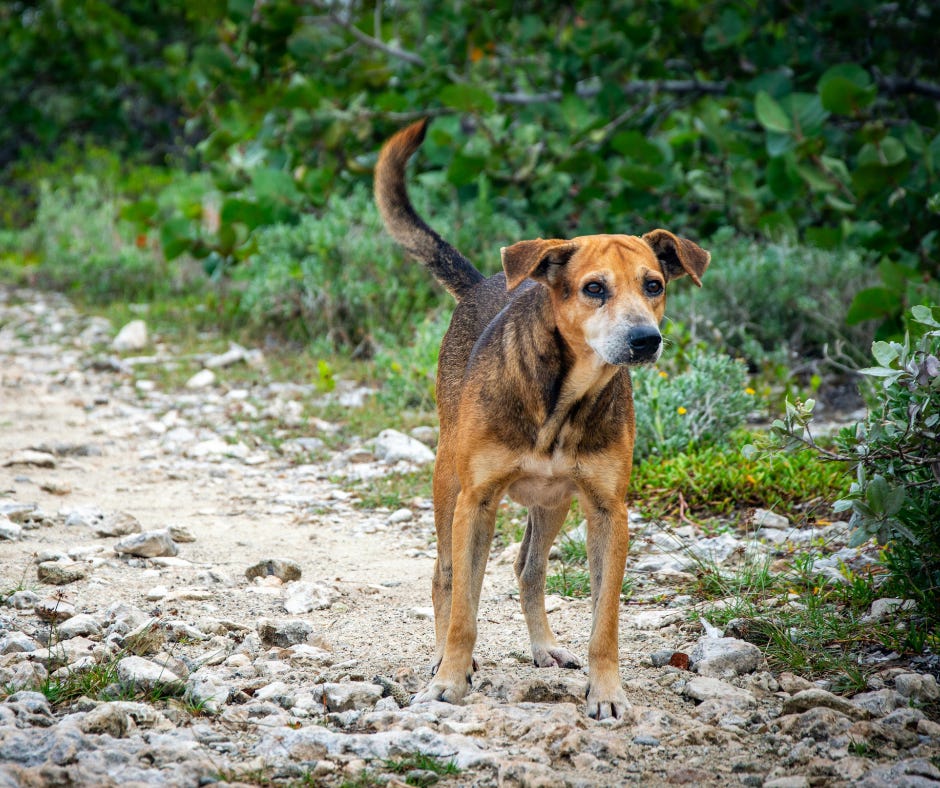
In the lives of stray dogs, reproduction is rarely a calm or private event. For male dogs living on the streets, the search for a female in heat is one of the most dangerous periods of their lives. What might appear, from a distance, to be a simple instinct is in reality a complex and risky behaviour shaped by competition, hierarchy, and survival pressures.
How Male Dogs Detect a Female in Heat
Male dogs do actively seek out females when they are in heat, but the process is driven primarily by scent detection rather than deliberate searching in the human sense.
When a female dog enters oestrus, she releases pheromones in her urine and vaginal secretions. These chemical signals travel through the environment and can be detected by males over considerable distances. A dog’s sense of smell is extremely sensitive, far more powerful than our own and it allows males to detect reproductive cues that humans would never notice.
Once a male detects this scent, he begins to follow it. This behaviour often looks very much like searching:
Following scent trails left through urine marking
Repeatedly returning to locations where the scent was strongest
Travelling further than usual from his normal territory
Investigating paths, crossroads, and areas where other dogs have passed
This process can continue for several days during the female’s fertile period.
Importantly, male dogs are not constantly looking for mating opportunities. Their behaviour changes only when a female nearby enters heat and releases these chemical signals.
Competition and Conflict
When a female dog enters oestrus, her scent can draw males from across a neighbourhood. Several males may converge on the same location, each attempting to secure access to the female.
This creates intense competition. Fights between males are common during these moments. They can escalate quickly and often involve bites to the face, neck, and legs. In stray populations, injuries like these frequently go untreated, leaving dogs vulnerable to infection, long-term disability, or death.
For many male dogs, the biological drive to reproduce overrides caution.
Increased Movement and Exposure
Male dogs searching for a female often travel far beyond their usual range. Dogs that normally remain close to a known feeding point or territory may suddenly roam across roads, industrial areas, and unfamiliar neighbourhoods.
This increased movement exposes them to multiple dangers:
Road traffic, one of the leading causes of death for street dogs
Aggression from unfamiliar or territorial dogs
Human hostility, particularly in areas where stray dogs are not tolerated
Municipal capture operations, which often increase when dogs gather or become more visible
A dog that leaves its familiar environment does not always return.
Disruption of Social Stability
Street dogs frequently live in loose social groups with established hierarchies. The presence of a female in heat can temporarily disrupt these structures.
Dominant males may attempt to guard the female, preventing others from approaching. Subordinate males may still attempt to gain mating access, triggering further conflict. What was previously a stable group dynamic can shift into several days of tension and aggression.
Physical Exhaustion
The mating pursuit itself is physically demanding. Male dogs may follow a female for days while she moves through different areas and continues to attract other males.
During this time, many dogs eat less and rest very little. Energy reserves already limited in street conditions can become depleted, leaving the dog weaker and more vulnerable to illness or injury.
Why Sterilisation Matters
These risks are one of the many reasons sterilisation programmes are considered the most humane and effective method of managing stray dog populations.
Neutering male dogs reduces roaming behaviour associated with mating, lowers levels of aggression between males, and decreases the number of unwanted litters born into harsh street conditions.
Every mating event in a stray population carries consequences, not just for the female who will give birth, but for the males who compete, travel, fight, and risk their lives in the process.
Understanding these behaviours reminds us that reproduction on the streets is not a peaceful or natural cycle. It is a survival struggle, and one that humane population management seeks to reduce.


