

The RSPCA Hoarding Case Initially Dismissed As AI

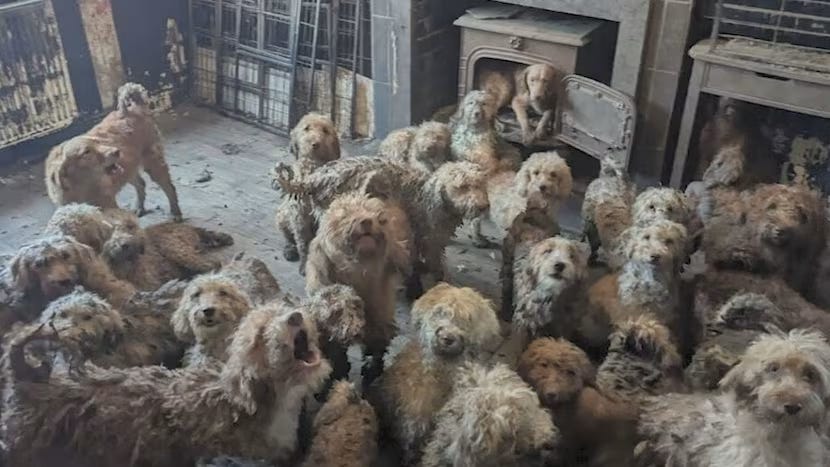
More than 250 dogs were found inside a single UK home. Not across multiple buildings. Not spread over land. Inside one domestic property.
The dogs, mostly poodle crosses had been bred in an uncontrolled way until the situation overwhelmed the owner and spiralled beyond control. Rooms were filled with animals. Living spaces were no longer functional. Conditions deteriorated over time.
The RSPCA removed dozens of dogs themselves, with others transferred to partner organisations simply because of the scale. This alone should have been enough to focus attention.
But it wasn’t.
The Detail That Changed Everything
When images from the property were released, something unusual happened. People did not just react with shock. They accused the charity of faking them.
The images were labelled AI-generated Publicly. Repeatedly. Confidently.
The situation became so widespread that the RSPCA had to issue a direct response, the images were real.
They had to tell people that what they were looking at was not artificial, not manipulated, not exaggerated but documented reality.
This is the shift.
When Disbelief Becomes the Default
The RSPCA itself acknowledged the reaction. People were “so aghast they don’t believe what they are seeing.”
That line matters. Because it explains what is happening:
The scale feels impossible
The setting (a normal home) feels incompatible
The image conflicts with what people think is realistic
So instead of adjusting their understanding of reality, people reject the evidence.
A New Problem - Unskilled AI Accusations
Alongside this, a second issue is emerging. A growing number of people are now:
Actively trying to identify AI images
Publicly calling out content as fake
Doing so without forensic tools, training, or verification
This is not expert analysis. It is guesswork presented as authority.
There is no metadata review. No source tracing. No technical validation. Just visual assumptions. And increasingly, those assumptions are wrong.
The Damage This Causes
When genuine welfare evidence is incorrectly labelled as fake:
Organisations lose credibility in real time
Public trust is undermined
Urgent cases are delayed or dismissed
Resources are diverted into defending reality
In this case, the RSPCA had to respond to comments questioning authenticity instead of focusing entirely on the animals.
That is not a small issue. It is operational damage.
Meanwhile, Fake Content Thrives
At the same time, there is a clear imbalance:
AI-generated animal content reaches millions
It is monetised
It is designed for emotional impact
And it often goes unchallenged
So we are now seeing a split:
Real suffering → questioned
Fabricated content → rewarded
And the people most confident in calling things fake are often the least equipped to verify them.
Why This Is Happening
This is not just about one case. It is a wider behavioural shift driven by:
Increased awareness of AI but not understanding of it
Social media rewarding fast reactions over accurate ones
A growing culture of debunking as status
A reluctance to accept how extreme real conditions can be
There has been a move from blind trust to blind doubt. Neither is useful.
The Risk for Animal Welfare
If this continues, the consequences are serious:
Evidence will need to be defended before it is believed
Smaller organisations will be hit hardest
Real cases may fail to gain traction
Public confidence will erode further
And critically:
Those working in animal welfare will be forced to fight two battles, one against cruelty, and one against disbelief.
Closing Observation
The RSPCA hoarding case should have been a clear example of what can happen when situations spiral out of control. Instead, it became something else. A moment where reality itself had to be verified.
And that is the real concern.
Because once the public stops believing what they are seeing, it becomes much easier for suffering to continue unquestioned, unchallenged, and increasingly ignored.