


Why some dogs can’t stop moving when they’re happy
There are calm dogs. There are excitable dogs.
And then there are the wigglers, the ones whose whole bodies seem to melt into motion the moment they see someone they love.
The tail starts first. Then the hips join in. Soon the spine bends like a ribbon and the dog appears to fold in half with joy.
To humans it looks adorable and chaotic. To science, it is something very specific: a full-body emotional overflow.
Happiness You Can Measure
Dogs do not smile the way humans do. They do not laugh or speak. Instead, they move.
Behaviour researchers describe tail wagging as an emotional signal amplifier. It doesn’t create emotion it broadcasts it. When the emotional intensity rises high enough, the movement spreads beyond the tail and recruits the entire body.
That’s when you get the wiggle.
The brain pathway responsible sits in the limbic system, the emotional centre which connects directly to motor control. In simple terms: dogs don’t decide to wiggle. The feeling physically spills out of them.
A wiggly dog is experiencing arousal in the positive valence range: excitement without fear.
Or more plainly:
their body can’t contain how good they feel.
Why Some Dogs Wiggle More Than Others
Not every dog wiggles. Some wag politely. Some barely move. The difference comes from three factors:
1. Social Attachment
Dogs who strongly bond to humans show larger greeting behaviours. The wiggle is a reunion response the same neurological reaction puppies display when their mother returns.
Rescue dogs often become the biggest wigglers because they have experienced absence. Safety becomes meaningful, not normal.
2. Emotional Regulation History
Street-born or previously neglected dogs frequently display exaggerated movement once secure. Their nervous system learned unpredictability first. When predictability finally arrives, the release is dramatic.
Calm dogs were raised expecting safety. Wiggly dogs discovered it.
3. Breed Motor Expression
Some breeds express emotion with posture (sighthounds lean), others vocalise (huskies talk), and many companion breeds evolved exaggerated body language specifically to communicate with humans.
The wiggle is communication shaped by evolution.
The Direction of the Wag Matters
Studies using high-speed video tracking found dogs wag asymmetrically:
Right-biased wag → positive emotional state
Left-biased wag → uncertainty or caution
The full-body wiggle almost always accompanies the right-side bias.
It is the canine equivalent of running toward someone with open arms.
So when a dog bends in half on greeting, they are not just excited they are socially certain. They trust the interaction will be good.
Why You See It Most in Safe Places
In environments where dogs must stay alert, streets, crowded shelters, survival conditions movement is economical. Energy is conserved. Signals are restrained.
After safety is learned, the nervous system leaves survival mode. That is when wiggles appear.
You often won’t see a true full-body wiggle during the first days after rescue. Instead you see cautious wagging, low posture, scanning eyes. Weeks later, suddenly, the dog looks like it might fall apart from happiness.
Nothing changed in that moment. The brain finally believed the safety was permanent.
The Wiggle as a Biological Relief Response
The body stores tension during uncertainty. Mammals release tension through movement: shaking, stretching, yawning, rolling.
The dog wiggle is partly joy and partly decompression.
It is the nervous system saying:
“I no longer need to be ready to run.”
That’s why wiggly greetings often come with:
soft eyes
loose ears
curved body
spinning or leaning
repeated approach-retreat motions
The dog is both excited and emotionally relaxed at the same time, a rare combination in animal behaviour.
Why Humans React So Strongly
Humans are neurologically wired to respond to rhythmic movement and affiliative signals. The wiggling motion activates caregiving responses in our brains, the same system that reacts to infant body language.
We don’t just see the wiggle. We feel compelled to respond to it. Your brain interprets it as unfiltered positive social intent. No strategy. No guardedness. Just connection.
What a Wiggly Dog Is Really Saying
Not “hello.” Not even “I’m happy.”
A true wiggle communicates something more specific:
I recognise you.
I trust you.
I am safe enough to lose control of my body around you.
For animals that evolved around survival calculations, that is an enormous statement.
The Quiet Meaning Behind the Chaos
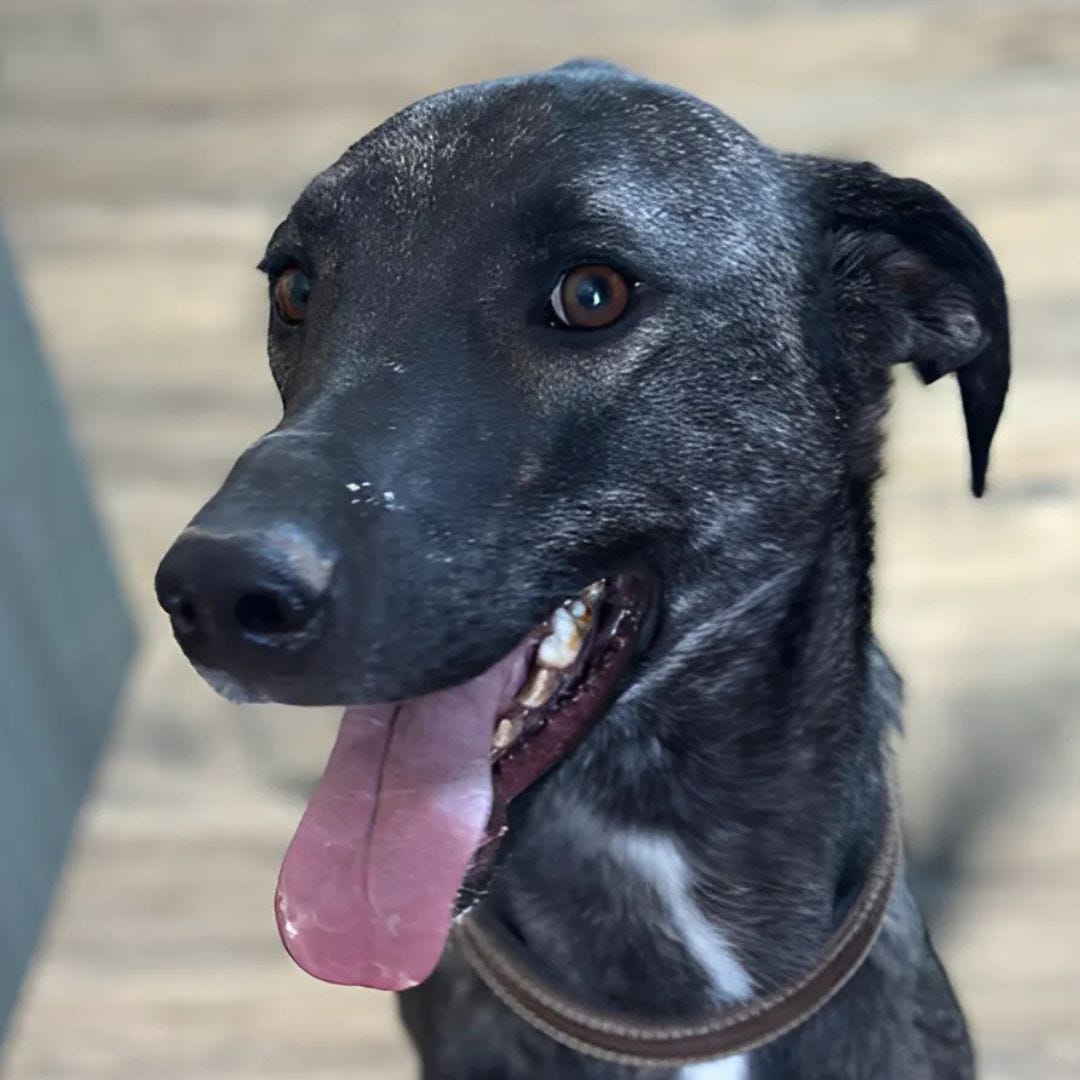
The wiggliest dogs are often the ones who once had the least certainty in life. When safety becomes predictable, emotion no longer needs to be contained.
So the tail measures joy. The hips measure relief. And the whole body measures belonging.
The wiggle is not random excitement.
It is what happiness looks like when the brain finally stops preparing for danger.