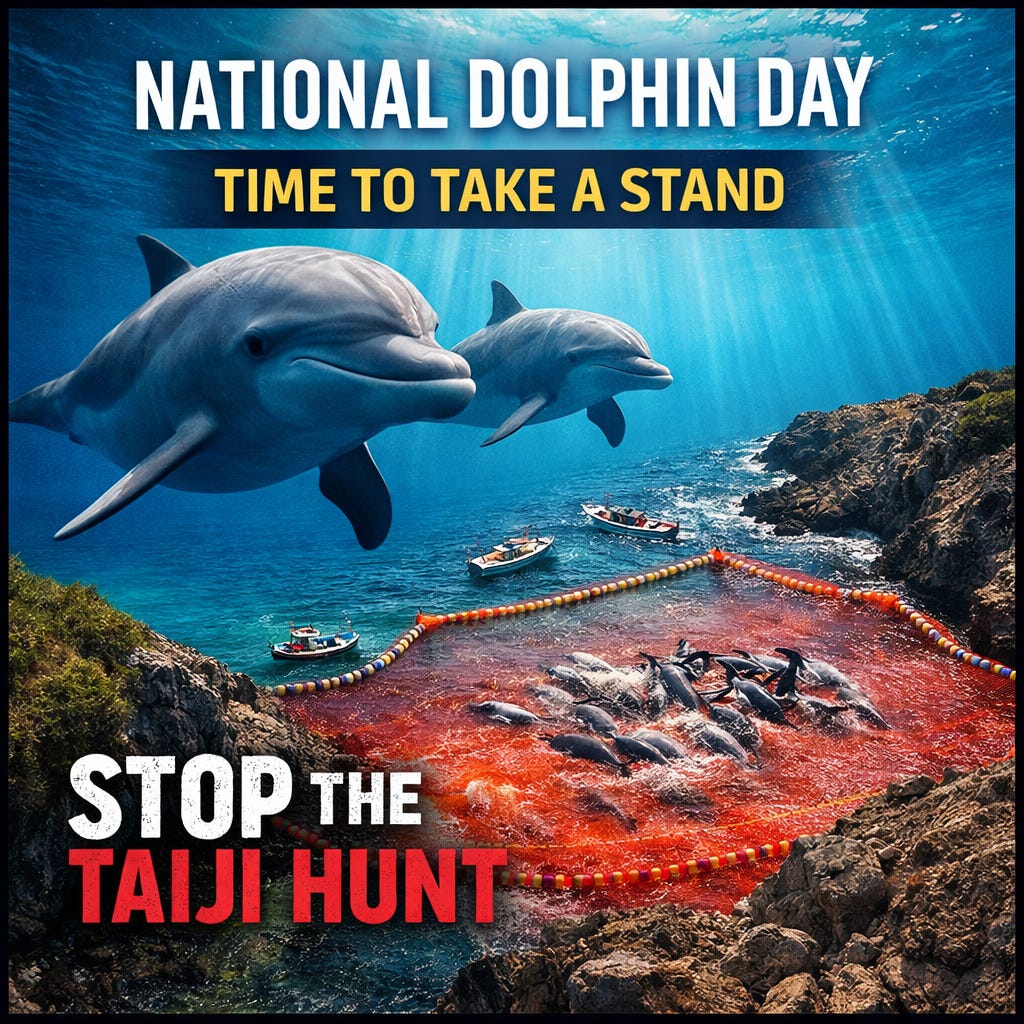
The Taiji Dolphin Hunt: What Is Happening at The Cove
The dolphin drive hunt in Taiji remains one of the most widely known wildlife issues in the world. Since The Cove brought international attention to the practice, the hunt has continued each year under a regulated system.
What has changed is not its existence but how it operates, what drives it, and how it is sustained.
When and How the Hunt Happens
The hunt runs annually from September through to late February or early March.
On suitable days, boats leave at sunrise and work together to locate dolphin pods offshore. Using coordinated movement and sound, they drive the animals toward a narrow cove.
Once contained:
Nets are placed across the entrance
The pod is confined in shallow water
A selection process begins
At this point, some dolphins are taken alive, while others are killed.
Where the Dolphins Go
Dolphins selected for live capture are:
Held in sea pens near Taiji
Sold into the global marine park industry
Transported to aquariums, resorts, and entertainment venues
In recent years, the largest demand has come from expanding marine park markets, particularly in Asia.
Dolphins not selected are killed, with meat entering a declining domestic market.
The Economics Behind It
The most important shift in Taiji is economic.
A live dolphin can sell for as much as $50,000, sometimes more
A dolphin killed for meat may be worth only a few hundred dollars
A single live dolphin can be worth more than dozens killed. This has changed the focus of the hunt:
Selection is deliberate
Value is placed on individuals, not volume
The global captivity industry now plays a central role
The hunt is no longer sustained by meat demand. It is sustained by international buyers.
The Trauma Behind the Process
Dolphins are highly social animals, living in stable groups with long-term bonds. The drive hunt disrupts this entirely.
During the hunt:
Dolphins are chased for extended periods, causing extreme stress and exhaustion
The use of sound creates disorientation and panic
Pods are forced into tight, unfamiliar confinement
During selection:
Individuals are separated from their families
Social bonds are broken in minutes
Distress behaviours and vocalisations are observed
For those taken alive:
Capture involves handling, restraint, and transport
They are removed permanently from their natural environment
They enter a life in confinement, fundamentally different from the open ocean.
For those killed:
The process takes place within the same confined space
The full psychological impact is difficult to measure, but the disruption and stress are inherent to the process.
Why It Continues
The Taiji hunts persist due to a combination of factors:
Legal status: the hunt is permitted under Japanese law
Economic incentive: high value of live dolphins
Global demand: ongoing market for captive dolphins
Reduced sustained attention: less continuous international focus
These factors combine to maintain a system that has proven difficult to change.
What Can Be Done
Ending the Taiji hunt requires addressing the system that supports it.
Remove Demand
Dolphins are captured because there is a market for them.
Do not visit dolphin shows or swim-with-dolphin attractions
Avoid facilities that keep dolphins in captivity
Question where captive dolphins come from
Without buyers, the economic incentive disappears.
Target the Supply Chain
The cove is only the starting point.
Challenge businesses that promote dolphin experiences
Support restrictions on the trade in wild-caught dolphins
Focus attention on the global network that sustains the hunt
Support Ongoing Work
Change depends on sustained effort. Support organisations working to:
Monitor and document the hunts
Expose trade routes
Apply legal and political pressure
Keep It Visible
The hunt continues, in part, because it no longer receives constant attention.
Share accurate information
Keep the issue in public discussion
Do not allow it to fade into the background
What You Can Do to Help End It
The hunt in Taiji continues because it is still profitable because of the selling of live dolphins for the entertainment industry.
If that demand disappears, so does the hunt.
Don’t fund it: avoid dolphin shows and swim-with-dolphin attractions
Challenge it: question where captive dolphins come from
Support pressure: back organisations exposing and opposing the trade
Keep it visible: don’t let it fade into the background
Remove the demand. Maintain the pressure. That’s how it ends.


The Farole Islands have a killing zone for whales dolphins and porpoises with people from the local community including children slaughter thousands each year and the water turns red with blood