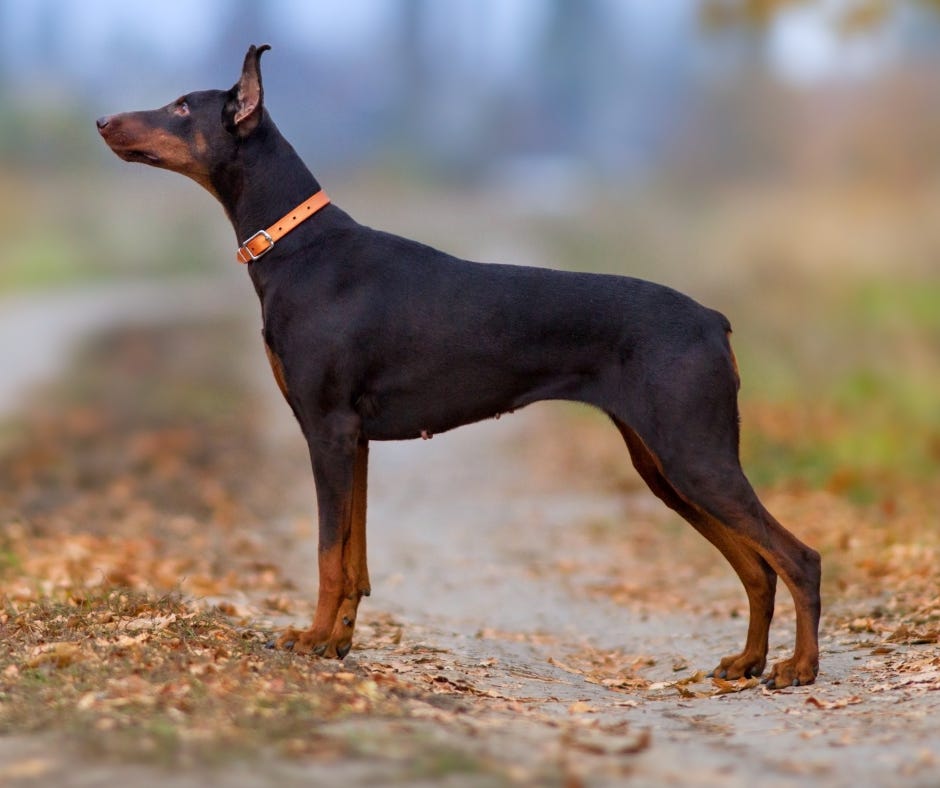
The UK is preparing to ban the import of dogs with docked tails, bringing tail docking into the category of mutilations alongside ear cropping.
On paper, it looks like a strong move.
In practice, it doesn’t stop tail docking.
It limits which dogs can enter the UK after the fact including some of the most vulnerable.
Docking didn’t disappear in the UK
Tail docking is restricted under the Animal Welfare Act 2006, but not eliminated.
Certain working dogs can still be legally docked
The procedure must be done by a vet within days of birth
It relies on declared intention, not guaranteed outcome
Many of these dogs:
never go on to work
live as pets with docked tails
Alongside that:
illegal docking still occurs
it is difficult to detect
prosecutions exist, but represent a small number of cases
There has even been a UK vet convicted for illegally docking puppies outside the legal exemption, showing the system is not airtight.
Illegal Tail Docking by a UK Veterinary Surgeon
A UK case also shows that illegal docking has not been confined to unregulated settings. A veterinary surgeon in Kent was convicted after removing the tails of 13 Rottweiler puppies, a breed that does not qualify under the working dog exemption.
He claimed he had misinterpreted the law and believed the puppies could be classed as working dogs, but the court found the procedure was unlawful. The case went on to the Royal College of Veterinary Surgeons, which criticised his conduct but did not remove him from practice.
This is one confirmed prosecution within a veterinary setting but because tail docking is carried out when puppies are only days old and relies heavily on professional judgment and documentation, it is difficult to detect or prove after the fact.
That raises a reasonable question about whether other cases have gone unchallenged.
The loophole is being closed
Until now:
docking in the UK = restricted
importing a docked dog = allowed
The new legislation is designed to close that gap by restricting the import of dogs that have undergone procedures such as tail docking.
The aim is to:
reduce demand for cosmetic procedures
prevent the outsourcing of practices banned or restricted in the UK
But this is where it becomes more complicated
Not every dog with a shortened tail has been docked for appearance. A large number of dogs entering the UK through rescue are:
street-born
abandoned
survivors of injury, infection, or neglect
Their tails may be:
removed in unregulated environments
partially lost due to trauma
medically amputated to save their lives
For these dogs, the tail is not cosmetic. It is a consequence of where they were born. A consequence of trauma.
The likely impact
The new rules will affect different groups in different ways.
Commercial breeding: may be discouraged from producing cosmetically altered dogs for export
Owners seeking a certain look: may find it harder to obtain these dogs
But the largest and most immediate impact is likely to be on:
rescue dogs
mixed-breed dogs
dogs already living with injury or past harm
Those dogs may:
face additional barriers to entry
require more documentation
or be excluded altogether, depending on how the rules are applied
No Exemption, No Evidence
At present, the regulations make no explicit exemption for rescue dogs. But even if one were introduced, the practical problem remains unchanged. A dog that has lost its tail surviving on the street can be treated the same as a dog deliberately altered for appearance not because they are the same, but because there is often no reliable way to evidence the difference.
Street dogs do not come with records, timelines, or verifiable histories. Any assessment is made after the fact, based on interpretation rather than proof. That means even a well-intentioned exemption risks failing in practice, because the system would still be asked to distinguish between circumstances it cannot consistently verify.
Targeting the Dog Instead of the Practice
This is the key distinction:
Importing a dog does not impede prosecution in the country of origin.
If a dog’s tail was illegally docked abroad:
the offence remains under that country’s law
enforcement responsibility remains there
In many cases the perpetrator has already been prosecuted
The UK import ban:
does not stop the act
It acts after the fact.
Meanwhile, within the UK
Docking continues to exist through:
legal exemptions
illegal practices that are hard to trace
a system based on early-life decisions and declared intent
So while the UK tightens its border rules docked tails have not disappeared domestically.
Illegal Home Docking and Limited Enforcement
Illegal tail docking in the UK most often happens outside any veterinary setting, carried out at home when puppies are only a few days old.
Methods reported in prosecutions include cutting the tail with basic instruments or using elastic bands to cut off the blood supply until the tail dies and falls away. These cases do reach court when discovered, typically under the Animal Welfare Act 2006, with convictions based on causing unnecessary suffering.
However, detection is difficult. By the time a puppy is sold or examined, there is often little evidence of who performed the procedure, and many cases only come to light when complications arise.
As a result, while prosecutions confirm that illegal home docking does occur, they are likely to represent only a small proportion of the actual number of incidents.
The tension at the centre of this
The policy is trying to solve a real problem:
unnecessary procedures
avoidable harm
But it does so by focusing on:
the presence of a docked tail
rather thanthe circumstances behind it
That creates a difficult balance.
Final line
A docked or missing tail tells you something has already happened.
This legislation responds to that outcome. It does not undo the act itself.
And depending on how it is applied, the dogs most affected may not be the ones it was originally intended to target.
Our Position on Docking and the Import Ban
Our position is straightforward. Tail docking is a welfare issue and should be addressed at the point it happens.
We initially supported the original petition in the expectation that rescue dogs would be exempt. When it became clear that this would not be the case, we withdrew that support.
Measures that aim to reduce demand have value, but not at the cost of dogs who are already living with the consequences of harm.
For Dog Desk Animal Action, the priority remains clear, stop cosmetic tail docking. Do not punish street born dogs by denying them a home because they have suffered trauma.


