


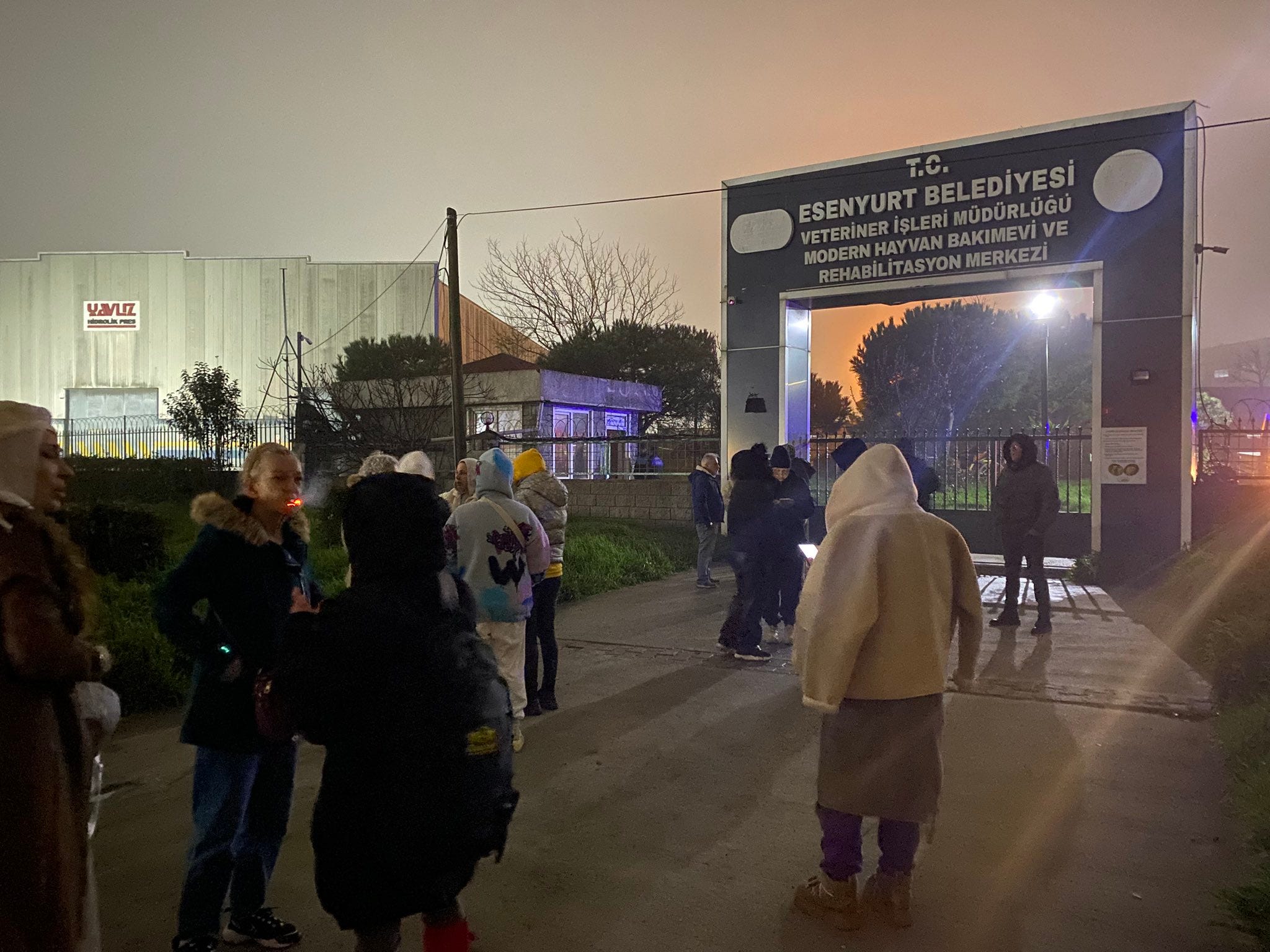
On 4 April 2026, activists arrived at the Esenyurt Municipal Animal Shelter following a worrying tip off
A large excavated pit had been dug near the shelter grounds. In any setting, that would raise questions. In the current climate in Turkey, it carries far greater weight.
Activists attending the site sought direct clarification from the shelter’s director:
What is the purpose of the pit?
How many animals are currently held in the shelter?
How many animals are dying each month?
Under what circumstances are animals euthanised?
These are not unreasonable questions. They are the minimum required to establish trust.
What the Municipality Said
According to video footage and first-hand accounts shared from the scene, the shelter director provided the following information:
Approximately 900 dogs are held at the Esenyurt facility
A further 500–600 dogs are held at a secondary site in Gülvadi
Around 200 cats are also in the system
Dogs are not collected arbitrarily, but through legal and veterinary processes
Euthanasia is carried out only under veterinary decision for sick animals, in line with current law
On the surface, this is a controlled and compliant account of operations. But the key figure, the one that matters most was not provided.
No monthly death data was disclosed.
Access Denied
Requests to enter the facility were refused. Some individuals were reportedly allowed inside. Others, including activists familiar with the shelter, were not. This matters.
Because once access is restricted, verification becomes impossible. And once verification is impossible, trust begins to collapse.
The presence of a visible burial site combined with a refusal to provide data or access creates a situation where questions cannot be answered, and assumptions begin to take their place.
The Detention
The situation extended beyond the main gate. At the secondary site in Gülvadi, one activist was detained by police.
There are, at the time of writing:
No confirmed charges
No official statement explaining the detention
No verified details on outcome or release
This appears consistent with a broader pattern in Turkey, where attempts to access or document municipal shelters can result in police intervention, even in the absence of violence.
There were no reports of assault or physical confrontation during the protest itself.
Why This Matters Now
This incident cannot be understood in isolation. It sits within a national system under significant strain:
A large free-roaming dog population
Limited shelter capacity
Increased pressure on municipalities to collect animals
Legal pathways that now permit euthanasia under veterinary discretion
Repeated reports of limited transparency in municipal operations
In this environment, certain signals carry more weight than they otherwise would. A burial pit is one of them. A refusal to provide death data is another. Restricted access is a third.
Individually, each can be explained. Together, they create a pattern that demands scrutiny.
What They Would Not Show
There is currently:
No verified evidence of mass killing at this facility
No confirmed wrongdoing based on available information
But there is also:
No transparent reporting of deaths
No independent access for verification
No clear explanation for a significant burial site
This is the space where concern exists. Not proven abuse. Not proven compliance.
But an absence of clarity where clarity is required.
The Real Question
This is not ultimately about one protest, one activist, or one shelter. It is about something more fundamental:
Can the public verify what is happening inside municipal animal shelters?
If the answer is no, then every unanswered question becomes larger than it should be.
Where This Goes Next
At the time of writing:
The story remains largely confined to social media
There has been no significant mainstream press coverage
No detailed municipal statement has been issued
That may change. But even if it does not, the questions raised at the gates of Esenyurt will not disappear.
Final Position
This is not a call for outrage. It is a call for transparency. If the system is functioning as stated, then the data should support it. If it is not, then the public has a right to know.
Until that line is made clear, situations like this will continue to repeat not because people are looking for conflict, but because they are looking for certainty.
And right now, certainty is not being provided.